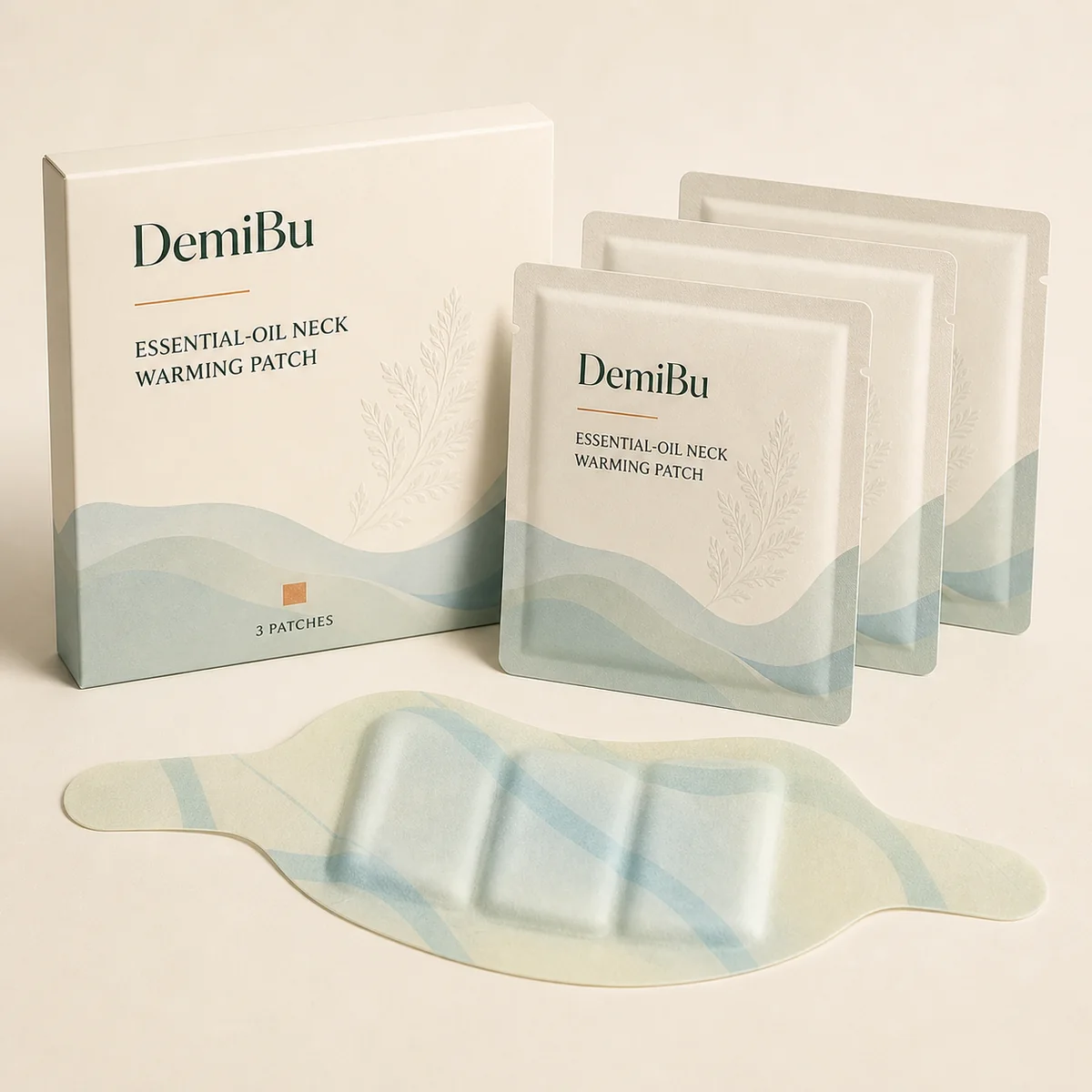
Define a US heat-patch SKU, review claims and plan a supervised, non-human bench comparison before private-label artwork and production.
Start With Product Identity, Not a Two-Path Shortcut
FDA’s own guidance says the device determination turns on intended use — what the product is for, as shown by its labeling, claims, and marketing [2]. Concretely for this category:
- The FDA product classification database includes an entry for chemical heat packs for temporary relief of pain (product code OMW) [1]. The existence of this entry shows that a heat patch is not automatically an ordinary consumer good: position a patch for pain relief and you may be in device territory.
- For a product that is not a medical device, other federal, state, import, labeling, and consumer-product obligations may still apply. The applicable set depends on the actual SKU and market; 16 CFR Chapter II is a regulatory starting point, not a classification decision [3].
“Not a medical device” is not “unregulated.” Do not infer a complete compliance route from a product photo, a factory statement, or the absence of a pain-relief claim. The temperature protocol below is only a buyer-side incoming-sample comparison; it cannot establish thermal-injury safety, skin-contact safety, biocompatibility, regulatory compliance, or market admissibility.
The practical workflow for a private-label line: lock the product definition first — formula and heating mechanism, skin-contact design, label copy, and a written claims inventory (every sentence your packaging and listings will say). Then run FDA’s determination logic per SKU [2], or engage a regulatory consultant for borderline cases. Do this before artwork is printed; changing the route after packaging is produced creates avoidable rework and inventory risk.
One more boundary worth stating: air-activated patches in the consumer channel also carry ordinary import attributes. The leading US brand’s published specification, for example, lists Harmonized Code 3005.90.9900 and ECCN EAR99 for its hand warmers [4] — a useful reference point for broker conversations, though your classification must be confirmed for your product, not copied.
Temperature Performance: A Public Reference, Not a Benchmark
For context only, one named HotHands hand-warmer product publishes the following specifications. A hand warmer is not automatically equivalent to an adhesive skin patch, so these figures must not become a benchmark, acceptance limit, or safety target for another product:
| Parameter (as published) | Value | Source |
|---|---|---|
| Average temperature | 135 °F (57 °C) | [4][5] |
| Maximum temperature | 158 °F (70 °C) | [4][5] |
| Activation time | 15–30 minutes after opening | [4][5] |
| Duration | Up to 10 hours (usage- and storage-dependent) | [4] |
| Ingredients | Iron, water, cellulose/wood fiber, activated carbon/charcoal, salt | [4][5] |
These are competitor-published figures, not a safety limit and not a specification your supplier inherits. Compare your supplier’s samples against an agreed purchase specification, but do not turn a comparison result into a safety claim. Any herbal addition must be declared and reviewed with the complete formula, skin-contact design, intended use, and claims; composition is not a marketing detail.
Supervised, Non-Human Bench Comparison
Use this only as a commercial incoming-sample comparison on production-representative units. It is a supervised, non-human bench procedure: use a sensor suitable for the temperature range and contact method, with current calibration evidence, plus a non-human fixture defined in the buyer’s quality plan. Do not use human skin, customer wear, patient use, or any clinical setting as a screen. This is not safety, biocompatibility, thermal-injury, or regulatory testing.
- Define the bench plan. Record sample IDs, batch codes, sensor identity and calibration status, non-human fixture, operator, ambient conditions, observation points, and stop conditions before activation.
- Use an appropriate non-human fixture. Position the sensor and product only as the written bench plan specifies. Do not place a patch on a person or infer skin-contact safety from a fixture result.
- Record the curve. Log the buyer-defined activation, time-to-peak, peak, sustained-temperature, and duration observations with the specified sensor and method.
- Apply stop conditions. Stop and isolate the unit if there is unexpected leakage, rupture, smoke, deformation, an abnormal odor, a sensor fault, or any condition outside the documented observation plan. Escalate the record to the supplier and qualified reviewer; do not continue to obtain a curve.
- Repeat as the quality plan requires. Compare multiple units and batches when available; a small comparison is not a statistical proof of production consistency.
- Record non-human integrity observations. Note packaging damage, leakage, and output irregularity. Do not convert adhesion or fixture observations into skin-contact safety evidence.
- Use buyer-defined commercial criteria carefully. An agreed comparison band and method may belong in a purchase specification, but they do not replace legally required testing or a product-safety assessment.
Labeling Implications by Path
Because labeling and claims are regulatory inputs, treat label copy as a regulated artifact, not marketing collateral. The points below are a scoping checklist, not a complete US compliance determination:
- Non-device scenario: identify the applicable consumer-product, import, labeling, and state requirements for the actual SKU before print. Do not rely on a generic CPSC reference as a complete checklist [3].
- FDA-device scenario: if a product-specific review places the SKU in an FDA device category, establish the applicable device obligations before launch [1][2].
- Claims inventory: preserve every proposed package, listing, and advertising claim in one review file. A warmth-oriented statement and a pain-relief statement can lead to different product analyses; do not assume wording alone settles the outcome.
The Supplier Documentation Package
Before the first production run, assemble a documentation package from your supplier that lets every later decision be made from records rather than assurances. For this category it has five components:
- Composition declaration. The full fill list — iron, carbon, salt, binder, any herbal additions — with percentages or ranges. This feeds your broker conversation, your regulatory determination [2], and your own label accuracy.
- Factory temperature records. The factory’s own curve data per batch (activation, peak, duration), which you then spot-verify with the protocol above. Records you can audit beat certificates you cannot.
- Batch traceability. A batch-coding scheme that ties shipped cartons to production runs — the thing you will need the first time a customer reports an underperforming unit.
- Packaging and instruction drafts. The factory’s default artwork and instruction text, so your regulatory review [2][3] works on the real artifact rather than a description of it.
- Change-notification commitment. A contractual clause requiring advance notice of any formula, material, or process change. In a category where composition drives regulatory analysis, a silent formula change is a compliance event, not a quality footnote.
Make these requests part of your RFQ and record what the supplier can and cannot provide. A document set is an input to qualification; it does not by itself prove product safety, compliance, manufacturing capability, or final market admissibility.
Sources and evidence notes
Public sources help frame terminology, specifications and buyer questions. They do not prove that every factory, formula or destination-market requirement is identical.
- [1]FDA — Product Classification database, product code OMW (chemical heat pack): accessdata.fda.gov (OMW)accessdata.fda.gov · regulator · accessed 2026-09-13
- [2]FDA — How to Determine if Your Product is a Medical Device: fda.gov (device determination)US Food and Drug Administration · regulator · accessed 2026-09-13
- [3]eCFR — 16 CFR (Consumer Product Safety Commission regulations; the consumer-product safety framework for general consumer products): ecfr.gov/current/title-16/chapter-IIElectronic Code of Federal Regulations · regulator · accessed 2026-09-13
- [4]HotHands Hand Warmers — published specifications (manufacturer’s official retail site): warmers.com/products/hothands-hand-warmerswarmers.com · industry · accessed 2026-09-13
- [5]HotHands 10 Pair — retail specification listing (Target): target.com listingtarget.com · marketplace · accessed 2026-09-13
- [6]Internal: Neck & Shoulder Warming PatchMoxa Sourcing · first party · accessed 2026-09-13
How this guide was prepared
Moxa Sourcing Editorial Team
The team translates supplier references, product samples and China-side sourcing workflows into practical English guidance for overseas buyers.
Moxa Sourcing Supply Review Team
The review team checks supplier attribution, commercial boundaries, product specifications and statements that require sample or market-specific verification.
Product availability, MOQ, price and production specifications are reconfirmed against the selected supplier reference. The buyer or importer leads the destination-market decision and retains applicable statutory importer duties; Moxa Sourcing supports the process by coordinating product and supplier evidence, specifications, documents, testing and label inputs, version control and agreed professional partners.