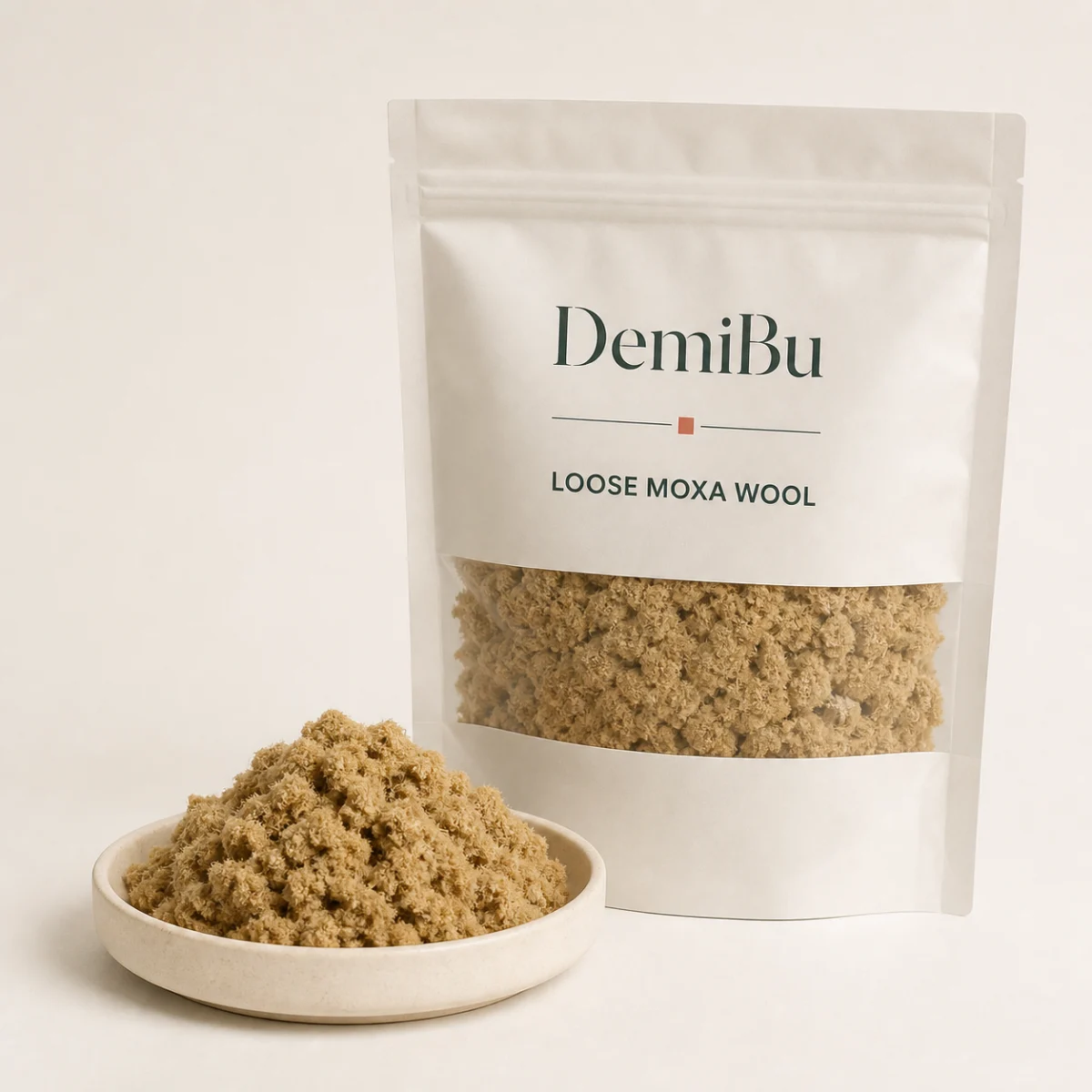
Create a repeatable loose moxa wool quality comparison using controlled samples, texture and color references, moisture methods and particle checks.
Why are grade names not enough?
The market uses ratios, colors and quality labels without one unified index, so buyers need a physical reference and defined test method.
A listing may say 10:1, golden, high quality, medium grade or aged. Those terms help organize a catalog but do not ensure equivalence between suppliers. Research on purity and growing-year identification explicitly notes the absence of a unified evaluation index. The commercial response is not to reject grades; it is to document what each grade means for the selected supplier.
MB2B-0004 begins with SKU MB2B-0004, described as 10:1 and 500 g per bag. It does not yet have an approved export sample or locked moisture and foreign-matter limits. Keep that distinction visible. The quality guide defines how to generate the missing evidence rather than pretending the supplier title is a complete standard.
Create a sample matrix with supplier, SKU, stated ratio, batch, pack, date, intended professional use and test status. Give every physical sample a code. If two bags have the same label but different batches, treat them separately until variation is understood.
Quality criteria must reflect function. Long fibers, a certain amount of fine material, color or shaping behavior may matter differently for loose professional supply, roll production or another format. The buyer should define the task before deciding what good looks like.
| Label | What it can tell you | What remains to verify |
|---|---|---|
| 10:1 | Supplier processing reference | Definition, sample and consistency |
| Golden | Market color positioning | Lighting-controlled range and function |
| Aged | Claimed material history | Traceable year evidence |
| Professional | Intended buyer positioning | Actual format and instructions |
How should samples be collected and conditioned?
Take representative portions with clean tools, preserve sealed units and record conditioning so tests can be repeated.
For a bag comparison, define where portions are taken: top, center and bottom, or a homogenized composite. Loose fibers and fines may separate during transport. A surface-only sample can misrepresent the bag. Record mass, tool, surface, container and operator.
Keep unopened retention bags from each batch. For test portions, define temperature, relative humidity and conditioning time when moisture or handling comparisons matter. Record opening time. Do not leave samples exposed for different periods and then attribute every change to the supplier.
Prevent cross-contamination. Use clean trays, sieves, containers and gloves appropriate to the method. Test one sample at a time and clean equipment between samples. Photograph labels and seals before opening and maintain a chain between the code and results.
Decide which tests are destructive. Sieving, laboratory moisture and microscopy may consume or alter material. Allocate separate portions and keep enough for investigation or supplier retest. A quality dispute is difficult to resolve when all reference material has been used.
- Representative top, middle and bottom portions
- Unopened retention unit
- Defined conditioning environment and time
- Clean equipment and sample identity
- Separate portions for destructive tests
How are texture, fiber and fines documented?
Combine controlled visual records, a handling task and—when justified—a validated sieving method.
Spread a defined sample mass to a stated depth on a contrasting tray. Use fixed camera distance, lighting and scale marker. Record visible long fibers, entanglement, fine particles, coarse pieces and unexpected material. Keep descriptive vocabulary consistent across suppliers.
Add a shaping task relevant to the buyer. Specify the mass, operator steps, target form and time. Record cohesion, shedding, spring-back and ease of separation. This is a practical comparison, not a medical-use instruction. If operator skill strongly affects the result, use multiple trained evaluators.
The published moxa-wool study used drying, extended sieving through selected mesh sizes, weighing and microscopy. It found differences in fiber and waste-particle fractions and proposed sieve sizes as a possible yardstick, while calling for larger validation. A buyer may adapt the concept but should validate its own protocol before creating contractual limits.
Photographs should not be the sole release record. Compression during packing can change appearance, and fine material can settle. Combine image, weight fraction and handling observations where those attributes matter. Define how borderline results are retested.
| Method | Strength | Limitation |
|---|---|---|
| Controlled photo | Fast visual comparison | Lighting and sampling sensitive |
| Handling task | Relevant to buyer workflow | Operator dependent |
| Sieving | Quantifies size fractions | Needs validated preparation and limits |
| Microscopy | Clarifies material features | Requires expertise and sampling control |
Sources for this section: [1]
How should color and odor be controlled?
Use physical or calibrated references and bounded sensory notes; neither color nor odor alone establishes grade or safety.
Color shifts with illumination, camera white balance, screen and sample depth. Photograph samples together under controlled light with a neutral reference. Better still, retain a sealed approved sample for physical comparison. Define an acceptable range only after reviewing normal process variation.
Market pages distinguish brown, golden and light-brown variants. That shows color is a selling and selection attribute, but it does not prove that one color is universally superior. Avoid attaching therapeutic meaning to color without evidence.
For odor, define container, sample mass, opening time, observer distance and scoring scale. Use more than one observer when practical. Record unusual, musty, burnt, chemical-like or packaging odors as investigation triggers, not automatic diagnoses.
If abnormal odor or appearance suggests deterioration or contamination, hold the lot and use a qualified analytical or microbiological method selected for the market and risk. Do not release a product because the ratio label appears correct.
- Fixed light and neutral reference
- Approved physical color range
- Defined sensory procedure
- Investigation trigger for abnormal findings
- No safety conclusion from appearance alone
Sources for this section: [3]
How is moisture measured and specified?
Name the material state, sample preparation, method, units and limit; screening observations cannot replace a quantitative result.
Clarify whether moisture applies to incoming leaf, processed loose wool or finished packed material. These are different test objects. Define whether the result is loss on drying, instrument reading or another method, and identify temperature, time and calculation where applicable.
Validate any rapid meter against an appropriate reference for this material. A device calibrated for wood, grain or another botanical may produce a number without adequate accuracy for moxa wool. If the supplier and buyer use different methods, compare them before writing a limit.
Record packaging and conditioning. A barrier bag, damaged seal or humid warehouse can affect the sample. Incoming checks should include seal integrity, condensation and carton condition. Quantitative sampling must follow the agreed plan rather than selecting only visibly dry material.
Set the limit from buyer requirements, destination considerations, approved sample data and factory capability. Do not copy a literature moisture value as the order limit merely because it concerns moxa. The cited studies answer research questions under their methods; they do not establish this project’s release specification.
| Field | Must state | Common error |
|---|---|---|
| Test object | Loose wool, roll or raw leaf | Mixing different material states |
| Method | Instrument or laboratory procedure | Reporting a number without method |
| Conditioning | Environment and duration | Comparing samples exposed differently |
| Limit | Basis and decision rule | Copying an unrelated threshold |
How are foreign matter and batch acceptance handled?
Define expected botanical fractions, prohibited material, inspection method, escalation and supplier response before production.
Foreign matter must be operationally defined. Coarse plant fragments, legitimate fine particles, packaging fibers, insects, mineral particles and unidentified debris are not the same category. Build a defect photo library and state whether findings are counted, weighed or identified analytically.
Use visual sorting for screening and sieving or microscopy when the specification requires it. If identity or contamination is uncertain, stop and send representative samples to a qualified laboratory. The inspector should not guess based on color or texture.
The acceptance plan identifies sample size, locations, critical defects, limits, retest and disposition. Wrong grade, unapproved substitution, abnormal deterioration or dangerous foreign material may stop release. Minor natural variation may be managed within the approved range. The buyer defines the rule before the supplier packs the order.
Link every result to batch and bag codes. Retain samples and issue a signed report. The supplier investigates deviations and proposes correction; the sourcing team coordinates evidence; the buyer makes the release or concession decision and controls destination obligations.
| Finding | Action | Evidence |
|---|---|---|
| Expected fine botanical fraction | Measure against validated limit | Sieve or reference sample |
| Coarse plant fragment | Classify and quantify | Photo and fraction result |
| Unknown material | Hold and identify | Qualified analysis |
| Batch mismatch | Stop release | SKU, code and change record |
Sources for this section: [1]
How is a reference library built for future inspections?
Keep sealed samples, controlled photographs, test data and defect examples by supplier, grade and batch so future inspectors compare against evidence rather than memory.
Create a reference entry when the buyer approves a material. Include supplier, SKU, ratio definition, batch, received date, pack, conditioning, photographs and every test result. Store a sealed bag and smaller protected working samples. Record storage conditions and review date.
Build a photo library for acceptable fiber and color range, coarse fragments, excessive fines, packaging damage and unknown material. Use consistent camera setup and include scale. Images are training tools; the physical sample and quantitative method remain controlling when the visual result is ambiguous.
Link the library to specification revisions. If the buyer accepts a new raw-material year, processing route or wider color range, issue a new reference rather than overwriting the old one. This preserves complaint investigation and shows why two orders differ.
Review the library before each inspection and periodically check retained samples for storage change. A deteriorated reference should not be used to approve new production. Replace it through a documented sample-approval process.
- Sealed retention and working samples
- Fixed-light photographs and scale
- Test results and method revision
- Defect examples and escalation rule
- Reference review and replacement date
How should measurement uncertainty and borderline results be handled?
Define repeat tests, equipment checks and decision authority before inspection so a borderline value does not become an argument at shipment.
Every method varies. Scales have resolution, moisture methods have repeatability, sieve recovery may not total exactly and visual scoring differs among observers. Record equipment identity, calibration status, operator and replicate values. Avoid reporting more precision than the method supports.
Create a guard process near the limit. A result within a defined review band may trigger duplicate preparation, a second operator, a larger sample or qualified laboratory confirmation. Do not average a clear failure with unrelated passing units unless the specification explicitly permits that calculation.
Investigate sample representativeness. Fine material may settle, moisture may vary after a damaged seal and one bag may not represent the carton. Retest from pre-defined locations and preserve both original and confirmatory portions. Record every result, including the one that caused the hold.
The buyer or authorized quality owner makes the final concession or rejection. The sourcing team coordinates supplier evidence, but it should not silently move the limit. Any accepted deviation is documented with affected quantity, commercial reason, customer impact and whether the next order needs corrective action.
| Borderline issue | Check | Decision path |
|---|---|---|
| Scale result | Calibration, tare and replicate | Repeat under controlled method |
| Moisture result | Preparation and sample location | Confirm with agreed reference method |
| Visual grade | Lighting, reference and second reviewer | Escalate against physical sample |
| Particle fraction | Recovery and sieve procedure | Repeat or laboratory review |
How should inspection data be trended across orders?
Track the same measurements and observations by supplier, grade and batch so drift is visible before it becomes a customer problem.
Create a compact dashboard for moisture result, net weight, key sieve fractions if used, color or visual score, shaping result, foreign-matter findings, pack defects and concessions. Display individual results and range, not only averages. A stable average can hide a widening distribution or repeated outliers.
Review trends before releasing repeat orders and before tightening specifications. If several batches move toward a limit, ask the supplier about raw material, equipment, season, storage or method changes. Do not claim a cause until evidence supports it. The trend is an early-warning signal that directs investigation.
Link complaints and returns to the same batch record. This helps distinguish one distribution event from a production shift and shows which quality attributes actually affect the buyer’s channel. Revise the test plan only through a controlled review so historical results remain comparable.
| Trend | Question | Action |
|---|---|---|
| Gradual drift | Has material or process changed? | Supplier review and comparison sample |
| Wider variation | Is process control weakening? | Increase sampling and investigate |
| Isolated outlier | Is it representative or handling damage? | Retest predefined locations |
| Complaint cluster | Which batch and attribute align? | Contain and investigate |
Sources and evidence notes
Public sources help frame terminology, specifications and buyer questions. They do not prove that every factory, formula or destination-market requirement is identical.
- [1]Quality of Moxa Wool Contained in Commercial Moxibustion DevicesPubMed · research · accessed 2026-08-27
Provides a published drying, sieving, weighing and microscopy method and explicitly notes the need for further validation.
- [2]Moxa Wool in Different Purities and Different Growing Years Measured by Terahertz SpectroscopyPubMed Central · research · accessed 2026-08-27
Discusses purity ratios, growing-year references and the absence of a unified evaluation index.
- [3]Loose Moxa Wool F-05, F-05A and F-05A1Acubest · distributor · accessed 2026-08-27
Shows market differentiation by quality, color and 500 g bag while including a professional-use caution.
How this guide was prepared
Moxa Sourcing Editorial Team
The team translates product references, product samples and China-side sourcing workflows into practical English guidance for overseas buyers.
Moxa Sourcing Supply Review Team
The review team checks supplier attribution, commercial boundaries, product specifications and statements that require sample or market-specific verification.
Product availability, MOQ, price and production specifications are reconfirmed against the selected product reference. The buyer or importer leads the destination-market decision and retains applicable statutory importer duties; Moxa Sourcing supports the process by coordinating product and supplier evidence, specifications, documents, testing and label inputs, version control and agreed professional partners.