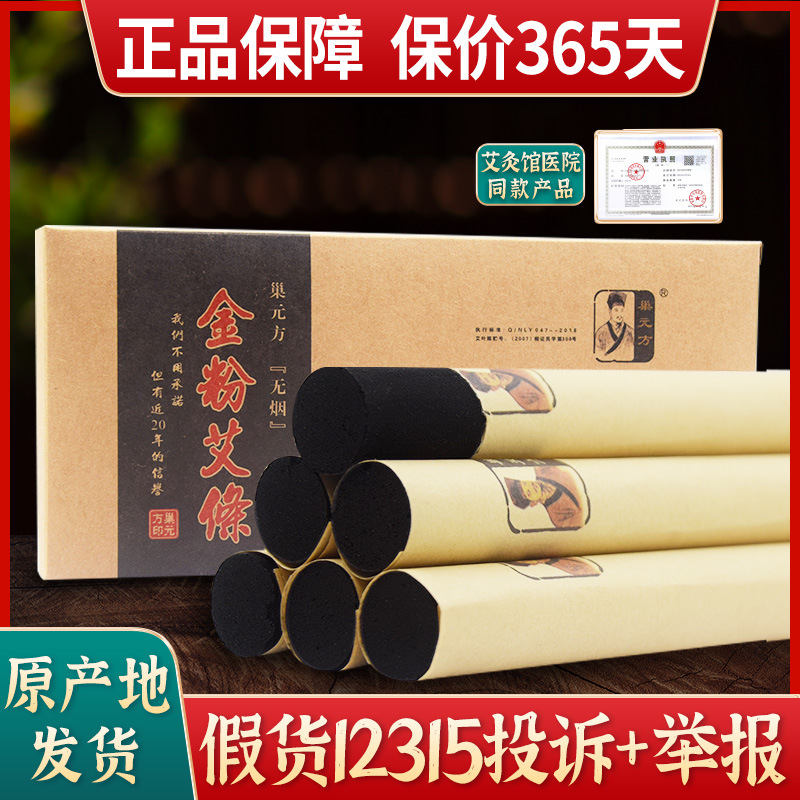
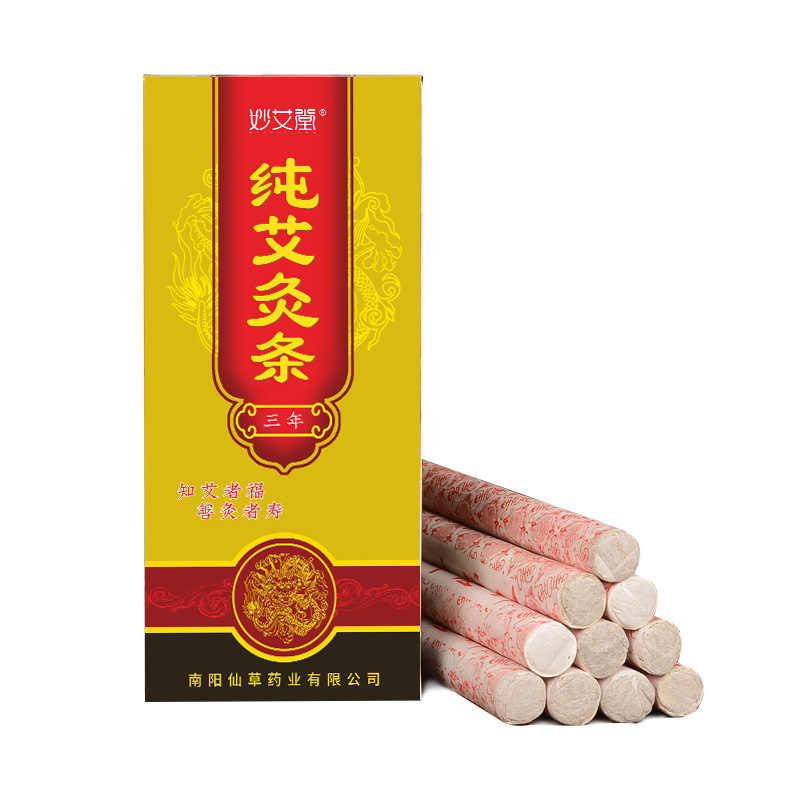
Compare smokeless and traditional moxa formats through a controlled buyer test covering smoke, odor, ignition, heat, ash, holder fit and channel use.
What is the most important difference for a buyer?
The products use different material and construction approaches, so the buyer should select by operating context and verified experience rather than assuming one is the upgraded version of the other.
Traditional pure moxa rolls are generally paper-wrapped rolls of processed moxa wool. Carbonized smokeless sticks are rigid products made through a charcoal or carbonization process and may contain a supplier-specific combination of materials. Market catalogs place both in the moxibustion family but list different dimensions and pack structures. That is a signal to compare them as distinct SKUs.
For this website, MB2B-0001 is a supplier-catalog reference described as 3:1 moxa wool, 18 x 200 mm, 10 rolls per box. MB2B-0002 is the exact GreenYing 1688 offer 626007826301 for a gold-powder smokeless moxa stick; its export dimensions, pack and performance are still open. The comparison must wait for approved samples rather than borrowing the BOENMED or DMC specifications.
The buyer question is not which type is universally better. It is which type fits the venue, holder, user expectation, price point and instruction burden. A clinic may value the familiar handling of a traditional roll in a well-managed space. A retailer may want a lower-visible-smoke option for customers sensitive to odor. A distributor may offer both and make the differences explicit.
Keep medical outcomes outside the purchasing comparison unless the responsible market pathway supports them. The comparison can address measurable product facts and observed use characteristics. Destination classification, labeling, claims and professional-use restrictions remain buyer or importer decisions.
| Dimension | Traditional pure roll | Carbonized smokeless stick |
|---|---|---|
| Construction | Processed moxa wool with paper wrap | Rigid carbonized format; composition supplier-specific |
| Market expectation | Traditional aroma and visible smoke | Lower visible smoke and odor positioning |
| Ignition | Sample-dependent | Often requires a different ignition approach; verify |
| Holder | Confirm diameter and retention | Confirm rigid-stick fit and airflow |
| Decision basis | Approved sample and specification | Approved sample and bounded comparison |
How do you design a fair side-by-side comparison?
Define the purpose, select named samples and hold every controllable environmental and procedural variable constant.
Write the decision question first. Are you comparing customer odor perception, visible smoke, time to ignite, holder fit, burn duration, heat at a stated distance, ash handling or pack economics? A test designed to answer all questions at once often records none of them well. Use separate test units and phases for physical measurement, combustion and packaging.
Number each sample and record dimensions, weight, construction and condition. Use the intended holders, because airflow and exposed surface affect burning. Establish room volume, ventilation state, background conditions, observer location, lighting, ignition tool, exposure time, test duration and extinguishing method. Photograph the setup before starting.
Run multiple units. Random variation, product damage and operator technique can affect one result. Report individual observations, range and any excluded test with a reason. If the two formats have very different sizes or weight, state whether the comparison uses one whole stick, equal mass, equal exposed length or a practical retail unit. Each method answers a different question.
Research on commercial moxa emissions uses controlled chambers and defined quantities, yet the authors still discuss product and method limitations. A buyer comparison should be even more modest. It can establish which approved sample produced less visible smoke or odor in the buyer’s setup, not certify workplace exposure or universal safety.
- State the business decision before the method
- Use named, numbered and measured samples
- Fix holder, room, ventilation, lighting and timing
- Test multiple units and report variation
- Describe limitations beside the result
How should smoke and odor results be interpreted?
Describe relative observations under the test conditions and do not convert lower sensory intensity into a zero-emission or safety claim.
Visible smoke can be recorded against a consistent background and lighting arrangement. An internal ordinal scale may help if every observer uses defined examples. Camera auto-exposure can distort images, so lock settings where possible. A particulate or gas measurement requires suitable equipment and a competent protocol; visual comparison cannot substitute for it.
Odor is subjective. Use the same observers, distance and timing, and allow the room to return to baseline between tests. Record intensity, character and persistence without implying that a pleasant or weak odor is harmless. Consider that packaging and storage can contribute background odor before the product is lit.
Carbonized products may reduce the traditional moxa aroma that some users expect. That is a channel tradeoff, not automatically a defect. A distributor can segment the assortment: traditional format for buyers who want that experience, carbonized format for buyers prioritizing lower sensory impact. Product pages and sales staff should avoid promising a result not verified for the sold SKU.
Both cited smoke studies discuss complex combustion products and ventilation. They do not show that MB2B-0001 or MB2B-0002 is safe or unsafe under a destination’s specific conditions. They support conservative instructions, ventilation planning and product-specific testing. The buyer or importer must determine applicable occupational, consumer and product rules.
| Claim | Evidence level | Responsible wording |
|---|---|---|
| Lower visible smoke | Controlled side-by-side observation | Lower than the named reference under stated conditions |
| Lower odor | Recorded sensory panel | Observers reported lower intensity in this test |
| Zero emissions | Appropriate analytical evidence | Do not claim from visual inspection |
| Safe indoors | Market-specific risk assessment | Do not infer from the term smokeless |
How do ignition, heat and burn rate differ?
They may differ materially because construction and geometry differ; measure them in the intended holder instead of generalizing from category names.
Record time and technique needed to establish the ember. A rigid carbonized stick may require sustained ignition compared with a paper-wrapped roll, but the result depends on the exact product. Note relighting, cracking or surface changes. The instructions must match the selected SKU and should be tested for comprehension.
Heat comparison needs a defined distance, holder, orientation and measurement method. Surface temperature at the stick is not the same as heat received at another point. If temperature is important to the buyer, use suitable equipment and a protocol reviewed for the intended application. Do not rely solely on hand sensation, especially for warning or safety decisions.
For burn rate, choose a measurable endpoint: length consumed over a fixed time, time to consume a defined length, or total duration to a controlled endpoint. Record starting dimensions and mass. Airflow and holder enclosure can change results, so the comparison belongs to the approved system rather than the bare stick alone.
Ash affects handling. Observe cohesion, cracking, drop frequency and where residue travels in the holder. A lower-smoke product that is difficult to ignite or incompatible with the chosen burner may not fit the channel. The decision matrix should weight every factor according to the buyer’s actual operating environment.
- Ignition tool and time to stable ember
- Holder, orientation and exposed length
- Heat measurement location and method
- Burn-rate endpoint and units
- Ash containment and extinguishing procedure
Which format fits clinics, homes and retail programs?
Channel fit depends on ventilation, user competence, holder control, instruction quality and customer expectation, not simply on the word smokeless.
Clinic and practitioner suppliers should ask how the product fits established equipment and procedures. They may prioritize repeatable supply, batch identity, professional instructions and ash control. A lower-smoke option can be useful where odor management matters, but the operator still needs ventilation and fire-risk controls appropriate to the setting.
For home and portable programs, instructions and foreseeable misuse become central. The buyer should evaluate stable placement, supervision, clearance from combustible materials, extinguishing and storage. If the product is marketed with a holder, approve the combined kit and its instructions. Do not present portability as permission to use the product in unsuitable enclosed spaces.
Retail buyers must also consider expectations. Traditional rolls and carbonized sticks may look, smell and light differently. Clear product naming, photographs and comparison language reduce returns. If a customer expects no visible smoke because of the word smokeless, the label may create disappointment or risk. Prefer bounded wording supported by the actual product test.
The buyer or importer decides whether the product is sold for professional use, general wellness use or another classified purpose in its market. That decision affects instructions, claims, distribution and evidence. The China-side factory cannot determine the final legal pathway for every country.
| Channel | Priority questions | Evidence |
|---|---|---|
| Practitioner supply | Holder fit, ventilation, repeatability | Approved sample and professional workflow |
| Home program | Instructions, supervision and extinguishing | Comprehension and system test |
| Retail | Expectation, pack and returns risk | Accurate comparative wording |
| Private label | Claims and destination classification | Buyer-approved market review |
How should a distributor build the assortment and quotation?
Treat the two formats as separate platforms with their own specifications, samples, packaging and buyer education, then price each against a locked scope.
Start with two approved references, not a broad category promise. For traditional moxa, confirm the MB2B-0001 size, grade and pack. For carbonized moxa, confirm the exact MB2B-0002 offer, dimensions, composition, pack and holder. Create a one-page comparison using observed facts and explicit pending fields.
Decide whether both products share a brand architecture. They may use common typography and sourcing information while keeping distinct instructions, warnings, color cues and product descriptions. Avoid describing carbonized moxa as premium solely because it may have a higher unit cost. Explain the operational difference that matters to the buyer.
Quote MOQ per SKU and per artwork. Packaging-component minimums, breakage protection and inserts can differ. If the distributor wants a mixed test order, ask which parts can use existing packaging and which need English labels. Keep the private-label development cost separate from product price.
Build sales training around questions rather than claims. Staff should ask where the product will be used, which holder is owned, how important smoke and odor are, and whether the buyer is a professional distributor or retail brand. This directs the inquiry to a sample and specification instead of a generic recommendation.
- One canonical specification per format
- Separate samples and performance records
- Accurate comparison language
- MOQ and packaging by SKU
- Sales questions tied to operating context
What conclusion can the comparison responsibly support?
It can identify the better-fit sample for a defined buyer situation; it cannot establish universal superiority, medical performance or destination compliance.
A responsible report concludes with conditions. State which sample, holder, room, ventilation and method were used. Present measured values and sensory observations separately. Identify limits, unexpected events and any further laboratory or market review required. Attach the report to the approved sample record.
If the smokeless sample produces lower visible smoke and odor in that setup but takes longer to ignite, say both. If the traditional roll offers more familiar handling but requires stronger odor management, say that. Balanced results create trust and help distributors segment customers instead of forcing one universal winner.
The next step is commercial. Confirm product and pack specifications, MOQ, lead time, inspection and handoff. The factory manufactures to the written reference. The sourcing team coordinates comparison samples and production checkpoints. The buyer or importer approves destination classification, warnings, clearance and final marketing claims.
For this project, no final comparison result is published yet because the exact export samples have not been locked. The website provides the method and the traceable source references. Results should be added only after the test record exists and has been reviewed.
| Conclusion type | Allowed now? | Next evidence |
|---|---|---|
| Formats differ in construction and market positioning | Yes | Public product sources |
| One sample showed lower smoke in a named test | After testing | Controlled comparison record |
| One format is safe in all indoor settings | No | Market-specific risk assessment |
| One format is medically superior | No | Applicable classification and evidence pathway |
How should the comparison be presented to customers and sales teams?
Publish a neutral choice guide that names practical differences, conditions and limitations rather than declaring a universal winner.
Create a short matrix using only approved facts: construction, confirmed dimensions and count, compatible holder, ignition approach, observed smoke and odor comparison, ash handling and pack. Link every value to the product specification or comparison report. Leave unknown fields blank or marked pending instead of filling them with typical market values.
Train sales staff to ask context questions: Where will the product be used? Which holder is available? Is traditional aroma acceptable? Is the buyer supplying clinics or retail customers? Does the buyer need an existing pack or private label? The answers determine which sample to offer and which instructions or quotation path follows.
Set expectations about the term smokeless. Use language such as carbonized, designed for lower visible smoke, with performance confirmed on the selected sample. Avoid photographs or demonstrations that imply zero emissions. Present ventilation, supervision and holder requirements consistently for both formats.
Review the guide when the supplier, composition, dimensions, holder, packaging or test method changes. A comparison is part of product control, not permanent marketing copy detached from the sold SKU.
- Use approved product facts only
- Show tradeoffs beside benefits
- Ask channel and holder questions
- Link claims to the named comparison
- Update after any controlled change
How can the comparison improve future sourcing?
Preserve the method and raw observations so a future supplier or batch is tested against the same decision, not against a remembered impression.
Store sample codes, measurements, room and ventilation conditions, holder, ignition, photographs, observer notes and result ranges. When a supplier changes or a new format is evaluated, repeat the controlled comparison and show both benefits and tradeoffs. A consistent archive makes sales wording more accurate and helps the buyer identify whether a complaint reflects product variation, a different holder or a changed operating environment.
Sources and evidence notes
Public sources help frame terminology, specifications and buyer questions. They do not prove that every factory, formula or destination-market requirement is identical.
- [1]
GreenYing Gold-Powder Smokeless Moxa Stick Offer 6260078263011688 · marketplace · accessed 2026-08-27
Exact source reference for the carbonized MB2B-0002 comparison candidate; final export specification remains sample-confirmed.
- [2]
Smokeless Moxa StickBOENMED · manufacturer · accessed 2026-08-27
Provides a concrete carbonized market example and dimensions, composition language and pack count for that supplier’s product.
- [3]
Acupuncture Needles and TCM Products CatalogDMC · distributor · accessed 2026-08-27
Shows both pure and smoke-free moxa formats with varied dimensions and counts.
- [4]
Safety Recommendations for Moxa Use Based on Substances Produced During Commercial Indirect MoxibustionPubMed Central · research · accessed 2026-08-27
Describes controlled emission testing and cautions against transferring results between products and environments.
- [5]
Analysis of the Components in Moxa Smoke by GC-MS and Preliminary Discussion on Toxicity and Side EffectsPubMed Central · research · accessed 2026-08-27
Documents the complexity of moxa combustion products and recommends ventilation; it does not evaluate the two project SKUs.
How this guide was prepared
Moxa Sourcing Editorial Team
The team translates supplier references, product samples and China-side sourcing workflows into practical English guidance for overseas buyers.
Moxa Sourcing Supply Review Team
The review team checks supplier attribution, commercial boundaries, product specifications and statements that require sample or market-specific verification.
Product availability, MOQ, price and production specifications are reconfirmed against the selected supplier reference. The buyer / importer remains responsible for destination classification, registration, final claims and customs clearance.