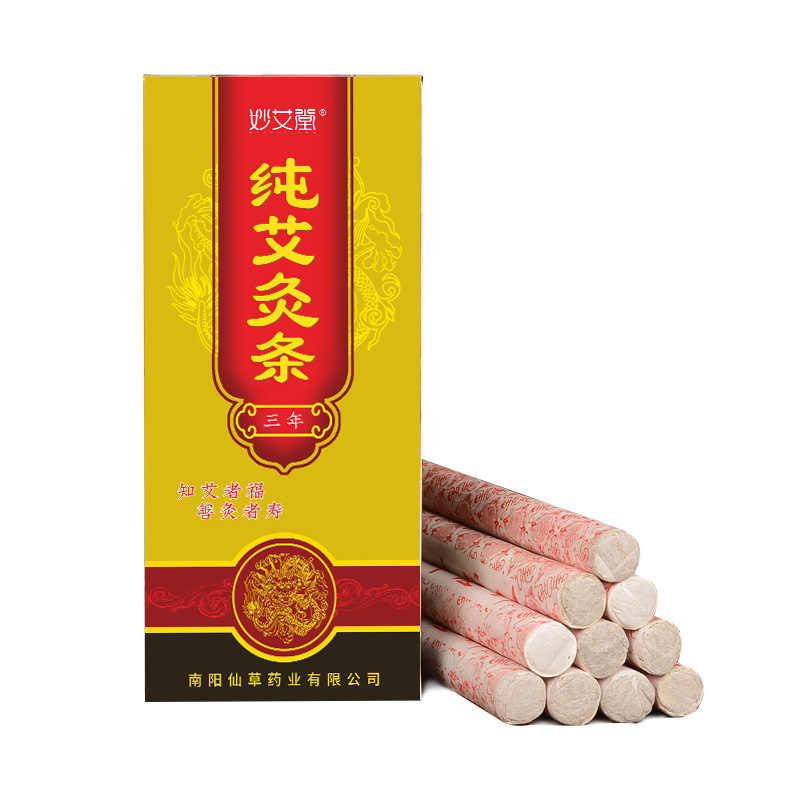
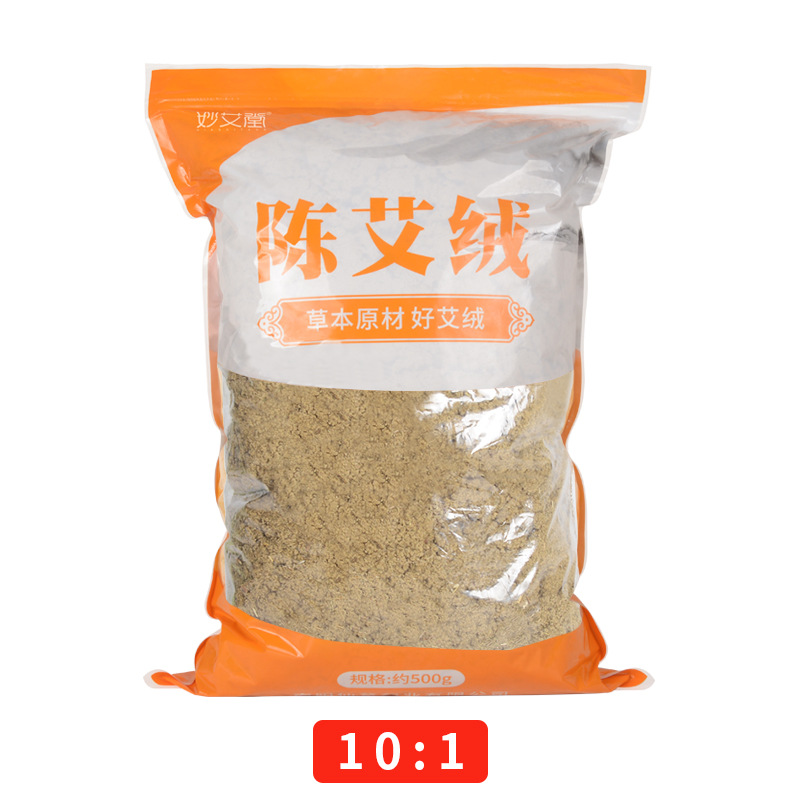
Compare pure moxa roll grades, dimensions, packing, sample tests and MOQ drivers before requesting a wholesale or private-label quotation.
What does a wholesale buyer actually need to define?
A usable wholesale brief defines the physical product, the commercial pack and the acceptance method. The label pure moxa roll is a category name; it is not a complete purchase specification.
The market uses overlapping names such as moxa roll, moxa stick, pure moxa, traditional moxa and mugwort roll. Distributor catalogs also show several finished lengths, diameters, pack counts and descriptions within the same family. That variety is useful evidence of market breadth, but it means a buyer cannot compare two supplier prices until both quotations refer to the same finished object. A lower price may represent a thinner roll, a different pack count, a different moxa-wool reference or less demanding packaging.
For this project, the current traceable supplier reference is MB2B-0001: a 3:1 moxa-wool reference, 18 x 200 mm, packed 10 rolls per box and 100 boxes per master carton. Those are starting facts from the supplier catalog record, not a promise that every future order will use the same configuration. Availability, net and gross weight, carton dimensions, current MOQ and the export sample still have to be reconfirmed when a buyer submits a real requirement.
The purchasing brief should state the target channel as well as the product. A clinic-supply distributor may prioritize consistent handling, clear professional instructions and reliable replenishment. A private-label retail brand may place more weight on compact shelf presentation, translated warnings, barcode placement and master-carton efficiency. The same factory platform can serve both channels, but the pack, artwork and quality plan will not be identical.
A competent sourcing discussion therefore begins with five anchors: intended buyer and channel, target dimensions and grade reference, unit and case packing, sample tests, and destination responsibility. Price follows those decisions. Starting with price encourages suppliers to fill missing assumptions themselves, which creates apparently attractive quotations that are difficult to compare and expensive to correct later.
- Name the exact supplier reference or send a comparison link
- State the intended channel and destination market
- Define the finished roll and pack before requesting price
- Separate existing-SKU wholesale from private-label development
How should grades and moxa-wool ratios be interpreted?
Treat a stated ratio as a supplier-defined processing reference until the factory explains its calculation and the approved sample establishes the commercial standard.
Buyers often see ratios such as 3:1, 5:1, 10:1 or higher attached to moxa wool and products made from it. In trade conversations, the ratio usually communicates how much starting leaf material is associated with the resulting processed wool. However, suppliers may describe processing yield, screening intensity, aging and color with different internal terminology. A ratio by itself does not tell the buyer the fiber length, dust level, rolling density, moisture condition or finished burn behavior.
Ask the supplier to describe the grade in operational language. What raw material and harvest reference is used? Is the stated ratio calculated from incoming dried leaf to finished wool, and how is waste measured? What screening steps remove coarse particles? Is an aging year claimed, and can that claim be traced to batch records? Which grade was actually used in the sample and which grade will be written into the purchase specification? These questions turn a marketing label into an auditable conversation.
The correct commercial control is an approved sample linked to a written grade reference. Photographs help document color and visible texture but cannot establish moisture, internal density or combustion behavior. Keep a sealed retention sample from the approved lot, record its supplier code and date, and define which measurable attributes will be checked on production. If a supplier proposes a new ratio or raw-material batch, require a comparison sample before accepting the substitution.
Do not convert a higher ratio directly into an unsupported claim of better therapeutic effect. For B2B purchasing, the defensible question is whether the chosen grade produces the handling, aroma, smoke, ash and burn characteristics required by the buyer’s channel under the agreed test conditions. Product classification and end-user claims depend on destination rules and remain the buyer or importer’s responsibility.
| Grade question | Evidence to request | Commercial decision |
|---|---|---|
| What does the ratio mean? | Supplier calculation and processing description | Use the same definition in every quotation |
| Which material is in the sample? | SKU, batch or written grade reference | Lock the approved reference |
| Is aging stated? | Traceable supplier record and sample identity | Do not publish an unverified year |
| Does a higher ratio perform better? | Side-by-side handling and burn observations | Choose by required performance, not number alone |
Sources for this section: [2]
Which size and packing details belong in the quotation?
Specify diameter, length, weight tolerance, rolls per inner pack, inner packs per carton and every packaging component that changes MOQ or freight.
Finished dimensions affect holder compatibility, use time, perceived value and case utilization. The DMC catalog, for example, lists multiple pure and smoke-free formats with different lengths, diameters and piece counts. Those market examples are not specifications for MB2B-0001; they demonstrate why the buyer must write the selected measurement into the request for quotation instead of assuming that all moxa rolls are interchangeable.
For the current MB2B-0001 reference, use 18 x 200 mm and 10 rolls per box as the starting point. Before ordering, confirm how the factory measures diameter, what tolerance applies after wrapping, whether length includes any end treatment, the target unit weight and the allowed variation. A roll can meet nominal dimensions while differing materially in density. Weight and density observations should therefore be recorded with the dimensions rather than treated as unrelated quality checks.
Packing needs equal detail. List the immediate wrap, moisture barrier if any, inner box material, pieces per box, boxes per carton, carton board grade, carton dimensions, carton weight, shipping marks and pallet requirements. If the buyer needs retail barcodes, lot codes, dates, importer details or multilingual instructions, place them in the artwork and pack specification. Do not assume the factory’s domestic pack is suitable for the destination market.
MOQ should be split into product MOQ and packaging-component MOQ. An existing supplier pack may support a smaller test order, while a printed box, insert, foil or special paper can impose a higher minimum. Ask whether excess printed components will be stored, charged, shipped or discarded. This prevents the common situation in which the quoted production quantity is acceptable but the buyer unknowingly funds several future orders of packaging inventory.
- Finished diameter, length, unit weight and tolerances
- Rolls per box and boxes per master carton
- Inner wrap, carton material and moisture protection
- Barcode, lot code, dates, origin and importer fields
- Product MOQ, printed-component MOQ and excess-material ownership
Sources for this section: [1]
How should the reference sample be tested before price approval?
Test several units under recorded conditions and compare density, ignition, burn time, ash, smoke, odor and packaging integrity without turning sensory observations into universal claims.
A single attractive sample is not enough. Request enough units to test normal variation and keep an untouched retention set. Record the sample code, date received, pack condition and visible dimensions. Weigh and measure multiple rolls, calculate the observed range and note paper seams, end finish and any loose material. The purpose is not to create a laboratory certification from a desk test; it is to establish whether the sample is consistent enough to become the commercial reference.
Combustion observations require a fixed method. Use the same holder, ignition approach, room size, ventilation state, observation distance and timing for each candidate. Record time to stable burn, total observed burn time, whether the ember remains even, how ash holds or drops, visible smoke and residual odor. Do not publish a statement such as low smoke or long burn unless the comparison method and reference product are identified.
Research on commercial indirect moxa has shown that emissions and volatile-organic-compound profiles can differ among products, and the paper explains that chamber size and ventilation affect interpretation. That does not establish the safety or superiority of a specific wholesale roll. It supports a more modest procurement conclusion: smoke observations are product- and condition-dependent, so the buyer should preserve the test conditions and avoid transferring results from one sample to another.
Packaging is tested at the same stage. Check whether the wrap loosens, whether the box protects the roll ends, whether printed instructions remain legible and whether the carton survives the intended distribution route. If the destination or sales channel requires specialized product testing, the buyer or importer should define the applicable method and acceptance criteria before production so that the factory and inspection party can quote the same scope.
| Check | Record | Do not assume |
|---|---|---|
| Dimensions and weight | Values from several numbered units | Nominal size proves density |
| Burn behavior | Holder, room, ventilation and timed observations | One unit represents every batch |
| Smoke and odor | Reference product and observation method | A sensory label is a universal result |
| Packaging | Unit, inner and shipping-pack condition | Domestic packing is export-ready |
Sources for this section: [3]
What determines MOQ and the final wholesale price?
MOQ and price are outputs of the selected product, packaging, inspection, documents and delivery terms; they should not be copied from an unrelated marketplace listing.
For an existing supplier SKU, the factory may be able to quote from current materials and a standard packing line. The buyer still needs to ask whether the quoted quantity is per SKU, per grade, per printed design or per shipment. Mixed-SKU supply may reduce inventory risk, but only if each component minimum and carton rule is clear. A statement such as MOQ 100 boxes has little value until the exact box count, grade, dimensions and packaging are attached to it.
Private label adds artwork preparation, printing setup, proofing, packaging purchase and approval time. Changing the roll diameter, density or paper can create a product-development MOQ rather than a simple branding MOQ. Inspection and testing also affect cost: define whether the quote includes a factory pre-shipment check, a third-party inspection, retained samples or destination-specific laboratory work. Each item should appear as an agreed deliverable, not as a vague promise that everything is included.
Delivery terms change the comparison again. Ask for currency, tax treatment, payment schedule, production lead time after approval, Incoterm, named handoff location and quotation validity. The buyer or its appointed forwarder normally manages the destination import process unless a separate service is explicitly contracted. A China-side supplier can provide agreed production documents, but it should not promise destination clearance without identifying the responsible importer and local requirements.
The practical way to compare suppliers is to issue one quotation sheet with locked fields. Suppliers may offer alternatives, but each alternative should occupy a separate line. This preserves the commercial reason behind a lower price and prevents accidental substitution during negotiation. The lowest useful quotation is the lowest price that still matches the approved sample, written specification and responsibility matrix.
- Existing SKU or changed product
- MOQ per SKU, grade, design and packaging component
- Artwork, proofing and excess packaging inventory
- Inspection, testing and retention samples
- Incoterm, handoff point, payment and validity
Which supplier questions should be answered before an order?
A supplier should be able to identify the exact material and pack being quoted, explain what can change, disclose what is not yet confirmed and accept measurable production references.
Begin with identity: What factory or production unit makes the selected roll? What is the internal SKU? Which moxa-wool ratio and raw-material reference are used? Are any other botanicals, binders, papers or processing aids present? Which facts come from the current production record and which are sales descriptions? The buyer does not need exaggerated factory storytelling; it needs a traceable chain from sample to purchase order.
Then test change control. Can the factory keep the approved diameter, length, weight range, density and paper? What triggers a new sample? How are raw-material, paper or packaging substitutions approved? Which batch and carton records can be provided? If the supplier cannot state how a production change reaches the buyer for approval, a good first sample does not provide repeat-order confidence.
Finally, define the commercial handoff. Confirm MOQ, lead time, packing, inspection access, defect resolution, export delivery point and documents that will accompany the shipment. The buyer should separately confirm tariff classification, import eligibility, required warnings, final label and claims with its importer or qualified market adviser. This division is not a weakness; it prevents the factory from making a destination-market promise it is not positioned to control.
For MB2B-0001, the next defensible step is a product and packaging sample against the known 3:1, 18 x 200 mm, 10-roll reference, followed by a written comparison sheet. Once the sample, quantity and destination brief are approved, the sourcing team can obtain a private quotation without publishing factory pricing or implying that an unverified grade, aging statement or burn result is already settled.
| Decision gate | Minimum evidence | Release condition |
|---|---|---|
| Shortlist | Supplier identity and exact reference | Candidate can answer specification questions |
| Sample | Numbered units and recorded observations | Buyer approves or requests revision |
| Quotation | Locked product, pack, quantity and handoff | Commercial terms are comparable |
| Production | Approved sample and written specification | Change-control and inspection rules accepted |
Sources and evidence notes
Public sources help frame terminology, specifications and buyer questions. They do not prove that every factory, formula or destination-market requirement is identical.
- [1]
Acupuncture Needles and TCM Products CatalogDMC · distributor · accessed 2026-08-27
The catalog shows that commercial moxa rolls are differentiated by dimensions, unit count, origin-style descriptions and heat positioning, illustrating why a buyer must specify more than a generic product name.
- [2]
Moxa Product Supply CategoriesWormwood Net · manufacturer · accessed 2026-08-27
The supplier site presents pure moxa sticks, smokeless sticks, moxa wool, patches and boxes as separate sourcing categories and advertises wholesale and OEM pathways.
- [3]
Safety Recommendations for Moxa Use Based on Substances Produced During Commercial Indirect MoxibustionPubMed Central · research · accessed 2026-08-27
The controlled chamber study found product-to-product differences in emissions and explains why smoke-related observations must state the product, room and ventilation conditions.
How this guide was prepared
Moxa Sourcing Editorial Team
The team translates supplier references, product samples and China-side sourcing workflows into practical English guidance for overseas buyers.
Moxa Sourcing Supply Review Team
The review team checks supplier attribution, commercial boundaries, product specifications and statements that require sample or market-specific verification.
Product availability, MOQ, price and production specifications are reconfirmed against the selected supplier reference. The buyer / importer remains responsible for destination classification, registration, final claims and customs clearance.