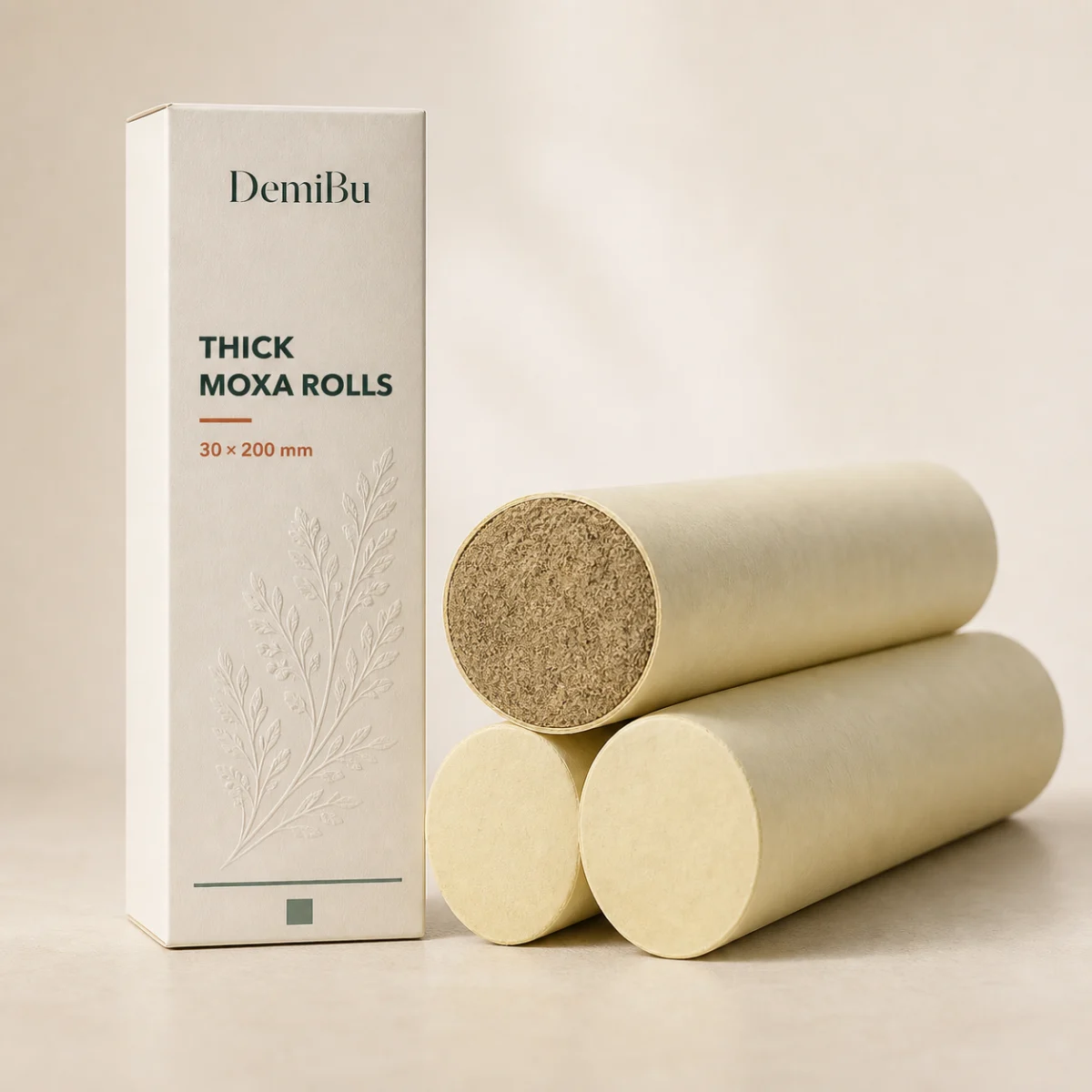
Compare moxa rolls, wool, cones, adhesive units and carbonized sticks by use method, geometry, combustion evidence, compatibility and pack economics.
Start with the procedure, not the supplier catalogue
The same distributor may need several consumable forms because each supports a different handling pattern, method and replenishment cycle.
A catalogue grouped only by supplier names makes comparison difficult. One source may call a cylinder a stick, another a roll, while a distributor may use cigar. The buyer needs a method-first map: what is lit, how it is held or positioned, whether it fits another object, where ash moves, and how the user replenishes it.
Our public range contains pure rolls, carbonized sticks, stick-on units, loose wool, standard cones, blended cones and large equipment consumables. These are not decorative variants. They create different questions about grade, geometry, ignition, adhesive bases, tool fit and supervision. A concise opening assortment is more credible than a wall of near-identical boxes.
Yamasho and Issosa catalogues show how professional sellers separate loose floss, adhesive units, hollow formats, rolls and applicator-specific pieces. The useful lesson is taxonomy, not their therapeutic wording. Each form earns its own specification because one generic moxa checklist cannot control all of them.
The buying team should name the intended user and setting before requesting price. A clinic-supply distributor, a specialist retailer and a buyer repacking bulk material face different pack, instruction and traceability demands even when the botanical source is similar.
| Format | Handling pattern | Specification core | Commercial implication |
|---|---|---|---|
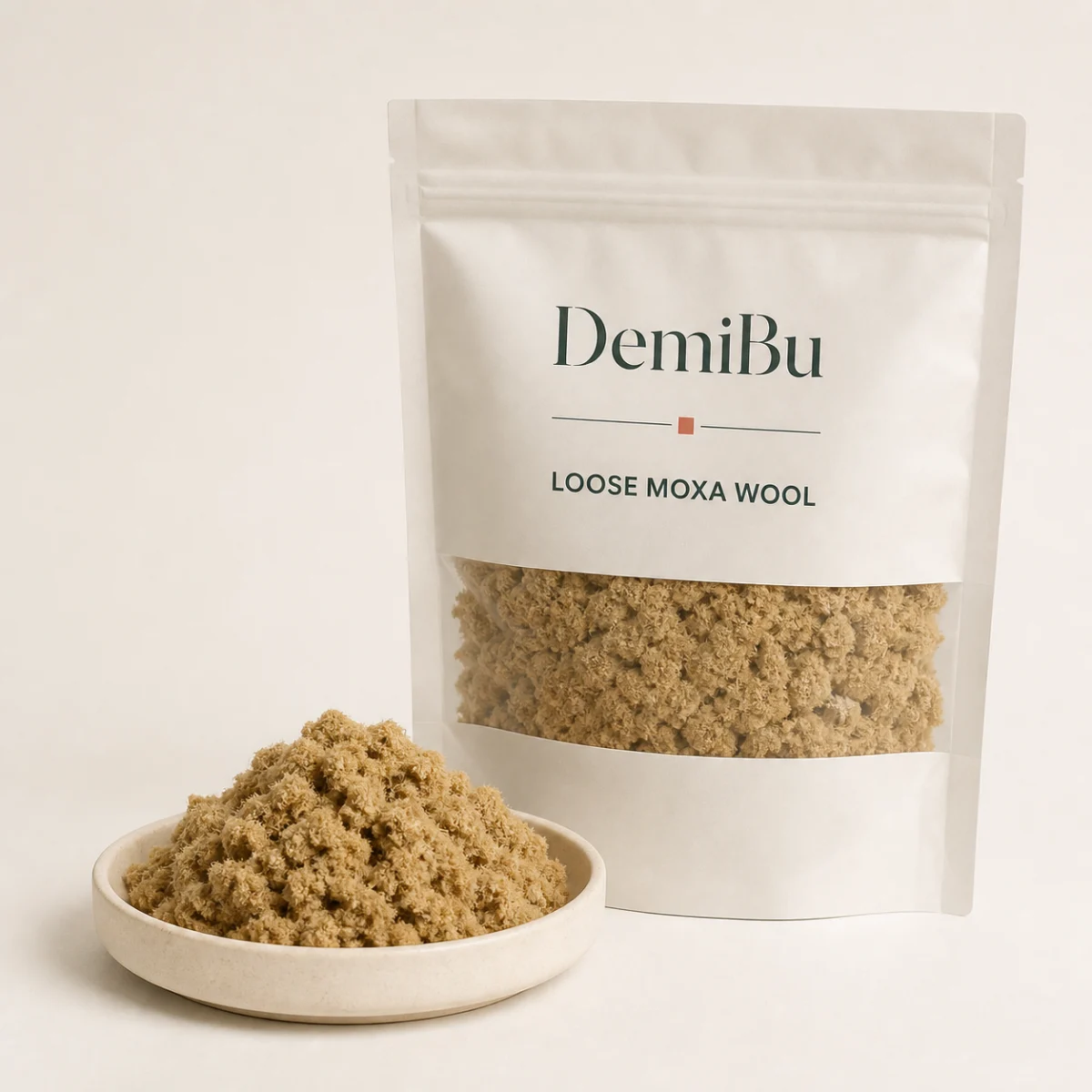
| Loose floss | Hand-shaped or practitioner-portioned material | grade definition, texture, moisture, foreign matter and bulk weight | Maximum technique flexibility; strongest handling and repacking controls. |
| Pure rolls | Hand-held continuous combustion | wool basis, diameter, length, density, wrapper, ignition and ash | Simple replenishment; dimensions and burn behavior must remain paired. |
| Carbonized sticks | Lower-visible-smoke assortment | carbonization or blend, geometry, ignition, residue and holder fit | A different experience, not an emission-free equivalent. |
| Stick-on units | Preformed adhesive-base format | unit geometry, base construction, heat option, count and removal directions | Convenience depends on assembly consistency and instructions. |
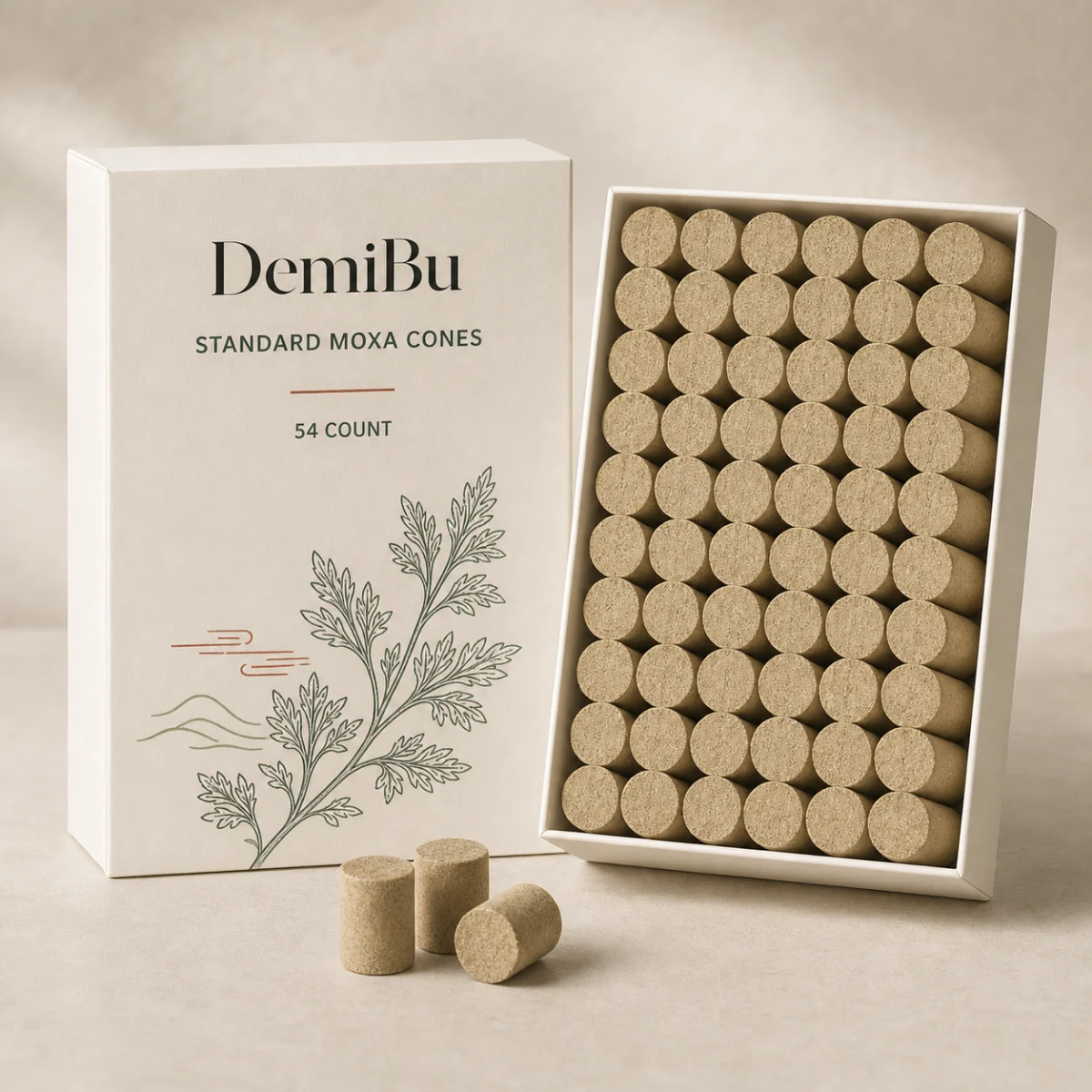
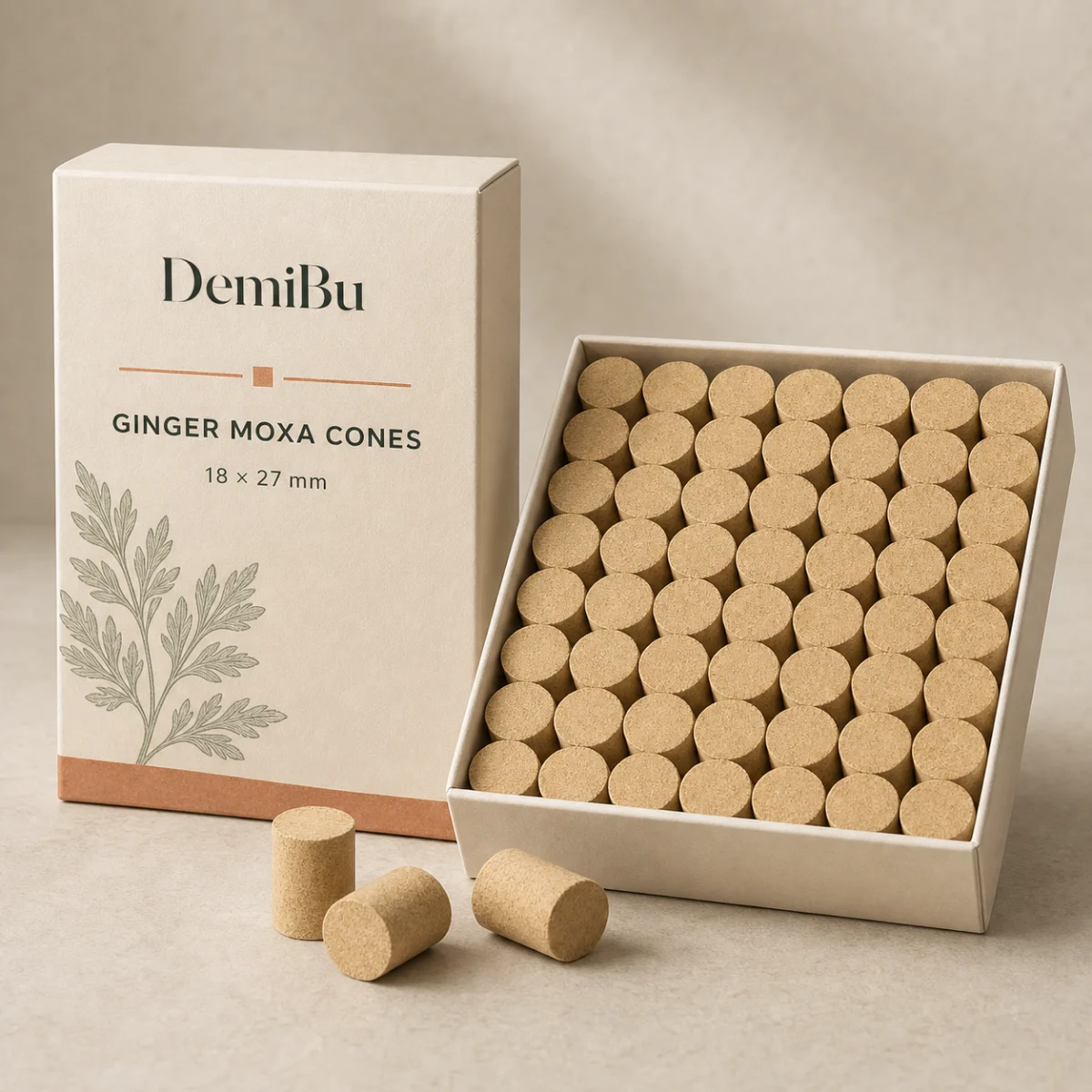
| Standard cones | Counted retail or professional packs | wool grade, height, base diameter, weight, shape and count | 54 and 108 counts can serve different channel economics. |
| Specialty consumables | Blended, large or equipment-specific formats | full composition, dimensions, burn profile and named equipment | Project-led until terminology becomes measurable. |
Build a range with core, comparison and project-led roles
The assortment should explain why every SKU exists and what decision it helps the buyer make.
The core layer contains repeatable forms with clear replenishment: a pure roll, one carbonized alternative, loose wool and a standard cone pack. Together they cover several buyer conversations while keeping sample work focused on material, smoke, ash, burn and handling.
A comparison layer exposes a meaningful trade-off. Examples include 54 versus 108 cones, traditional versus carbonized sticks, or loose wool versus preformed cones. The second SKU must answer a different purchase need; changing only color or supplier packaging creates inventory without new value.
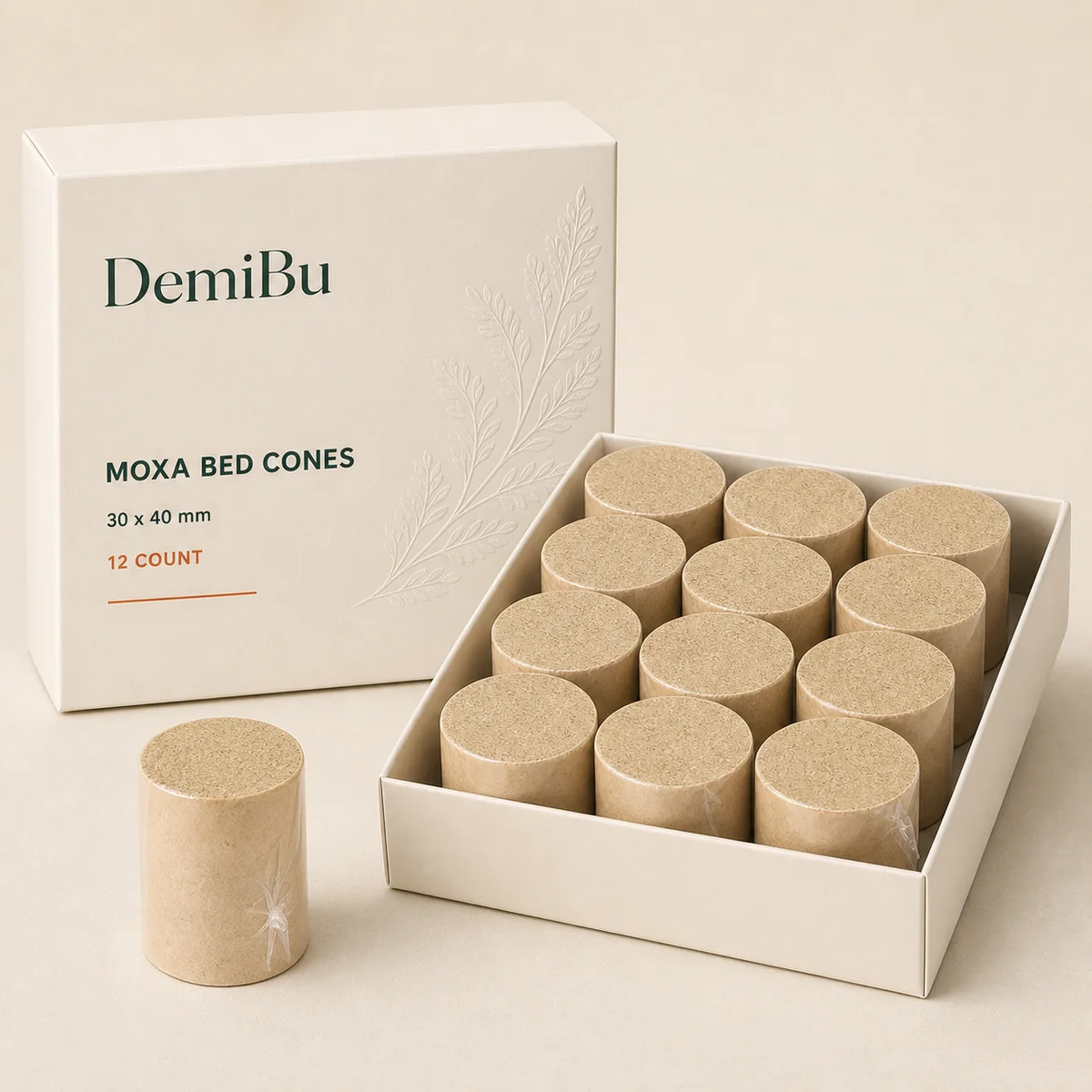
Specialty blends, thunder-fire terminology, moxa-bed cones and thick rolls belong in project-led development until composition, geometry or equipment context is explicit. Public visibility is useful for qualified inquiries, but active outreach should not imply that unresolved formats are ready for every buyer.
Pack architecture follows consumption cadence. Clinics may value larger counts and stable lot codes. Retailers need smaller units and instructions. Repackers require bulk identity plus buyer-side controls after opening. These economics should be planned before a per-piece comparison.
The site can support multiple discovery paths without duplicating the product. Category pages explain physical form; clinic, portable and low-smoke pages explain use constraints; the canonical SKU page retains the facts. That keeps search intent and procurement records aligned.
- Core products support recurring demand.
- Comparison products expose a real trade-off.
- Project-led products require new evidence before promotion.
- A new SKU needs a distinct workflow, price position or replenishment role.
Turn grade language into a material-and-burn record
Ratios and aging references are useful only after the supplier defines them and the selected sample demonstrates the intended behavior.
Moxa wool labels are not automatically harmonized. A ratio may describe raw leaf input relative to finished floss, but calculation and processing losses differ. Aging might refer to harvest, raw-material storage or finished product. Record the supplier’s basis rather than treating the number as a universal ranking.
Physical review starts before ignition. Compare color under controlled light, fiber texture, uniformity, foreign matter, moisture method, unit weight and density. For rolls and cones, measure several units. For loose wool, assess shaping and bulk-pack condition. Appearance alone cannot prove grade or performance.
Combustion comparisons require equal conditioning, unit geometry, ignition, room volume, ventilation, observation points and extinguishing. Record time to stable burn, duration, visible smoke, odor character, ash retention and unusual behavior. Sensory notes are bounded observations, not laboratory emissions data.
Retain sealed approved references. When production arrives, compare it with a dated sample and written tolerances instead of memory. If burn behavior drives the commercial choice, define how many units are tested, which result matters and what happens when variation exceeds the limit.
A supplier may improve one characteristic while changing another. Finer material can affect density; carbonization changes ignition and residue; a thicker roll changes duration and holder fit. The specification should preserve the complete product balance rather than rewarding a single headline attribute.
| Evidence | Establishes | Does not establish |
|---|---|---|
| Supplier definition | Meaning of ratio, age and grade for that source | Universal quality order |
| Controlled physical review | Texture, dimensions, weight and visible condition | Identity or efficacy by appearance |
| Recorded burn test | Behavior under named conditions | Safety in every room or technique |
| Retained sample | Comparison anchor for production | Automatic conformity of all units |
Treat tool fit as part of consumable identity
A dimensionally acceptable roll or cone can still fail the holder, box, pot or bed used by the buyer.
Compatibility should name both sides. Put consumable diameter, length, retention and burn orientation beside the holder opening, chamber, screen and clearance. Universal-fit wording should be reserved for combinations actually evaluated, not assumed from photographs.
Large moxa-bed cones illustrate the risk. They are not merely enlarged standard cones: tray dimensions, airflow, load and ash collection affect use. Thick rolls face similar constraints when a burner accepts a narrow diameter. Equipment photographs and critical dimensions belong in the RFQ.
A kit assembled from different specialist factories can be commercially sound. Moxa Sourcing must coordinate the interface sample, component IDs, instructions and pack-out. The tool maker and consumable producer keep their production responsibilities; neither should be misrepresented as making the other component.
Compatibility results belong in structured product data. A tested, conditional and not-tested matrix helps distributors recommend replenishment and prevents warehouse substitution. Re-evaluate the pair after material, screen, chamber or consumable geometry changes.
Do not overlook extinguishing. A product that fits during burning may be difficult to remove or extinguish with the intended accessory. The evaluation should follow the complete operating sequence and record ash or residue that could affect the tool.
- Identify exact tool and consumable IDs.
- Measure critical interfaces on multiple units.
- Observe draft, retention, ash and removal.
- Approve the combination sold to the buyer.
- Re-test whenever either side changes.
Inspect the defect that would destroy a reorder
QC should protect identity, count, material consistency, combustion and pack integrity rather than pursue a vague premium score.
For loose wool, high-value defects include wrong grade, moisture shift, foreign matter, damaged bulk packaging and lost lot identity. Rolls add diameter, length, wrapper, straightness and count. Cones add geometry and breakage. Stick-on units add adhesive-base construction and assembly.
Sampling should reflect carton structure. One retail box cannot verify a shipment. Draw units across cartons and positions, preserve lot identity, and distinguish non-destructive checks from ignition tests. When a laboratory test is required, agree the method and decision owner before production.
Artwork accuracy matters, but it cannot replace product truth. A correct English carton around inconsistent units remains a failed order. Conversely, natural botanical color variation should not be rejected when it falls within the approved reference and does not affect agreed criteria.
Nonconformity handling should identify containment, evidence, disposition and corrective action. The factory addresses verified production deviation. Moxa Sourcing coordinates records and buyer decisions. The importer determines whether a deviation has destination-market consequences.
Inspection points need tolerances. Exact botanical uniformity may be unrealistic, while wrong unit count is binary. Classify defects by commercial impact so an inspector does not spend the same effort on a minor print shade and an unstable burning unit.
| Form | High-value QC | Possible destructive check |
|---|---|---|
| Loose wool | grade, texture, moisture, foreign matter, bulk weight | moisture or identification test |
| Rolls/sticks | geometry, weight, wrapper, straightness, count | burn observation |
| Cones | shape, breakage, count, material reference | burn and ash observation |
| Stick-on | assembly, adhesive base, count, instructions | heat and removal observation |
Sources for this section: [1]
Write an RFQ that a moxa specialist can answer
The inquiry should define method, product references and evidence instead of asking for the cheapest moxa.
State buyer type, destination, channel and intended method. Select two or three product IDs. Ask for the supplier’s grade definition, dimensions, current pack, stock status, MOQ, lead time and available records. Attach equipment data when compatibility matters.
Request separate offers for existing supplier packaging, English private label and any material or geometry change. Combining those routes hides development, print minimums and evidence work. A portfolio can use wholesale for cones, private label for core rolls and a project quote for equipment consumables.
The production file should connect sample, specification, packaging, artwork, burn or compatibility record, inspection and delivery terms. Factory obligations, Moxa Sourcing coordination and buyer/importer duties need one concise allocation in the commercial documents.
Destination requirements depend on exact form, directions, intended user and claims. The buyer/importer controls classification, registration where applicable, final labeling and customs clearance. A catalogue, factory statement or successful shipment to another buyer does not establish universal access.
An effective sample request narrows alternatives. Ask for two grades or two smoke profiles within one format rather than ten unrelated products. This produces evidence that can change a decision and keeps freight and review effort proportional.
Assortment memo 1: Loose floss belongs in the range only when hand-shaped or practitioner-portioned material is part of the buyer’s operating model. Its approval file should contain grade definition, texture, moisture, foreign matter and bulk weight. Maximum technique flexibility; strongest handling and repacking controls. Reorder planning should compare stock cover, carton quantity, lot identity and the cost of holding this specific form. That prevents substitution based on a similar photograph or generic moxa name.
Assortment memo 2: Pure rolls belongs in the range only when hand-held continuous combustion is part of the buyer’s operating model. Its approval file should contain wool basis, diameter, length, density, wrapper, ignition and ash. Simple replenishment; dimensions and burn behavior must remain paired. Reorder planning should compare stock cover, carton quantity, lot identity and the cost of holding this specific form. That prevents substitution based on a similar photograph or generic moxa name.
Assortment memo 3: Carbonized sticks belongs in the range only when lower-visible-smoke assortment is part of the buyer’s operating model. Its approval file should contain carbonization or blend, geometry, ignition, residue and holder fit. A different experience, not an emission-free equivalent. Reorder planning should compare stock cover, carton quantity, lot identity and the cost of holding this specific form. That prevents substitution based on a similar photograph or generic moxa name.
Assortment memo 4: Stick-on units belongs in the range only when preformed adhesive-base format is part of the buyer’s operating model. Its approval file should contain unit geometry, base construction, heat option, count and removal directions. Convenience depends on assembly consistency and instructions. Reorder planning should compare stock cover, carton quantity, lot identity and the cost of holding this specific form. That prevents substitution based on a similar photograph or generic moxa name.
Assortment memo 5: Standard cones belongs in the range only when counted retail or professional packs is part of the buyer’s operating model. Its approval file should contain wool grade, height, base diameter, weight, shape and count. 54 and 108 counts can serve different channel economics. Reorder planning should compare stock cover, carton quantity, lot identity and the cost of holding this specific form. That prevents substitution based on a similar photograph or generic moxa name.
Assortment memo 6: Specialty consumables belongs in the range only when blended, large or equipment-specific formats is part of the buyer’s operating model. Its approval file should contain full composition, dimensions, burn profile and named equipment. Project-led until terminology becomes measurable. Reorder planning should compare stock cover, carton quantity, lot identity and the cost of holding this specific form. That prevents substitution based on a similar photograph or generic moxa name.
Assortment memo 7: Loose floss belongs in the range only when hand-shaped or practitioner-portioned material is part of the buyer’s operating model. Its approval file should contain grade definition, texture, moisture, foreign matter and bulk weight. Maximum technique flexibility; strongest handling and repacking controls. Reorder planning should compare stock cover, carton quantity, lot identity and the cost of holding this specific form. That prevents substitution based on a similar photograph or generic moxa name.
Assortment memo 8: Pure rolls belongs in the range only when hand-held continuous combustion is part of the buyer’s operating model. Its approval file should contain wool basis, diameter, length, density, wrapper, ignition and ash. Simple replenishment; dimensions and burn behavior must remain paired. Reorder planning should compare stock cover, carton quantity, lot identity and the cost of holding this specific form. That prevents substitution based on a similar photograph or generic moxa name.
Assortment memo 9: Carbonized sticks belongs in the range only when lower-visible-smoke assortment is part of the buyer’s operating model. Its approval file should contain carbonization or blend, geometry, ignition, residue and holder fit. A different experience, not an emission-free equivalent. Reorder planning should compare stock cover, carton quantity, lot identity and the cost of holding this specific form. That prevents substitution based on a similar photograph or generic moxa name.
Assortment memo 10: Stick-on units belongs in the range only when preformed adhesive-base format is part of the buyer’s operating model. Its approval file should contain unit geometry, base construction, heat option, count and removal directions. Convenience depends on assembly consistency and instructions. Reorder planning should compare stock cover, carton quantity, lot identity and the cost of holding this specific form. That prevents substitution based on a similar photograph or generic moxa name.
Assortment memo 11: Standard cones belongs in the range only when counted retail or professional packs is part of the buyer’s operating model. Its approval file should contain wool grade, height, base diameter, weight, shape and count. 54 and 108 counts can serve different channel economics. Reorder planning should compare stock cover, carton quantity, lot identity and the cost of holding this specific form. That prevents substitution based on a similar photograph or generic moxa name.
Assortment memo 12: Specialty consumables belongs in the range only when blended, large or equipment-specific formats is part of the buyer’s operating model. Its approval file should contain full composition, dimensions, burn profile and named equipment. Project-led until terminology becomes measurable. Reorder planning should compare stock cover, carton quantity, lot identity and the cost of holding this specific form. That prevents substitution based on a similar photograph or generic moxa name.
Assortment memo 13: Loose floss belongs in the range only when hand-shaped or practitioner-portioned material is part of the buyer’s operating model. Its approval file should contain grade definition, texture, moisture, foreign matter and bulk weight. Maximum technique flexibility; strongest handling and repacking controls. Reorder planning should compare stock cover, carton quantity, lot identity and the cost of holding this specific form. That prevents substitution based on a similar photograph or generic moxa name.
Assortment memo 14: Pure rolls belongs in the range only when hand-held continuous combustion is part of the buyer’s operating model. Its approval file should contain wool basis, diameter, length, density, wrapper, ignition and ash. Simple replenishment; dimensions and burn behavior must remain paired. Reorder planning should compare stock cover, carton quantity, lot identity and the cost of holding this specific form. That prevents substitution based on a similar photograph or generic moxa name.
Assortment memo 15: Carbonized sticks belongs in the range only when lower-visible-smoke assortment is part of the buyer’s operating model. Its approval file should contain carbonization or blend, geometry, ignition, residue and holder fit. A different experience, not an emission-free equivalent. Reorder planning should compare stock cover, carton quantity, lot identity and the cost of holding this specific form. That prevents substitution based on a similar photograph or generic moxa name.
- Use method and channel
- Exact product IDs
- Grade definition
- Dimensions and tolerances
- Pack and carton
- Compatibility target
- Sample and burn questions
- Documents, inspection and delivery
Sources for this section: [2]
Sources and evidence notes
Public sources help frame terminology, specifications and buyer questions. They do not prove that every factory, formula or destination-market requirement is identical.
- [1]Yamasho Moxa Product CatalogueYamasho Co., Ltd. · manufacturer · accessed 2026-08-27
Shows that professional catalogs distinguish loose floss, stick-on formats, bulk pieces, sizes and pack counts.
- [2]Moxa Products MoxibustionKOTRA buyKOREA · marketplace · accessed 2026-08-27
Public example of a broad trade-facing moxa assortment, MOQ field and commercial product taxonomy.
- [3]Unified English Catalogue: Moxibustion Product FormatsIssosa · distributor · accessed 2026-08-27
Public catalog evidence that rolls, adhesive units, hollow formats and applicator-specific consumables are sold as distinct specifications and pack counts.
How this guide was prepared
Moxa Sourcing Editorial Team
The team translates product references, product samples and China-side sourcing workflows into practical English guidance for overseas buyers.
Moxa Sourcing Supply Review Team
The review team checks supplier attribution, commercial boundaries, product specifications and statements that require sample or market-specific verification.
Product availability, MOQ, price and production specifications are reconfirmed against the selected product reference. The buyer or importer leads the destination-market decision and retains applicable statutory importer duties; Moxa Sourcing supports the process by coordinating product and supplier evidence, specifications, documents, testing and label inputs, version control and agreed professional partners.