Shelf Life, Batch Records and Consistent Reorders
Check the remaining life at delivery, connect batch records and reconfirm material and packaging versions before a repeat order. The Swiss buyer asked about shelf life, batch traceability and defect handling. The German buyer wanted a supplier for a longer-term relationship. Together, those questions point to something important: if the trial seems right, can we keep receiving the same product? And if a problem appears, can it be traced and handled properly?
Peter Chen / Moxa Sourcing ·
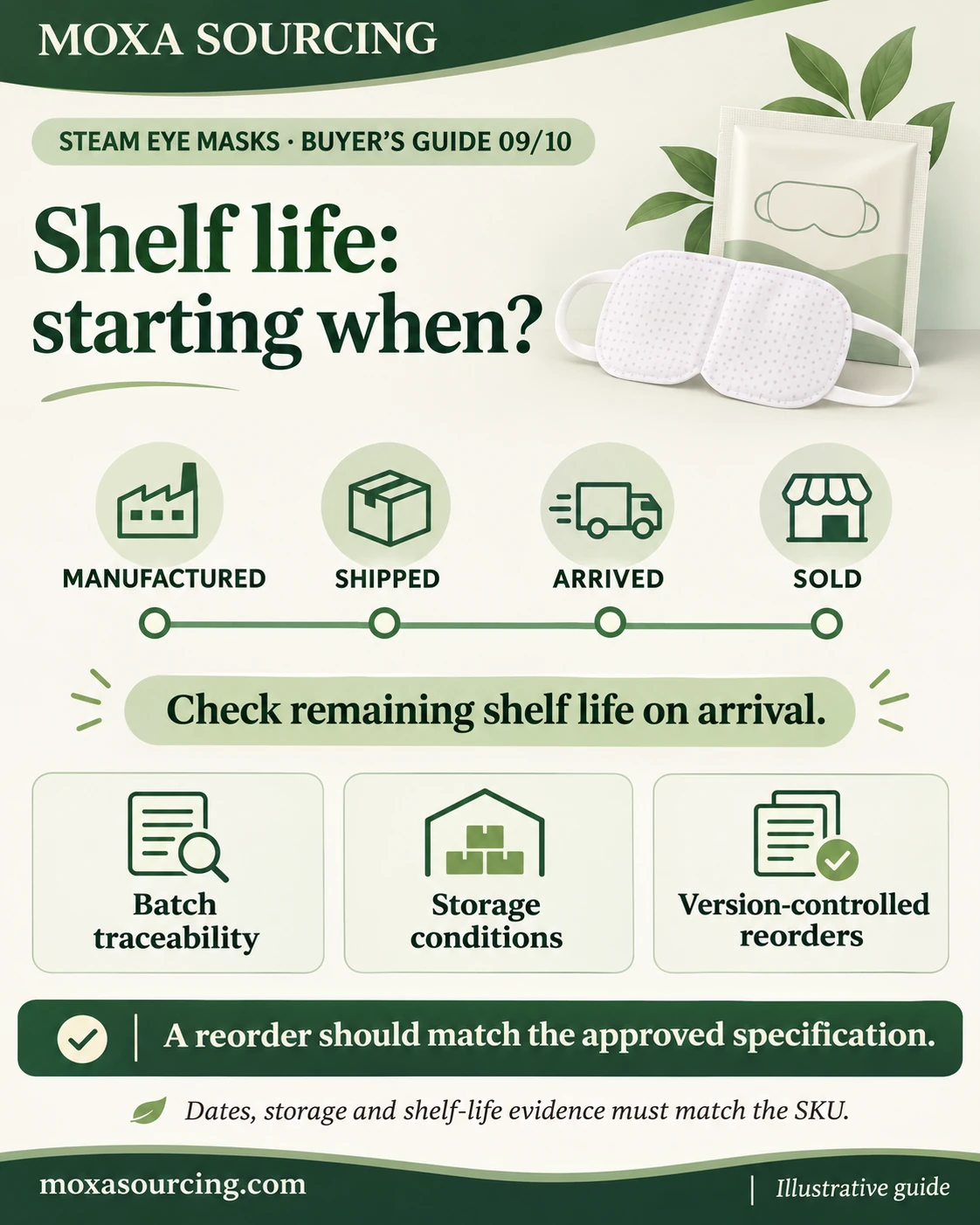
When does the shelf-life clock start?
Start with shelf life. It is not automatically two years for every steam eye mask. Two years from manufacture and two years remaining after delivery are very different promises.
Write down the manufacture date, expiry date, total shelf life and minimum remaining life at delivery separately. You can set a purchasing target, but the supplier needs evidence for the actual product and packaging. Printing a later date does not extend stability.
For masks activated by contact with air, the individually sealed pouch matters particularly. Ask about storage conditions, seal and packaging-integrity control, and the basis for the shelf-life claim. A change in packaging, sealing conditions or product system may mean the previous evidence needs reassessment.
What should a batch code connect?
Then consider the batch code. It is not decoration.
Its value is whether a problem can be linked to production and inspection records and the affected stock identified. Where do the batch code and dates appear? How are incoming and outgoing goods recorded? Where are retained samples kept? Do fragrance and language variants map to the right SKU?
Connecting the brand’s order, production batch, inspection results and warehouse records gives you a basis for complaint investigation, reorders and necessary corrective action. Check the applicable requirements for the scope of records and retention periods.
How should defects, changes and reorders be handled?
This does not mean we experienced every failure mentioned here. The following are arrangements worth agreeing before ordering.
If a mask does not heat, loses performance early or arrives with a damaged pouch, do not immediately blame the buyer or factory. Transport damage, sealing, storage, use conditions and manufacture may need investigation. Keep the item, packaging, batch information, photos and a specific description of the conditions. They are much more useful than simply saying the quality was poor.
“We will replace defects” needs detail too. What is the reporting period? Who investigates? Individual masks or complete boxes? Refund or credit against the next order? Who pays international freight? What happens to potentially affected stock from the same batch? A possible safety issue is not just a routine exchange; relevant parties may need to assess stopping sales, notification and other corrective measures under applicable rules.
When it is time to reorder, do not simply copy the first order.
Review actual sales and user feedback before setting the quantity. Reconfirm product, fragrance, material and packaging versions, usable leftover packaging, price validity, capacity and lead time.
Important material or process substitutions should be notified in advance and checked for possible retesting. Looking similar is not a reason to omit the discussion. Buyers should also share design changes, forecasts and changing needs promptly.
The relationship I hope to build is not endless price pressure or responsibility without limits. It is transparent changes, connected records and a practical way to work through problems together.
Before a repeat order, what would you most like the supplier to reconfirm without being asked: unchanged product, lead time or remaining shelf life?
A quick comparison checklist
| Check | Confirm |
|---|---|
| Shelf life | Manufacture date versus remaining life on delivery |
| Traceability | Batch, production, inspection and stock records |
| Reorder | Approved version, changes, pricing and timing |
FAQ — Quick answers
What is the main buying lesson?
Check the remaining life at delivery, connect batch records and reconfirm material and packaging versions before a repeat order.
What should be written down?
Shelf life: Manufacture date versus remaining life on delivery; Traceability: Batch, production, inspection and stock records; Reorder: Approved version, changes, pricing and timing.