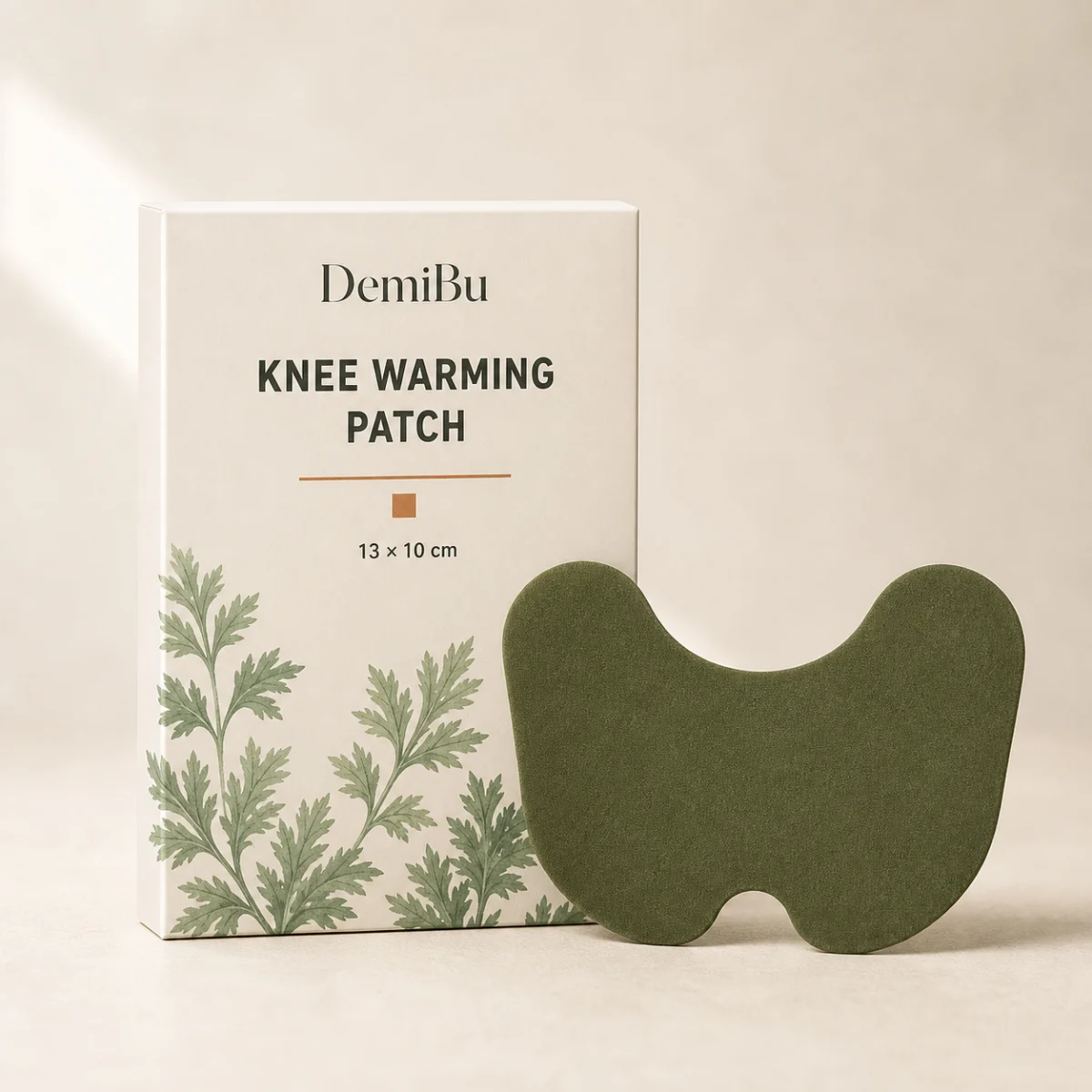
A sample-testing protocol for neck warming patch fit, heat curves, adhesion, removal, pouch integrity, warnings and production consistency.
How should the test protocol be defined before samples arrive?
Write the intended placement, configuration, environment, instruments, observations and decision rules before comparing suppliers.
The protocol begins with the product. Record sample code, supplier, proposed manufacturer, dimensions, chamber layout, formula or fill reference, layer construction, adhesive, placement, pouch and stated duration. A clothing-applied reference is not tested or described as a direct-skin patch. If placement is undecided, run separate concept reviews and do not merge the data.
Define the use context: garment layer, body area, posture, movement, ambient temperature and intended wear time. Neck-and-shoulder geometry changes as users turn, sit and raise their arms. Heat can also change under coats, pressure or restricted airflow. The protocol does not need to simulate every user, but it must reflect the planned instructions rather than a convenient laboratory setup unrelated to the product.
Define instruments and intervals for temperature, and define visual scales for fit and adhesion. Record activation time, readings at fixed points, peak, duration above the chosen threshold and end condition. For adhesion, record initial attachment, edge lift, migration, bunching, residue and removal. For the pouch, record seal, opening, pre-activation and visible damage.
Finally, decide what the data can prove. The test can compare samples and support a production specification. It is not clinical evidence and does not establish a treatment result. The buyer or importer separately determines classification, claims, warnings and any formal testing required in the destination.
| Protocol item | Record before testing | Reason |
|---|---|---|
| SKU identity | Sample code, construction, placement and pouch | Prevents data from being transferred to another variant |
| Environment | Ambient conditions, garment and body setup | Heat and adhesion depend on use context |
| Temperature method | Sensor, locations, interval and duration | Makes curves comparable |
| Fit and adhesion scale | Edge lift, movement, removal and residue criteria | Reduces subjective memory |
| Market boundary | Intended use and claim owner | Separates product testing from destination authorization |
How do you evaluate neck-and-shoulder fit?
Fit testing checks coverage, flex, movement and chamber position rather than accepting an ergonomic shape claim at face value.
Measure overall width and height, active heat area, curves, neck opening or center relief, wing length and thickness. Photograph the patch flat and in position. Compare intended coverage with the buyer’s product brief. A larger area may feel bulky under clothing, while a smaller area may not deliver the intended warming placement. The target is not maximum coverage; it is stable placement for the defined use.
Observe the patch during common movements. Record whether edges lift, heat chambers fold, material pulls, the center shifts or clothing dislodges the product. Include representative body sizes and garment fabrics appropriate to the channel. The results help select a shape and adhesive system, but they are not population-wide guarantees. The final instructions should reflect the evaluated placement.
Check chamber distribution. Air-activated heat cells or fill areas may warm differently across a curved shape. Sensor placement should capture more than the center point when distribution matters. A comfortable average can hide a localized peak. If the product uses several chambers, record each relevant area and inspect fill migration or bunching after movement.
Fit approval is tied to construction. Changing the nonwoven, chamber weld, dimensions or adhesive can change flex and movement even if artwork is unchanged. The written specification should mark these attributes as controlled and define whether a component change requires another wear sample.
How are temperature and heat duration compared?
Compare full temperature curves under the same method and interpret average, peak, rise time and duration together.
Open the pouch immediately before testing and record the time. Apply the patch according to the proposed instruction. Measure at defined locations and intervals from activation through the stated end. Record ambient conditions and any covering layer. If a supplier provides a curve, repeat enough representative samples to understand variation and compare the method before accepting it.
Average temperature describes only part of the experience. Peak temperature is relevant to overheating risk. Rise time affects initial use. Duration indicates how long the product remains within the selected working range. Distribution shows whether a chamber or edge behaves differently. The buyer needs a balanced target rather than an isolated long-duration claim.
Public products show different stated durations and placement instructions. That diversity confirms that values are configuration-specific. It does not establish what MB2B-0005 will achieve. Our product record keeps average, peak and duration open until a reference SKU and method are locked. Neutral website copy should therefore say that heat data are confirmed during sampling.
A material or pouch change can alter airflow and curve. Production inspection may use a reduced confirmation method, while development uses a fuller curve. The relationship between the two should be demonstrated during pilot work. If production readings fall outside the agreed range or show unusual peaks, hold the affected lot and investigate before shipment.
| Heat metric | Why buyers need it | Common interpretation error |
|---|---|---|
| Activation time | Sets user expectation and early check | Assuming warmth begins instantly |
| Average or working range | Describes sustained output | Treating one reading as the average |
| Peak | Supports safety and variability review | Ignoring local hot areas |
| Duration | Defines the period under the chosen threshold | Quoting pouch-open time as useful heat time |
| Distribution | Shows differences among chambers and edges | Measuring only the center |
How should adhesion and removal be tested?
Test the exact adhesive on the intended clothing or skin interface, with heat, motion and wear time included.
For clothing-applied products, select representative fabrics and record initial bond, repositioning, edge lift, migration, residue and fabric effect. Smooth synthetic fabric, cotton and textured layers may behave differently. The instruction should not promise compatibility with every material. If the product is meant to remain hidden under clothing, also assess bulk, noise and visibility during movement.
For a direct-skin proposal, obtain full skin-contact material information and define an appropriate evaluation plan with qualified input. Holding strength alone is not enough. Record removal comfort, residue and visible response in the approved context. Do not use ‘hypoallergenic,’ ‘skin safe’ or sensitive-skin language without substantiation for the exact material and market.
Heat can influence adhesive behavior, perspiration and user sensation. Run the adhesion review with the active patch, not only a cold blank, when safe and appropriate. Pressure from sitting, straps or outer clothing can change both heat and attachment. Exclusions and warnings should be designed from the test and destination review.
Production checks confirm adhesive component identity, dimensions, liner, application and sampled holding behavior. Any adhesive substitution requires notice and risk review. A visually identical backing does not demonstrate equivalent adhesion or contact suitability.
What packaging and warning checks belong in quality testing?
The sealed pouch, instructions and warnings are functional controls because they affect activation, use and risk.
Inspect pouch material, dimensions, seal, tear opening, print and code. Check that unopened samples have not activated. If shelf life is claimed, request its basis for the selected product and package. A different film or seal setting can change oxygen exposure and heat performance, so packaging changes belong in the heat-risk review.
The instructions should state placement, how to open and apply, whether the patch must lie flat, intended duration, single-use status and removal conditions. Public clothing-applied neck warmers include prominent warnings such as not applying directly to skin, removing if uncomfortably hot and avoiding sleep use. Those examples are useful questions; final warnings must match the selected SKU and destination.
Artwork review checks that the visible English text matches the approved instruction and does not add medical, pain, circulation or treatment promises. Ecommerce listings and distributor sheets should use the same controlled claims boundary. The buyer or importer approves market wording; factory quality control verifies that the approved version was printed and packed.
Retail and shipping checks cover unit count, box, insert, barcode, lot or date code and carton. Run appropriate transit-oriented reviews when the package is new. A product can pass heat testing and still fail commercially because pouches are punctured, boxes crush or instructions are missing.
How are results converted into a bulk-order control plan?
Freeze the approved sample, specification, reduced production checks and nonconformance actions before bulk release.
The sample report identifies approved configuration, method, results and conditions. The written specification records dimensions, construction, heat material or formula reference, adhesive, placement, pouch, pack and artwork. The buyer signs the commercial product and market text; the factory confirms reproducibility; Moxa Sourcing coordinates the record.
Production controls may include incoming component identity, fill or weight, dimensions, chamber seals, adhesive, pouch seal, code and count. Pilot samples establish that a reduced lot check correlates with the full development curve. The inspection plan states sample size, methods and acceptance actions for the specific order.
Nonconforming heat, adhesion or packaging results trigger containment. Record affected lot, evidence and severity. Changes that affect user placement, warnings, label or destination classification require buyer review. A one-lot concession does not silently change future specifications.
The release summary states what was checked and what remains outside the test. It does not guarantee every unit, long-term shelf behavior beyond the evidence, a clinical outcome, destination registration or customs clearance. The buyer or importer leads those market decisions.
| Bulk checkpoint | Development basis | Lot action if outside limit |
|---|---|---|
| Construction and size | Approved sample and dimensions | Hold, investigate and sort or rework |
| Heat profile | Full curves and pilot correlation | Hold lot and investigate fill, material, seal or method |
| Adhesion and fit | Representative wear review | Check component and application; buyer reviews substitution |
| Pouch and coding | Approved packaging system | Hold packing and correct or replace |
| Artwork and warnings | Buyer-approved version | Stop shipment until corrected |
What should be included in the test report delivered to the buyer?
The report should allow another reviewer to identify the sample, reproduce the method, understand variation and see which decisions remain open.
The cover identifies project, sample codes, supplier, proposed manufacturer, site, product version, placement and dates. Photographs show flat construction, measurement points, application and the pouch. The report links the composition or construction statement and approved protocol. If a detail was supplier-provided rather than independently checked, it is labeled accordingly.
The heat section includes the raw or summarized time series for each representative sample, ambient and application conditions, activation, working range, peak, distribution and duration definition. It records abnormal events such as chamber bunching or sensor movement. Averages are not presented without the individual variation needed to judge consistency.
The fit and adhesion section lists users or forms, garments, movements, edge lift, migration, removal, residue and visible observations. It states the limits of the exercise. A small sourcing sample does not prove suitability for an entire population and does not support a hypoallergenic or clinical statement.
The package section records seal, opening, premature activation, print and code. The conclusion separates product approval, conditional changes, missing supplier documents and buyer-market decisions. Owners and due dates are listed. The report then becomes an input to the written specification instead of a promotional summary.
Production reports use the same identifiers but may apply a reduced, previously correlated method. They state lot, sample size, results, deviations and disposition. This traceability helps the buyer determine whether a result relates to the approved configuration or whether an unapproved component or method entered the order.
Charts and photographs should be readable without sales interpretation. Axes, units, sample codes, conditions and acceptance references are labeled, and any missing reading or excluded sample is explained. The reviewer can therefore distinguish a stable result from a selected curve that hides variation.
Finally, the report records the authority of each sign-off. The factory may confirm the sample and production method, the sourcing team may verify the file and inspection trail, and the buyer or importer closes destination classification, warnings and claims. These approvals are related, but none substitutes for the others. Retain the signed report with the approved sample and purchase-order revision for later traceability.
Sources and evidence notes
Public sources help frame terminology, specifications and buyer questions. They do not prove that every factory, formula or destination-market requirement is identical.
- [1]Neck and Shoulder PatchINTCO Healthcare · manufacturer · accessed 2026-08-27
Identifies heat duration, peak temperature, adhesive, patch size, pouch and real-use sampling as B2B purchasing checks.
- [2]Neck WarmerThermopad · manufacturer · accessed 2026-08-27
Provides an actual clothing-applied neck-warmer example with dimensions, duration and safety instructions relevant to test design.
- [3]Recalls and Product Safety WarningsU.S. Consumer Product Safety Commission · regulator · accessed 2026-08-27
Provides public context that burn is a recognized heat-product hazard category, supporting conservative temperature and warning review.
- [4]Guide for Import of GoodsEuropean Commission Access2Markets · regulator · accessed 2026-08-27
Supports buyer responsibility for destination requirements, packaging, labeling and product-specific compliance decisions.
How this guide was prepared
Moxa Sourcing Editorial Team
The team translates product references, product samples and China-side sourcing workflows into practical English guidance for overseas buyers.
Moxa Sourcing Supply Review Team
The review team checks supplier attribution, commercial boundaries, product specifications and statements that require sample or market-specific verification.
Product availability, MOQ, price and production specifications are reconfirmed against the selected product reference. The buyer or importer leads the destination-market decision and retains applicable statutory importer duties; Moxa Sourcing supports the process by coordinating product and supplier evidence, specifications, documents, testing and label inputs, version control and agreed professional partners.