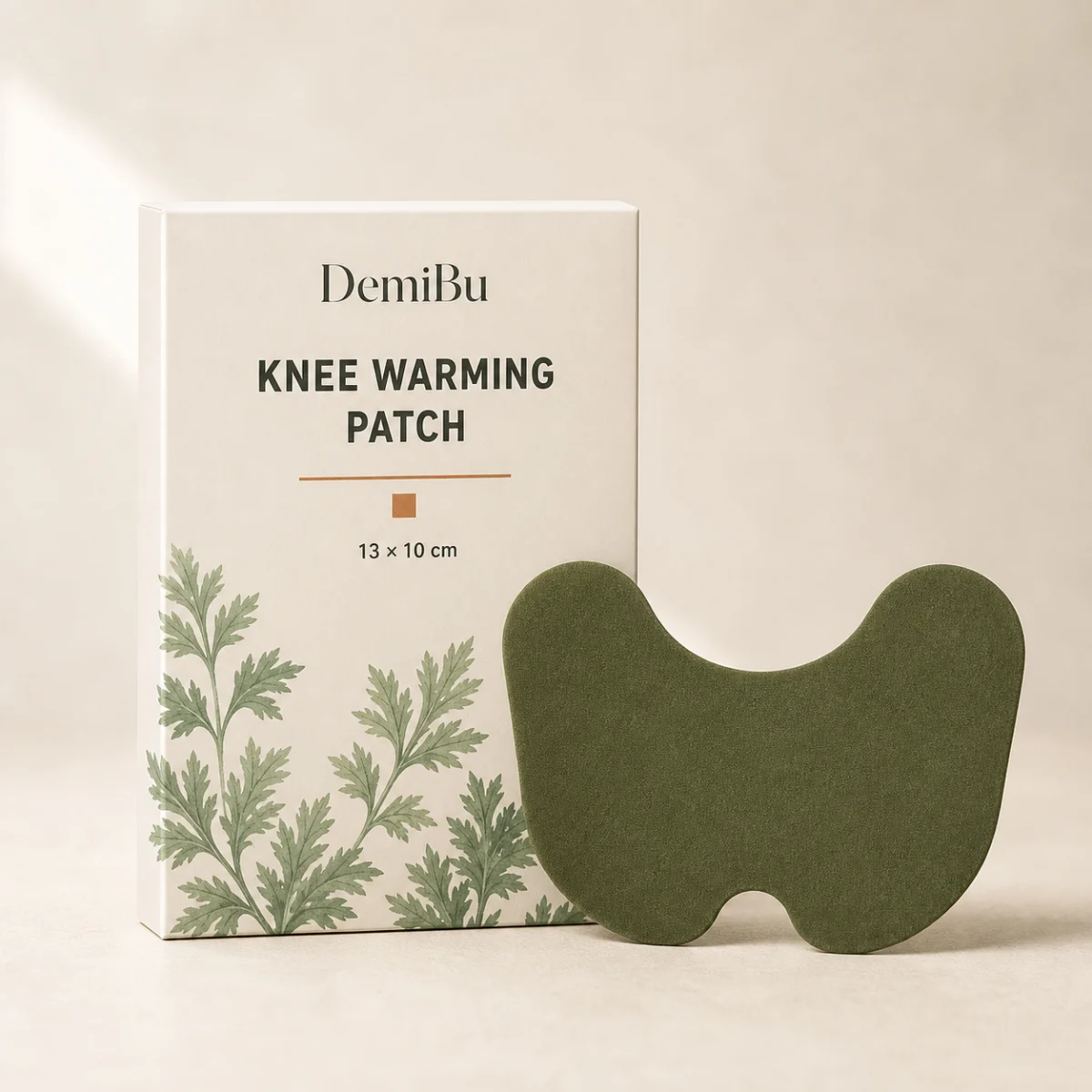
Plan private-label neck warming patch pouches, cartons, instructions, warnings, claims, channel packs and artwork approval without overclaiming.
Which product decisions must be frozen before packaging design?
Freeze the placement, construction, heat profile, size, use time and destination-market direction before the pack makes those facts permanent.
Packaging cannot solve an undefined product. The design brief begins with whether the patch attaches to clothing or skin, overall and active dimensions, chamber layout, formula or heat material, average and peak temperature method, duration, adhesive, single-use status and warnings. If those fields are still sample-dependent, the artwork remains a neutral draft and no performance number is printed.
Confirm the intended buyer and channel. A pharmacy pack may require a different information hierarchy from an ecommerce multipack or seasonal wellness gift. A distributor may need language variants and clear case data. A single-use trial pack can reduce first-purchase friction, while a multipack can support replenishment. The pack count should follow channel economics and actual product use, not a competitor’s shelf image.
The destination owner must decide the product category and permitted claims. Words such as therapy, pain, treatment, circulation or medical can change the market route and evidence burden. A neutral warming-comfort position may be appropriate, but even neutral instructions and warnings must match the exact SKU. The factory cannot authorize overseas claims by providing an English catalog.
Once the decisions close, create a packaging specification and artwork brief. The same approved values flow into pouch, carton, insert, distributor sheet and ecommerce listing. This avoids a compliant box being undermined by stronger online copy written later.
| Decision before design | Artwork dependency | Release gate |
|---|---|---|
| Placement | Application diagram, instruction and warnings | Representative sample and market review |
| Heat profile | Any temperature or duration statement | Approved method and data for final SKU |
| Dimensions and count | Net contents and product imagery | Measured specification |
| Intended use | Product name, benefit language and channel | Buyer or importer classification decision |
| Shelf-life basis | Expiry or durability statement and storage | Product-plus-pouch evidence |
| Responsible parties | Manufacturer, importer or market contact text | Destination-approved entity details |
Why is the unit pouch a functional component?
The pouch controls exposure before use and can affect activation, heat curve, shelf behavior and customer trust.
Air-activated patches need a sealed barrier until use. Specify pouch material or approved reference, dimensions, seal configuration, tear opening, print, lot or date code and units per retail pack. The supplier should disclose whether a change in film, thickness, seal or converter can affect airflow and shelf-life evidence. A similar metallic appearance is not proof of equivalent performance.
Development review checks seal integrity, ease of opening, premature activation, odor on opening, product removal and print durability. Transit review considers puncture and abrasion. If custom printing changes the film or processing, representative finished pouches should be tested rather than assuming that an unprinted sample controls the final package.
The pouch must identify the product sufficiently if separated from the carton, according to the buyer’s market review. Instructions may be divided between pouch and box, but essential warnings should remain visible at the point of use. The decision depends on channel, language and regulation. A small pouch is not an excuse to omit critical information without a documented alternative.
Shelf-life statements belong to the selected product and barrier system. Request the basis and storage conditions. A supplier’s general three-year statement or another brand’s duration is not copied. Any change to heat fill, nonwoven, breathable layer or pouch can require a new review.
Sources for this section: [1]
How should retail pack architecture fit the channel?
Choose the pouch count, carton, insert and case configuration by buyer behavior, merchandising, unit economics and information needs.
A single-pouch carton can support trial and premium presentation but uses more packaging per unit. A multipack can improve value and replenishment but requires clear count, storage and individual-pouch identification. An ecommerce set needs protection against crushing and clear listing imagery. A pharmacy or distributor case needs stable carton data, barcode hierarchy and language or market separation.
The pack architecture should be costed at every level. Product MOQ, printed-pouch minimum, box minimum, insert minimum and carton quantity may differ. Ask whether excess packaging will be stored, charged or discarded. Packaging inventory can lock the buyer into old claims or an old product version, so order quantities should match the validated commercial stage.
Gift-oriented design should not overwhelm instructions. A neck warming patch is a heat product, and placement and warning information must remain legible. Premium finishes, windows or unusual cartons are evaluated for barrier, transit and recycling implications. Claims and symbols are reviewed for the destination rather than selected only for visual familiarity.
The final case specification includes units per pouch, pouches per retail pack, retail packs per inner and outer carton, dimensions, gross and net weight, marks and barcode. These fields allow meaningful freight and landed-cost comparison.
| Channel | Useful pack question | Common risk |
|---|---|---|
| Ecommerce | Will the product survive parcel handling and remain clear online? | Crushed cartons, listing overclaims or confusing count |
| Pharmacy or specialist retail | Is safety and product identity easy to scan? | Benefit headline overwhelms instructions |
| Distributor | Are language, barcode, case and reorder data stable? | Mixed market versions or unclear carton configuration |
| Gift or seasonal | Can presentation coexist with heat warnings? | Decorative pack hides essential use information |
| Trial program | Can a low-count format test demand without obsolete stock? | Packaging MOQ exceeds validated demand |
What belongs in instructions and warnings?
Instructions and warnings must reflect placement, heat profile, user context and destination review for the exact SKU.
At minimum, the user needs to know when to open the pouch, how to remove the liner, where and how to attach the product, whether it must lie flat, how long to use it, when to remove it and whether it is reusable. Diagrams should match the actual shape and garment or skin interface. Translations are reviewed against the approved English meaning.
Warnings may address excessive heat, reduced temperature sensation, children, sleep, pressure, damaged product, reuse, reheating, ingestion or contact with heat-cell contents, depending on the construction and market. Public clothing-applied products demonstrate that placement and removal warnings are central, not optional fine print. The final set must come from product risk review and local requirements.
Avoid copying a competitor’s entire warning set because its formula, temperature, placement and legal category may differ. Conversely, do not remove a warning merely because a different brand omits it. The buyer, product reviewer and market adviser should reconcile product evidence with required wording.
The artwork checklist confirms font size, contrast, translations, symbols, net count, code area and responsible-party text. The factory checks print feasibility and version. Quality control verifies that the approved file appears on the correct market batch.
How should private-label claims be reviewed?
Start from a factual product identity and add only buyer-approved claims supported for the destination, SKU and intended use.
A factual core can describe a disposable air-activated warming patch for the neck-and-shoulder area, the intended placement, count and verified use profile. Even these statements require the selected construction and sample. Words implying pain relief, treatment, circulation improvement, medical action or guaranteed results are excluded unless the buyer establishes a lawful, substantiated route.
Ingredient or material claims need evidence. If iron powder, activated carbon, salt or another heat system is named, the supplier’s exact composition statement should support it. ‘Natural,’ ‘drug free,’ ‘odorless,’ ‘hypoallergenic’ and similar terms can carry requirements or create misleading expectations. They are not added from a competitor page.
Channel copy remains controlled. Product-page headings, marketplace bullets, advertising, distributor PDFs and social posts should use the same claims matrix. A compliant carton does not protect the business if the ecommerce listing makes unapproved medical promises. The buyer or importer leads the destination claim decision and review schedule.
If classification or evidence is not ready, use neutral warmth and practical-use copy while the question remains open. That is a commercial choice, not a guarantee that neutral wording removes all obligations. The product, market and importer still require review.
| Copy type | Evidence needed | Launch treatment |
|---|---|---|
| Product identity | Exact SKU, shape, placement and heat method | May publish after sample confirmation |
| Temperature or duration | Defined test and representative data | Do not print while open |
| Material claim | Exact supplier declaration and relevance | Use precise names, not broad adjectives |
| Comfort positioning | Product experience and buyer market review | Keep bounded and non-medical |
| Medical or efficacy language | Classification, substantiation and destination approval | Exclude unless buyer closes the route |
What is the artwork approval and change-control workflow?
Version the dieline and text, obtain technical and market approvals, test representative packs and prevent substitution after release.
The artwork file has a unique version, date and market. The buyer approves brand, product name, claims, instructions, warnings, barcode and responsible-party text. The factory approves dieline, seal-free areas, code position and print feasibility. Moxa Sourcing coordinates comments and stores the released file with a rendered proof.
Before bulk print, review a digital proof and, when risk justifies it, a printed pouch or carton sample. Color is only one issue. Check scale, fold, seal, opening, barcode, legibility and whether essential text is hidden after packing. Representative filled packs support pouch and transit review.
Any later change to product, placement, temperature, duration, adhesive, pouch, count, artwork or responsible party enters change control. The change request states reason, affected stock and reapproval required. Obsolete files and leftover packaging are quarantined or dispositioned.
Before shipment, inspection matches SKU, pouch, box, insert, code, count and carton to the approved versions. The buyer or importer closes destination documents and clearance arrangements separately. Packaging approval improves accuracy but does not guarantee market authorization or customs release.
How should a buyer brief a designer without creating claim risk?
Give the designer a locked product-fact sheet, claims matrix, hierarchy and prohibited assumptions before visual exploration begins.
The fact sheet contains the exact product name, placement, dimensions, verified heat wording, count, materials approved for disclosure, instructions, warnings, responsible-party text and barcode fields. Each item has an evidence owner. Open values are marked clearly and are not replaced with competitor numbers or temporary marketing language in a mockup.
The claims matrix identifies approved, pending and excluded phrases. It covers front panel, back panel, pouch, insert, ecommerce title, bullets and advertisements. For this product family, a restrained warmth and daily-comfort hierarchy avoids accidental treatment, pain or circulation promises. Neutral language still requires the final buyer or importer review.
The hierarchy tells the designer what a customer must understand first: what the product is, where it is placed, how many units are included and how to use it safely. Decoration, lifestyle imagery and brand story follow. Application imagery must show the approved garment or skin interface and should not depict prohibited sleep, folding or pressure scenarios.
The designer receives the printer’s dieline and no-print or seal areas. Technical copy remains live text until approval. A rendered proof is checked by editorial, supply and market reviewers for different risks. Only the final version is converted for print, and the source file remains controlled for later market or SKU variations.
This workflow also reduces cost. Early creative work can proceed with a neutral concept, but expensive print finishes and bulk components wait until heat, placement and claims close. The buyer avoids redesigning a full packaging system because a reference duration or medical phrase could not be supported.
The brief should also distinguish fixed market information from optional brand language. Required instructions, warnings, codes, responsible-party fields and translations receive reserved space before promotional copy is written. If the available panel cannot hold legible information, the team changes the hierarchy, pack format or insert rather than shrinking essential text without review.
For multiple destinations, the master artwork uses controlled layers or separate files with explicit market codes. Shared graphics do not imply shared legal text. The buyer or importer approves each version, while the factory verifies that the correct file, pouch and carton are matched during production and final inspection. Archive every released proof and market-specific approval record.
Sources and evidence notes
Public sources help frame terminology, specifications and buyer questions. They do not prove that every factory, formula or destination-market requirement is identical.
- [1]Neck and Shoulder PatchINTCO Healthcare · manufacturer · accessed 2026-08-27
Provides a B2B example of private-label pouch, carton, instruction, language and channel-pack options tied to sampling.
- [2]Neck WarmerThermopad · manufacturer · accessed 2026-08-27
Provides a consumer-market example of clothing placement, dimensions, duration and warnings that appear prominently in product communication.
- [3]Guide for Import of GoodsEuropean Commission Access2Markets · regulator · accessed 2026-08-27
Supports market-specific checks for product requirements, packaging, labeling, importer readiness and customs documents.
- [4]FDA Import ProcessU.S. Food and Drug Administration · regulator · accessed 2026-08-27
Explains that FDA-regulated imports are reviewed for admissibility and that complete, accurate product and firm data supports the entry process.
How this guide was prepared
Moxa Sourcing Editorial Team
The team translates product references, product samples and China-side sourcing workflows into practical English guidance for overseas buyers.
Moxa Sourcing Supply Review Team
The review team checks supplier attribution, commercial boundaries, product specifications and statements that require sample or market-specific verification.
Product availability, MOQ, price and production specifications are reconfirmed against the selected product reference. The buyer or importer leads the destination-market decision and retains applicable statutory importer duties; Moxa Sourcing supports the process by coordinating product and supplier evidence, specifications, documents, testing and label inputs, version control and agreed professional partners.