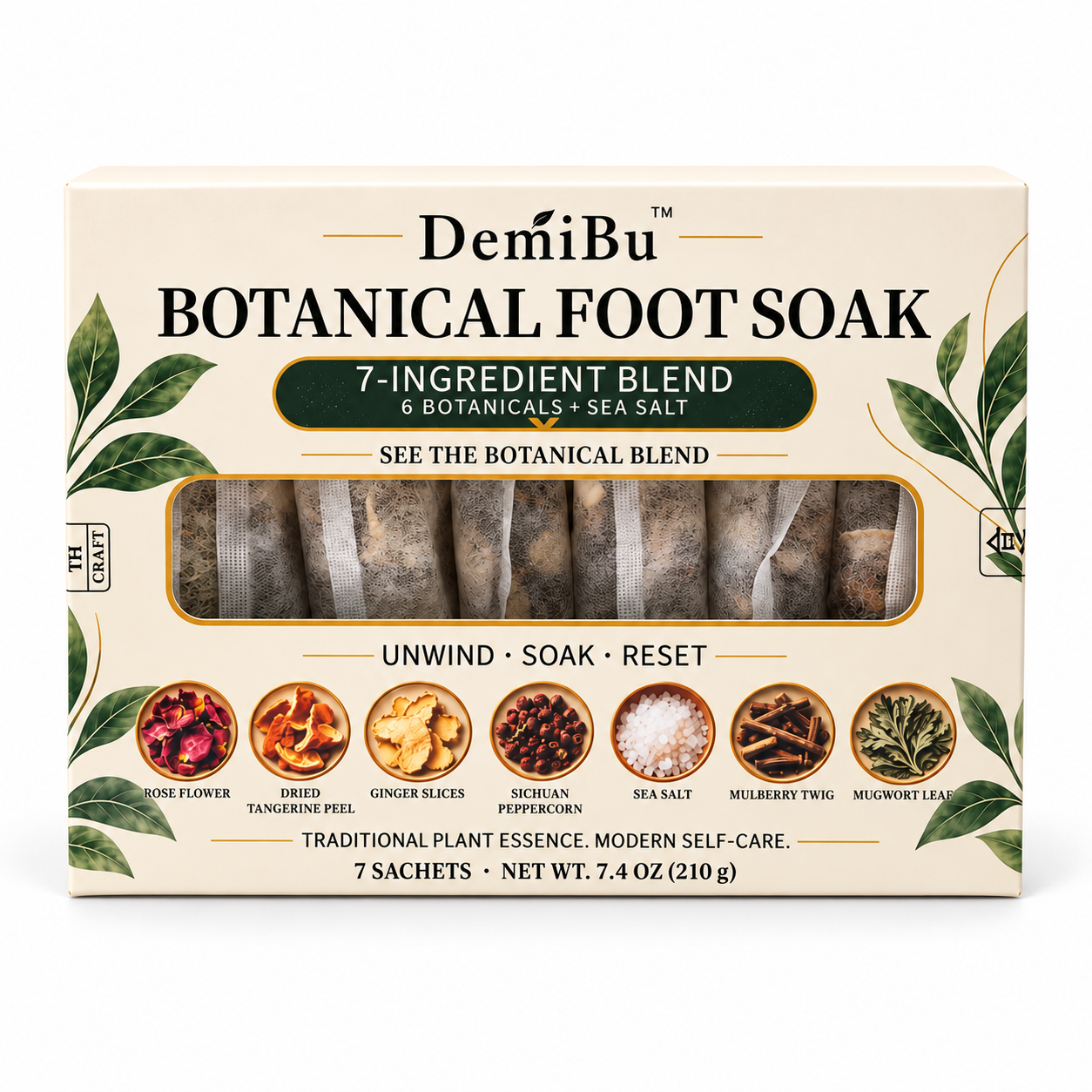
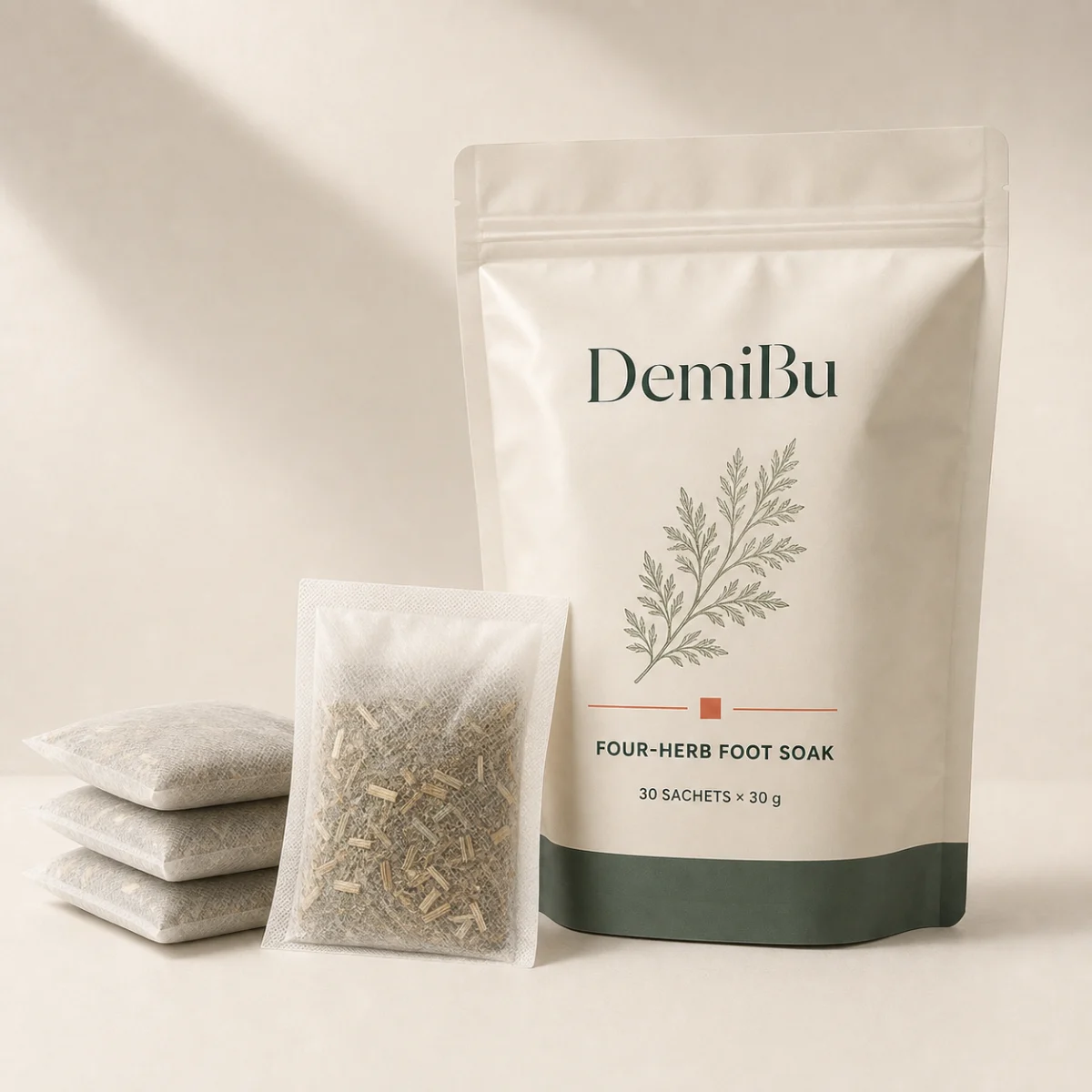
Source mugwort foot-bath sachets wholesale through a traceable SKU, exact formula, 6 g × 30 count control, containment layers, MOQ and PO gates.
Use one traceable reference pack to anchor the wholesale conversation
The current specialist manufacturer reference, SKU MB2B-0012 at 6 g × 30 sachets per bag, is a starting configuration—not a universal foot-bath standard.
A wholesale inquiry becomes actionable when it names a product code and pack basis. MB2B-0012 gives the team an observable reference: thirty individual six-gram sachets in one retail bag. The buyer can request that exact configuration, compare another supplier on the same basis, or propose a controlled variation. Without the reference, suppliers may quote different formulas, doses and counts under the same English name.
Record which entity owns the source code and how it maps to the buyer’s future SKU. If the supplier revises the formula, filter bag or retail pack while retaining a familiar name, the buyer needs written change notice. A purchase order should reference the approved specification version and sample, not only MB2B-0012.
Published manufacturer pages show that dry herbal foot-bath packs are commercially offered and that formula, filter bag, unit size and private-label presentation can be selectable. These sources demonstrate category structure. They do not prove the composition, export history, efficacy or destination compliance of MB2B-0012.
The baseline pack also supports operational questions: Is 180 g net botanical content intended? Are sachets individually coded? How are thirty counted? Is the retail bag resealable? What is the unit and master-carton quantity? Which packaging minimum applies if artwork changes? These questions turn a web-visible format into a wholesale item.
Do not assume that the supplier’s domestic directions or claims can be translated unchanged. The destination brief begins separately with intended use, preparation, warnings, label and claim boundaries.
A reference pack should also be photographed against a scale and opened. Capture the outer front and back, seal, individual sachet, botanical cut and master carton. Translate factual Chinese copy into an internal field map before creating sales English. Photography records what was sampled; it does not prove that every future lot will be identical.
Qualification should identify the actual manufacturing site for botanical preparation, sachet filling and retail packing. If one step is subcontracted, record the party and control flow. The buyer is not disqualifying specialist subcontracting; it is preventing a catalogue owner from being mistaken for the maker of every component.
Specify botanical content by identity, cut and controlled quantity
A sachet price cannot be compared until the formula and physical botanical form are defined.
Request the full formula for the exact reference or proposed variation. For each botanical, record common and scientific identity where the quality plan requires it, plant part, supplier or source description, dried form, cut-size range or powder proportion, and target amount or controlled ratio. If the product is sold as pure mugwort, define whether any carrier, fragrance, salt or other material is absent or present based on records—not marketing assumption.
Physical form controls both manufacture and the user experience. Large cut material can be visible and may release differently from fine powder; powder can migrate through seams, create sediment or block handling. A blend can segregate by particle size during transport and filling. Specify the form that the approved sample represents and how the factory controls uniformity.
Unit weight needs a target, tolerance and sampling method. Six grams printed on a sheet is not enough. Ask how many sachets are weighed, whether net botanical content excludes the filter bag, how results are recorded and what happens outside limits. Retail net-content treatment and local tolerances require destination review.
| Wholesale field | Reference or decision | Evidence to request | Commercial effect | |—|—|—|—| | Source SKU | MB2B-0012 | supplier confirmation and approved sample | anchors repeat orders | | Unit dose | 6 g reference | fill target, tolerance and sampled weights | affects cost and directions | | Count | 30 sachets per bag | count-control method and pack record | defines retail quantity | | Formula | exact pure or blended composition | controlled formula and identities | drives sourcing and claim review | | Botanical form | cut, granule or powder distribution | sieve or visual standard as appropriate | affects leakage and consistency | | Substitution | none without written approval | change-notification clause | protects repeatability |
Contaminant and microbiological questions should be based on ingredients, process, intended market and use. Ask what raw-material and finished-product controls are available, then have the buyer and qualified reviewers identify gaps. Do not demand irrelevant certificates for appearance while ignoring agricultural source risk.
| Wholesale field | MB2B-0012 baseline | Buyer-led specification | Receiving evidence |
|---|---|---|---|
| Formula | product reference formula must be confirmed | botanical identities, parts, cut and substitution rule | controlled formula version and lot linkage |
| Unit dose | 6 g per inner sachet | target, tolerance, sampling and reject rule | sampled weight record |
| Retail count | 30 sachets per bag | count method and pack disposition | count verification and finished-bag check |
| Inner containment | filter sachet supplied with reference | material, dimensions, seam and wet integrity | dry-loss and wet-use inspection |
| Outer protection | multi-count retail bag | barrier structure, seal, reclosure and code | seal integrity and opened-pack condition |
| Order economics | reference SKU quotation | MOQ by botanical, filling and packaging layer | normalized landed-cost and material ownership sheet |
| Repeat control | same source code alone is insufficient | approved sample, version, PO and change notice | incoming comparison and retained unit |
Approve the two containment layers and the retail count system
The inner filter sachet contains wet botanical material during preparation; the outer pack protects the dry units before use.
The filter bag must retain the approved botanical cut through filling, transport and wet preparation. Define material, dimensions, seal construction, fill zone and any string or tag. Screen dry powder loss, seam opening and wet integrity with the actual formula. A bag that survives coarse leaves may fail with a finer blend.
The outer retail bag needs a moisture-barrier role suited to the product and shelf plan. Record structure or supplier code, dimensions, closure, zipper if selected, seal width, tear feature, decoration and lot-code area. A kraft appearance does not prove barrier performance; if paper is used decoratively, identify the actual protective layer.
Count control is separate from unit weight. Thirty correct-weight sachets can still become twenty-nine through packing error. The line should have a count method and verification record. Finished bag weight can be a useful screen if packaging variation is controlled, but it should not be the only check where errors can offset each other.
Master cartons must preserve retail seals and avoid crushing. Define units per carton, orientation, liner if used, gross weight, packed dimensions and marks. Inspect a pilot after handling for pinholes, burst seals, powder migration, scuffed codes and count accuracy.
Lot linkage should connect botanical lots, sachet filling run and retail packing run. Decide whether each inner sachet needs a code or whether a retail-bag code provides adequate traceability for the approved system and destination. Record the rationale.
Moisture screening should include incoming botanical condition, filled sachet storage and opened retail-bag use. Define how long consumers are expected to keep a thirty-count bag after opening and whether a zipper or individual overwrap is part of the design. An intact outer seal supports unopened storage only; it does not describe repeated opening in a humid bathroom.
Inspect filter-bag seams both dry and after the proposed preparation. Record burst, delamination, excessive fiber shedding and herb escape. A visual tea-bag analogy is inadequate because botanical cut, fill mass, temperature and soak duration differ. If the supplier changes cut size, the wet-retention screen should be reconsidered.
Calculate MOQ and landed cost at every packaging level
Wholesale economics depend on botanical, filter roll, printed bag, filling and carton minimums—not one headline MOQ.
Ask for separate minimums and price breaks for formula preparation, inner sachet material, filling, stock outer bag, custom printed outer bag and carton. A supplier may fill a small pilot while requiring thousands of printed bags. Excess custom material creates storage, obsolescence and version risk that must be costed.
Normalize quotations to one sellable retail bag: thirty six-gram sachets, outer packaging, coding, inspection and export carton. Then add freight, duty, brokerage, local handling, testing or review costs, damage allowance and storage. Comparing the price per inner sachet with a price per retail bag produces false savings.
Weight and volume affect freight. Herbal sachets are light but can occupy space, especially if the outer bag is inflated or cartons are loosely packed. Request actual packed carton dimensions and gross weight from the pilot. Calculate units per pallet or courier carton according to the intended route.
Pilot quantity should answer commercial questions without creating unusable artwork. A neutral or supplier-standard bag can test demand if labeling is appropriate. Custom printing should follow when the buyer can justify material minimums and has stable copy. The stock-to-private-label transition needs a planned SKU mapping so repeat data are preserved.
Payment schedule and lead time should distinguish raw-material reservation, packaging production, filling and final inspection. Botanical seasonality or supplier inventory can affect continuity; ask what is held as finished stock and what is made after order.
Build a reorder sensitivity table internally. Model botanical cost, exchange rate, packaging price, freight and order size independently. This shows which variable can erase margin and supports a rational quote-validity period. It also helps the buyer decide whether to consolidate several formulas in one shipment or keep a single reference SKU until turnover is established.
Write preparation directions without turning ritual into a health promise
Directions should make the product usable while claims stay within evidence and destination rules.
A direction panel can state the number of sachets, water volume or vessel basis, temperature range if technically approved, steeping time, foot-soak duration, external-use limitation, disposal and storage. These variables must be confirmed for the actual formula and bag. Avoid copying numbers from an unrelated seller because cut size and dose may differ.
The words detox, improve circulation, support sleep, relieve pain or treat a condition are not adopted in this wholesale guide. FTC health-products guidance emphasizes express and implied claims and the need for substantiation. Images, product names, testimonials and before-and-after narratives can imply the same claim even when the sentence is absent.
Traditional or evening-routine context can help a retailer explain the format, but it should be separated from proof of effect. Describe botanical identity, measured sachets, aroma or preparation experience only when accurate. Avoid implying that visible water color demonstrates extraction strength or benefit.
The one responsibility boundary is this: specialist manufacturer or another approved factory makes the sachets to the signed formula and pack specification and supplies agreed truthful records; Moxa Sourcing coordinates samples, supplier communication and quality checks within scope; the buyer or importer determines destination classification, contaminant and safety requirements, directions, warnings, claims, labeling, registrations, customs and final release.
Sources for this section: [3]
Issue a wholesale PO packet, not a generic reorder email
Repeatability comes from a compact packet containing SKU, specification, sample, pack, inspection and change controls.
The RFQ should state source SKU MB2B-0012 or alternative, destination, buyer type, intended ritual, prohibited claims, pure or blended formula, identities, unit weight, count, filter material, outer pack, label languages, carton, forecast, pilot quantity and required timing. Request MOQ and lead time by layer.
Attach the versioned specification and approved reference images. List critical defects: wrong formula, unapproved substitution, out-of-tolerance fill, open seam, powder outside the sachet, wrong count, damaged outer seal, unreadable code, incorrect artwork or wet carton. Set inspection sampling and disposition with the quality team.
Request available evidence with boundaries: formula declaration, botanical or supplier records, packaging material information, batch and count controls, and any agreed contaminant or microbiological results. The buyer reviews relevance; document volume alone does not establish suitability.
The purchase order should name incoterm, currency, payment, product and packaging quantities, material ownership, overrun/underrun limits, production sample, inspection access, change notification and handling of rejected or excess printed bags. Ask who authorizes rework and how lot traceability is maintained.
On receipt, reconcile cartons, units, code, bag integrity, count and retained samples before distribution. Record complaints by lot and defect type. A wholesale line becomes reliable when the second and third orders reproduce the approved pack, not when the first photograph looks convincing.
A receiving checklist should distinguish critical, major and minor defects before goods arrive. Wrong formula, unapproved botanical substitution, open retail seals and incorrect language version are critical commercial failures. Isolated scuffing may be major or minor according to the agreed limit. Classification makes disposition consistent and prevents a warehouse from accepting a visually attractive but incorrect lot.
Retain unopened retail bags from the pilot and each commercial batch under defined conditions. They support complaint comparison, code verification and investigation of odor, moisture or seam observations. Retention duration and quantity should match the quality plan rather than an arbitrary habit.
For every reorder, compare the approved reference, current formula version, pack material codes and quotation assumptions before releasing payment. Continuity is a deliberate verification step, not an expectation created by a familiar product photo.
Record the outcome and approver in the order file before production begins.
Document it clearly.
Sources and evidence notes
Public sources help frame terminology, specifications and buyer questions. They do not prove that every factory, formula or destination-market requirement is identical.
- [1]Pure Herbal Foot Bath PacksMugwort Wellness · manufacturer · accessed 2026-08-27
Public supplier example of a dry herbal foot-bath sachet and OEM product category. Health or detoxification statements are not adopted.
- [2]Custom OEM Herbal Foot Bath PacksBX Medicine · manufacturer · accessed 2026-08-27
Public manufacturer evidence that herb formula, filter bag, size and private-label pack are separate sourcing decisions; export or efficacy claims are not adopted.
- [3]Health Products Compliance GuidanceU.S. Federal Trade Commission · regulator · accessed 2026-08-27
Supports review of express and implied health claims and the need for appropriate substantiation before advertising.
How this guide was prepared
Moxa Sourcing Editorial Team
The team translates product references, product samples and China-side sourcing workflows into practical English guidance for overseas buyers.
Moxa Sourcing Supply Review Team
The review team checks supplier attribution, commercial boundaries, product specifications and statements that require sample or market-specific verification.
Product availability, MOQ, price and production specifications are reconfirmed against the selected product reference. The buyer or importer leads the destination-market decision and retains applicable statutory importer duties; Moxa Sourcing supports the process by coordinating product and supplier evidence, specifications, documents, testing and label inputs, version control and agreed professional partners.