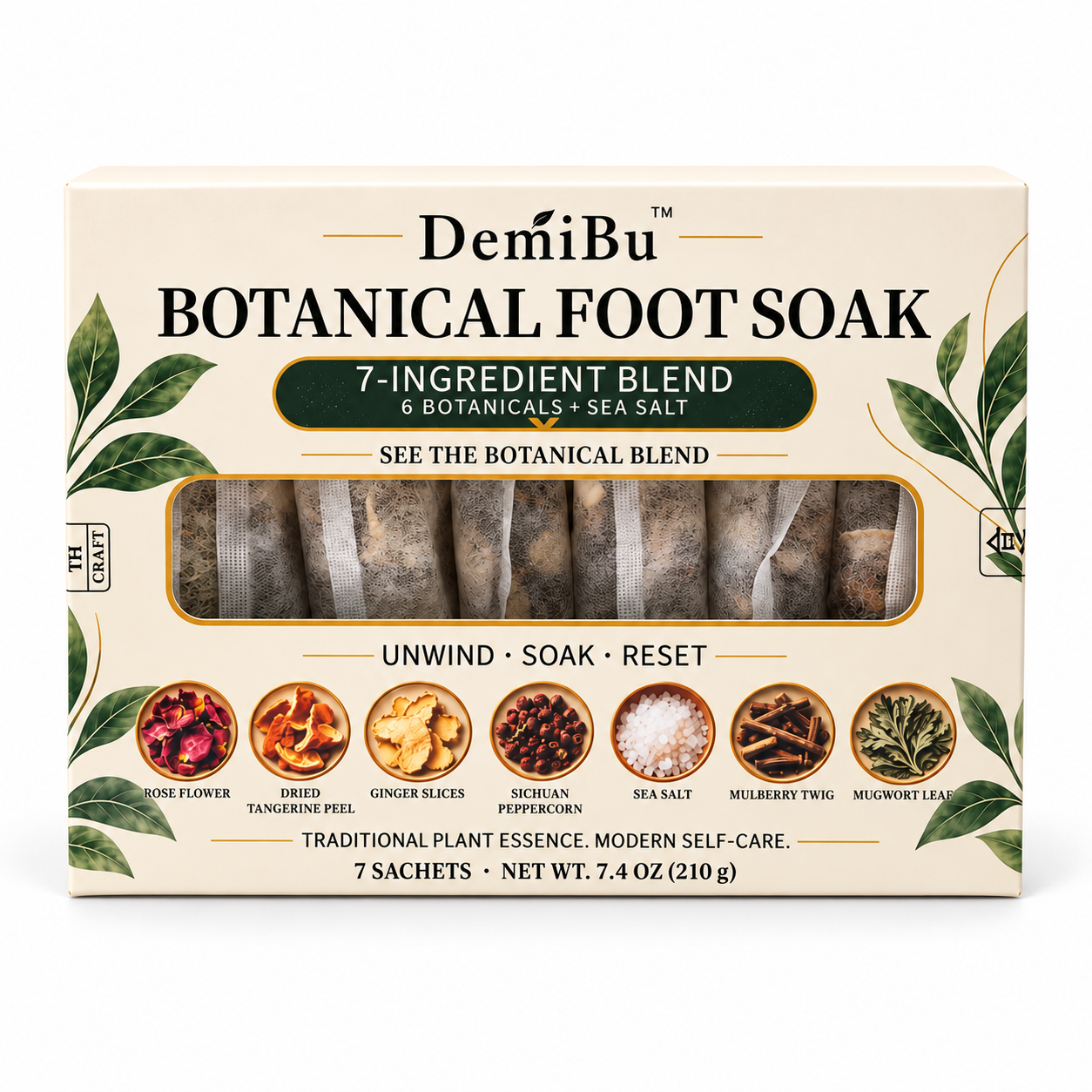
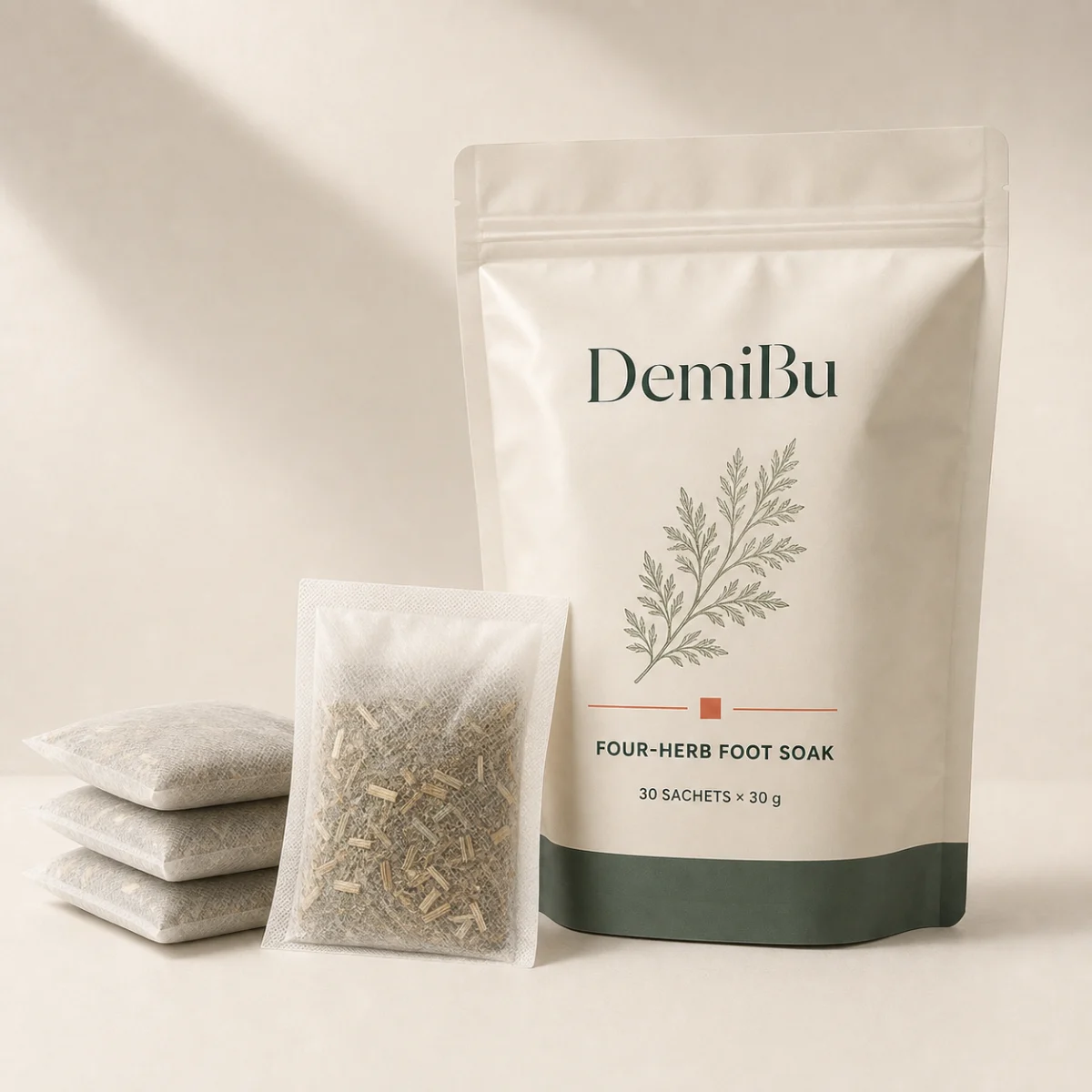
Choose pure mugwort or a botanical foot-soak blend by story clarity, supply complexity, sensory control, formula ratios, cost and claim exposure.
Begin with the job the formula must perform in the assortment
Pure mugwort and botanical blends are commercial architectures; choose between them by clarity, differentiation, repeatability and operational capacity—not presumed efficacy.
A single-botanical sachet gives the buyer one hero ingredient and a short identity story. A blend creates room for aroma, color, regional tradition or tiering, but every added botanical becomes another sourcing, specification, label and variability decision. Neither architecture is inherently superior or more effective.
Write a one-sentence assortment job before requesting samples. Examples include entry mugwort sachet for specialist retailers, aromatic evening ritual for gifting, or premium visible-botanical blend for spas. The job defines whether ingredient simplicity or sensory differentiation matters more. It also sets a boundary against random kitchen-sink formulation.
Decide how the product will be compared on shelf. A pure mugwort pack competes through provenance, measured format, cut and presentation. A blend competes through a transparent recipe logic and consistent sensory profile. If the buyer cannot explain why each additional botanical is included without making an unsupported health promise, the blend is not yet commercially designed.
Public OEM foot-bath pages show that manufacturers offer both herbal packs and customizable formulas. They establish market availability, not a ranking of recipes or proof of benefits. The sourcing decision must return to the selected supplier’s actual ingredients and controls.
Use a five-axis fork rather than counting ingredients
Ingredient count is a poor decision rule; evaluate story clarity, sourcing load, sensory control, cost behavior and claim exposure.
| Decision axis | Pure mugwort tends to offer | Botanical blend tends to offer | Question for the buyer | |—|—|—|—| | Story | one named botanical and source narrative | a composed ritual or sensory concept | which can sales explain accurately in ten seconds? | | Supply | one agricultural input to qualify | several inputs and more substitution paths | can the team control every ingredient? | | Sensory | clearer mugwort-led reference | adjustable aroma, color and visible variety | is the profile defined without benefit claims? | | Cost | concentrated exposure to mugwort grade and season | mix cost can be engineered but is more complex | is the ratio frozen and auditable? | | Label/claims | shorter declaration and fewer implied stories | more names, traditions and implied meanings | can every statement be supported and permitted? |
Weight the axes for the channel. A practitioner or specialist retailer may value a direct mugwort identity. A gift buyer may value a composed visual and aroma experience. An ecommerce brand may prefer a short ingredient story that is easy to translate. A spa may need a distinctive routine but also demands batch consistency.
Do not let one attractive sample decide the architecture. Score at least two lots or source representations when practical, review quotations on equal dose and pack, and model what happens if one blend ingredient becomes unavailable. The chosen formula must survive reordering, not only a presentation meeting.
Set a complexity budget. For a first blended SKU, three or four controlled botanicals can be more manageable than a long list. The appropriate count depends on the team’s evidence, labeling and supply capacity. The principle is that every component consumes control attention.
| Decision axis | Pure mugwort option | Botanical blend option | Selection question |
|---|---|---|---|
| Story clarity | one hero botanical and source-led message | composed sensory or ritual concept | which can the channel explain accurately without health promises? |
| Supply controls | one agricultural stream with concentrated variability | several identities, ratios and substitution paths | can every input be qualified and reordered? |
| Formula governance | purity boundary, cut and source rules | purpose, percentage and tolerance for each component | is the composition auditable at production scale? |
| Sensory profile | mugwort-led range | engineered aroma, color and visible variety | which coded sample fits the intended occasion? |
| Containment | filter selected for one cut distribution | smallest particle and blend segregation drive risk | does the final formula pass dry and wet retention? |
| Economics | grade and crop exposure dominate | mixing, minor-ingredient MOQ and loss add complexity | what is the landed cost at equal dose and pack? |
| Claim exposure | shorter ingredient story | more traditional associations and implied meanings | can naming and imagery remain substantiated and permitted? |
A pure-mugwort formula still needs a complete specification
Single botanical does not mean specification-free: species, plant part, cut, moisture, contaminants, dose and substitution rules remain open until written.
Define what pure means for the project. It may mean the sachet fill contains only the approved mugwort botanical, with no other herb, salt, carrier or added fragrance. The filter bag and outer packaging are separate materials and should not be confused with formula purity. Support the statement through the controlled formula and supply records.
Record scientific identity where required by the quality plan, plant part, geographic or supplier source description, fresh or dried status, cut-size range, powder fraction, visual standard, odor reference and target unit mass. A change from leaf-dominant cut to fine mixed powder can change containment and user perception even if the common name remains mugwort.
Single-input sourcing concentrates variability. Crop, drying, storage and cut can influence color and odor. Create a range reference rather than demanding impossible sameness from agricultural material. At the same time, define unacceptable foreign material, dampness, infestation, excessive powder, uncharacteristic odor or unapproved source substitution.
Pure mugwort is commercially useful when traceability and an intelligible hero matter. It is not evidence of detoxification, circulation, sleep support or treatment. Pure should not be paired with stronger benefit language merely because the ingredient list is short.
Cost comparisons should use equal net botanical weight, pack count and packaging. A pure formula may be cheaper or more expensive than a blend depending on grade and supply. Ingredient count does not predict cost reliably.
Single-botanical procurement can make root-cause work clearer. If odor or cut shifts, the team examines one agricultural stream, storage history and processing path. That clarity is useful for early quality systems. It does not remove the need to qualify packaging, contamination controls or the finished sachet.
Pure positioning also needs an adulteration boundary. State whether stems, dust or other parts of the same plant are limited by the visual or sieve standard and how foreign botanical material is handled. Do not call normal botanical variation adulteration, but do not let the word natural excuse unapproved composition.
Sources for this section: [1]
A blend needs a purpose, ratio and control plan for every component
A defensible blend is a formula, not a loose list: each botanical has a stated commercial role, fixed identity and controlled proportion.
Create a formula table with ingredient identity, plant part, form, target percentage or quantity, tolerance, commercial role and approved source. Roles can be sensory or merchandising—aroma note, visible color contrast, regional story—without alleging a health effect. If an ingredient has no role, remove it or justify the complexity.
Ratios must be auditable. A label list alone does not tell the factory how to make a consistent blend. Record whether the formula is controlled by weight, how small-percentage materials are preblended, how segregation is managed and how sachet samples are evaluated. Different particle sizes can separate during movement, causing the first and last fills to differ.
Supplier substitution is a central risk. A blend can retain the same English marketing name while one botanical species, part or source changes. Require written approval for formula and source changes, and define which sensory, contaminant, label or packaging reviews follow.
More ingredients expand the evidence map. Agricultural inputs can have different contaminant profiles, market restrictions or nomenclature issues. The buyer should build a destination-specific review for the exact formula rather than assuming that familiar culinary or traditional use elsewhere makes every ingredient suitable.
A blend may support price tiers if the architecture is honest: a pure core product, a defined aromatic variation and a premium visible-botanical version. Avoid multiplying nearly identical recipes that fragment inventory and confuse sales. Each variation should answer a distinct channel need.
Blend development should use a scale-up check. A hand-mixed laboratory bowl can look uniform while production equipment creates settling, dusting or damage. Request samples from the intended mixer and filling process, then compare early, middle and late sachets. Record whether a premix or defined addition sequence is necessary.
Allergen, sensitization and warning review should be based on each exact ingredient and destination. The presence of common culinary botanicals does not resolve cosmetic, consumer-product or other market questions. Ingredient removal may require a fresh sensory and ratio approval rather than a silent reformulation.
Sources for this section: [2]
Compare samples through sensory and operational evidence
The sample panel should separate preference from manufacturability and never treat water color, aroma intensity or sediment as proof of benefit.
Prepare coded sachets at equal net weight and use one written preparation method for comparison. Record dry appearance, powder escape, aroma before and during preparation, water color as an observation, sachet integrity, visible botanical release, cleanup and packaging odor after storage. Reviewers should not know which sample is positioned as premium during the first round.
Add an operational sheet: ingredient availability, batch minimum, mixing step, fill variation, filter compatibility, outer barrier, lead time, cost and substitution risk. A preferred aroma may lose commercially if the blend blocks the sachet line or depends on an unstable minor ingredient. Conversely, an operationally simple pure SKU may need stronger presentation to meet the gift channel.
Do not use darker water or stronger odor as a proxy for purity, extraction or performance. Those attributes can be influenced by cut, powder, species, age, blend and preparation. Define the sensory profile the brand wants and control it as an experience attribute only.
Test wet sachet retention with the final formula because a blend’s smallest particles determine leakage risk. Observe seam strain at target fill and water conditions. If the formula changes, review whether filter material, dimensions or dose still fit.
Cost the sellable bag, not the recipe per kilogram. Include blending loss, small-ingredient handling, filter material, outer pack, inspection, testing, freight and obsolescence. A low-cost filler can make a blend look economical while weakening the declared story; a high-cost decorative botanical can add little consumer value.
A blind panel should include a duplicate coded sample to reveal reviewer consistency. Collect descriptors before preference scores so the team can build an agreed sensory vocabulary. If responses divide sharply by channel, the answer may be two clearly separated SKUs rather than a compromise blend that satisfies neither group.
Document sample preparation materials too. Water source, temperature, vessel, steeping time and agitation can change visible and aromatic observations. Standardization makes formula comparisons meaningful while keeping conclusions limited to the tested experience. It does not turn the panel into clinical evidence or a performance claim.
Make the claim boundary part of formula approval
The chosen recipe and the words used to sell it must be reviewed together because ingredient names and imagery can imply health outcomes.
FTC guidance explains that both express and implied health claims require appropriate substantiation. A blend named circulation formula or sleep detox makes a promise even if the back panel uses softer language. A foot illustration, nighttime imagery, testimonials and ingredient traditions can reinforce the implication.
This article excludes detoxification, circulation improvement, sleep promotion, pain relief, disease and treatment language for both formula types. Commercial copy can accurately describe pure or blended composition, measured sachet format, botanical aroma, preparation and evening-routine context. Any further claim needs its own evidence and destination review.
The responsibility boundary is singular: the approved factory purchases and blends materials and fills sachets to the signed formula, provides agreed records and reports changes; Moxa Sourcing coordinates option comparison, samples and inspection within scope; the buyer or importer approves ingredient suitability, contaminant plan, classification, claims, label, warnings, customs and market release for the destination.
Formula approval should include a red-line list of prohibited substitutions and prohibited marketing terms. Send the same list to the factory, copywriter, distributor and marketplace team. Otherwise a claims-safe specification can be undermined by reseller copy copied from another listing.
Sources for this section: [3]
Pilot the decision with two comparable briefs
Request one pure and one deliberately designed blend on the same commercial basis, then select by weighted evidence.
For the pure brief, specify mugwort identity, part, cut, six-gram or other target dose, filter bag, count, outer pack and sensory range. For the blend brief, use the same dose and pack but attach the formula table, roles, ratios, preblend and segregation controls. Equalizing the pack exposes the formula decision.
Request quotation blocks for ingredients, blending, sachet filling, packaging, testing and development. Ask for minimums and lead times by material. A blend with one high-MOQ minor botanical can set the entire order size. A pure formula may offer a lower operational minimum if the supplier stocks the approved mugwort.
Score the candidates against the five axes using weights set before samples arrive. Include a disqualifying gate for unsupported identity, unapproved substitution, uncontrolled ratio, filter failure or claim-dependent positioning. A high sensory score cannot rescue a failed identity gate.
Run a small channel review using claims-safe names and equal-quality presentation. Collect buyer feedback on clarity, aroma preference, preparation and price without teaching respondents that more herbs are premium. Use the results to choose pure, blend, both as distinct tiers, or neither.
The decision record should state why the formula exists, what its controlled composition is, which sensory range is accepted, what may never change without approval and which claims remain excluded. That record becomes the starting point for packaging and repeat orders.
Portfolio architecture should prevent keyword and shelf cannibalization. If both pure and blended products launch, give each a distinct use occasion, pack color, price reason and formula statement. Avoid claiming the blend is advanced or stronger. The pure option can be the source-led core; the blend can be the sensory variation. Reorder data should be tracked separately so a retailer’s preference is visible.
After the pilot, schedule a formula review against complaints, availability and margin. The default should be no change. If a component becomes unavailable, compare a temporary stop, approved alternate or retirement; do not allow the supplier to rebalance the recipe merely to keep production moving.
Revisit the weighted score after actual landed cost and retailer feedback are available. The formula decision should improve with evidence, while any revision remains a controlled new version requiring sample, packaging and copy impact review.
Keep that comparison commercially honest and auditable.
Sources and evidence notes
Public sources help frame terminology, specifications and buyer questions. They do not prove that every factory, formula or destination-market requirement is identical.
- [1]Pure Herbal Foot Bath PacksMugwort Wellness · manufacturer · accessed 2026-08-27
Public supplier example of a dry herbal foot-bath sachet and OEM product category. Health or detoxification statements are not adopted.
- [2]Custom OEM Herbal Foot Bath PacksBX Medicine · manufacturer · accessed 2026-08-27
Public manufacturer evidence that herb formula, filter bag, size and private-label pack are separate sourcing decisions; export or efficacy claims are not adopted.
- [3]Health Products Compliance GuidanceU.S. Federal Trade Commission · regulator · accessed 2026-08-27
Supports review of express and implied health claims and the need for appropriate substantiation before advertising.
How this guide was prepared
Moxa Sourcing Editorial Team
The team translates product references, product samples and China-side sourcing workflows into practical English guidance for overseas buyers.
Moxa Sourcing Supply Review Team
The review team checks supplier attribution, commercial boundaries, product specifications and statements that require sample or market-specific verification.
Product availability, MOQ, price and production specifications are reconfirmed against the selected product reference. The buyer or importer leads the destination-market decision and retains applicable statutory importer duties; Moxa Sourcing supports the process by coordinating product and supplier evidence, specifications, documents, testing and label inputs, version control and agreed professional partners.