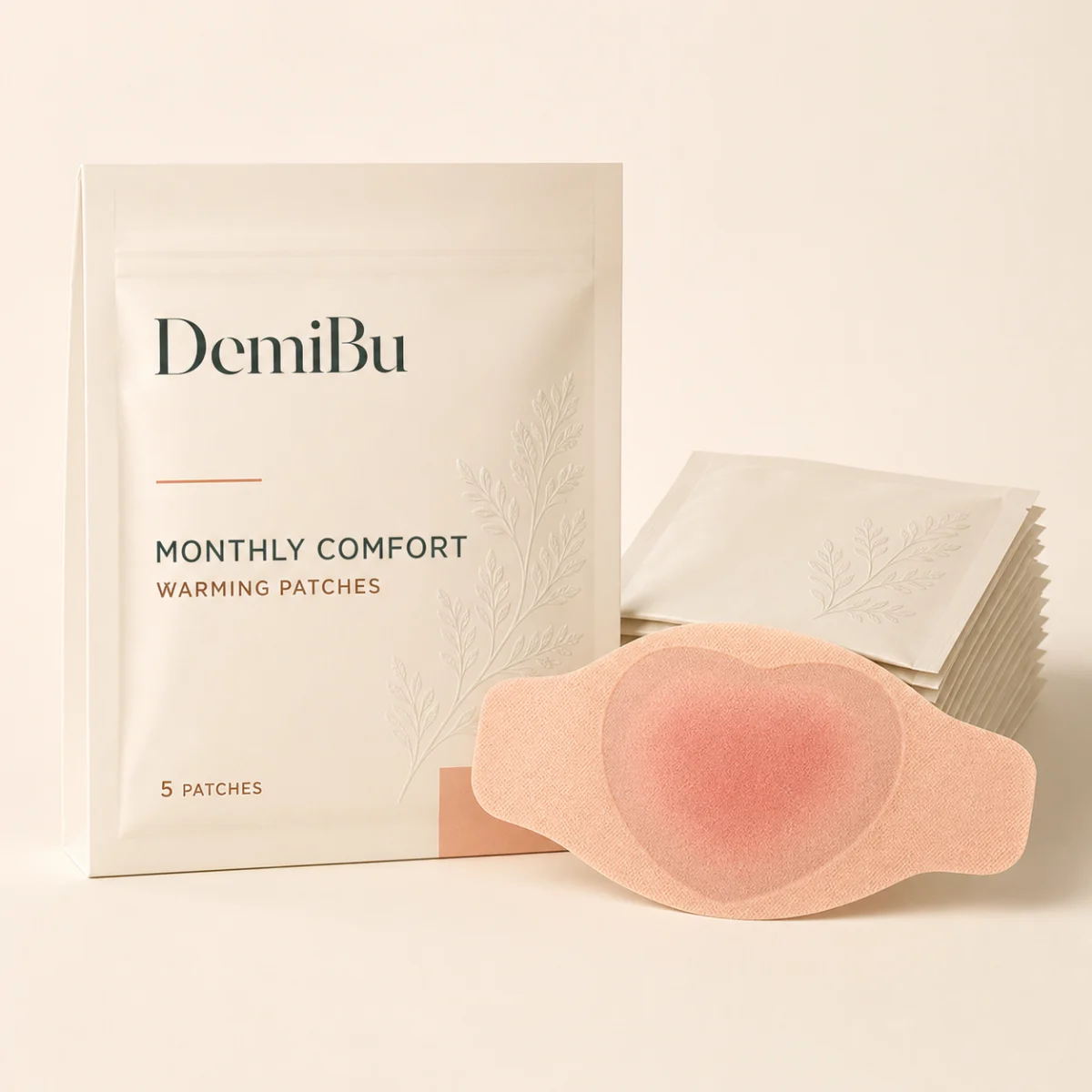
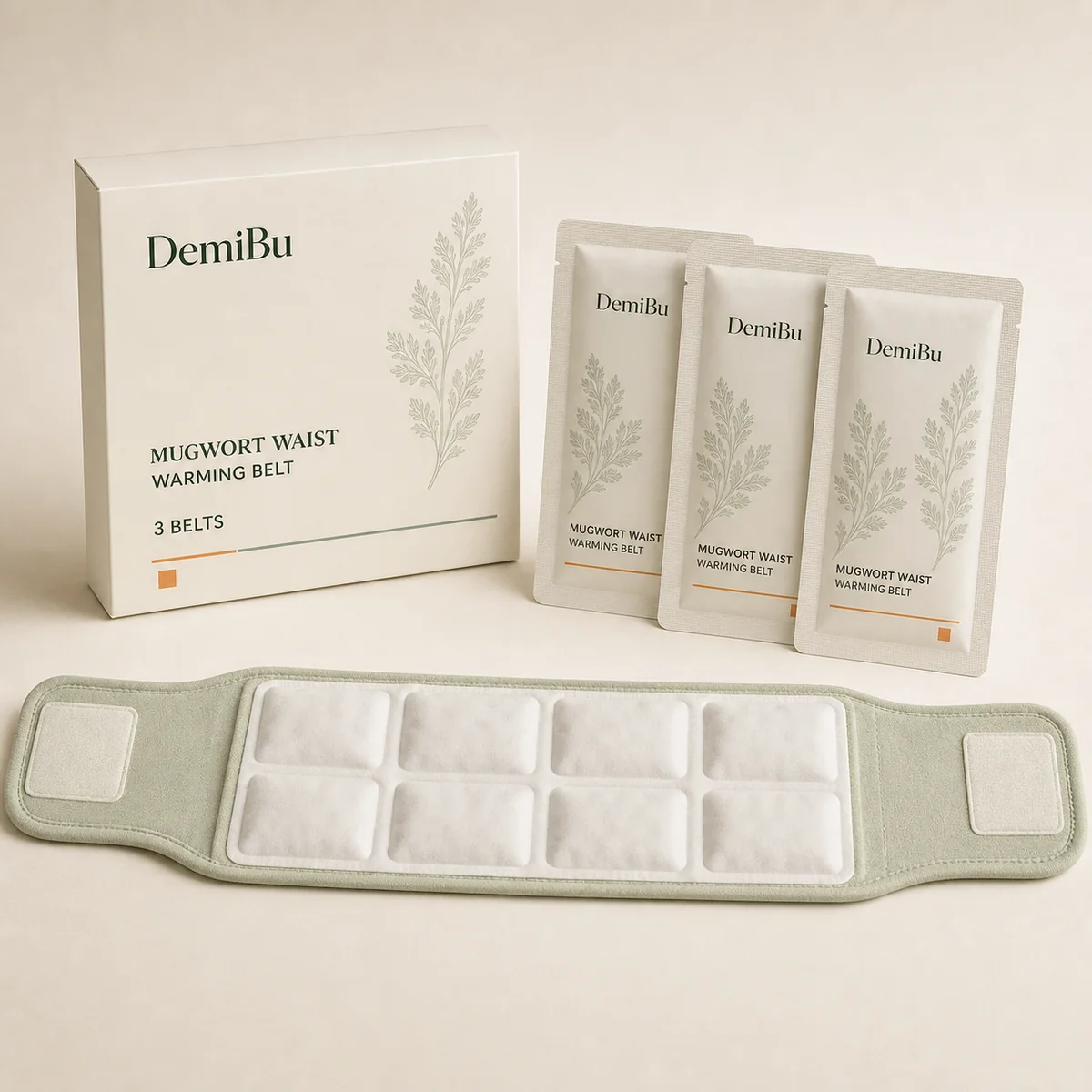
Use a packaging and claims checklist for OEM menstrual comfort patches covering product identity, heat evidence, warnings, artwork and importer review.
What must be verified before any claims review begins?
Claims review starts with a locked physical and commercial product because wording cannot be assessed against an undefined SKU.
Identify legal seller, actual manufacturer, production site, product code, heat system, composition, layers, dimensions, fill or weight, adhesive, liner, intended placement and pouch. State whether the product attaches to underwear, clothing or skin. The name menstrual comfort does not answer these technical questions and does not establish a regulatory category.
Approve representative samples using a written method. Record activation, average and peak temperature, duration, distribution, attachment, movement, discretion, pouch and warnings. Values from a supplier page or another branded product may frame the request but cannot be printed for the final SKU without verification.
Define the destination, importer, buyer type and channel. The same construction can be marketed with very different wording, which can change classification and evidence requirements. Decide who provides regulatory or legal review and when that decision must close relative to component purchase and printing.
Document the buying model and quotation scope. Existing product, private-label packaging and a newly developed patch create different sample, MOQ and validation work. The buyer should not accept a private-label price that silently assumes an unreviewed domestic formula or label.
| Pre-claim item | Required evidence | Why it matters |
|---|---|---|
| Product identity | Manufacturer, site, construction and version | Claims must describe the actual item |
| Placement | Underwear, clothing or skin instruction | Changes heat transfer and warnings |
| Heat profile | Method, curves, peak and duration | Controls factual performance language |
| Contact system | Adhesive, layers and sample observations | Controls suitability and caution questions |
| Destination route | Importer, classification owner and channel | Determines final wording and filings |
| Buying model | Existing, adapted or new development | Defines which evidence must be regenerated |
How should product naming and benefit language be separated?
Use a factual identity first, then review every benefit phrase for evidence, destination effect and channel consistency.
A factual identity can describe a disposable air-activated warming patch intended for the lower-abdominal area or attached to underwear, when the sample supports it. Monthly comfort can describe a usage context. It should not be surrounded by statements that imply treatment of menstrual disorders, elimination of cramps, pain relief, improved circulation or guaranteed daily performance unless the buyer completes a different reviewed route.
The claims matrix lists the exact phrase, where it appears, supporting evidence, classification effect, destination reviewer and status. Factual values such as dimensions, count, placement and verified duration still need the final SKU evidence. Ingredient or material claims require the supplier declaration. Broad terms such as natural, safe, non-toxic, drug free, odorless or hypoallergenic are not used from habit.
Product name, pouch, carton, insert, distributor sheet, ecommerce title, bullets, advertising and social content use the same approved matrix. Online copy is not a separate unregulated layer. If a distributor wants stronger wording, it returns to the buyer or importer rather than being added by a sales representative.
When evidence is incomplete, the phrase stays open or is replaced with bounded factual copy. This may reduce short-term promotional force, but it keeps the first production run from locking the brand into unsupported packaging.
| Copy category | Example direction | Evidence and decision |
|---|---|---|
| Identity | Disposable air-activated warming patch | Exact construction and sample |
| Placement | Attach to underwear and keep flat | Approved SKU instructions |
| Performance | Verified duration under stated conditions | Defined method and representative data |
| Context | Monthly warmth and practical comfort | Buyer market review; no medical implication |
| Medical or physiological | Treatment, pain or circulation language | Exclude unless classification and substantiation route is completed |
What should the packaging checklist contain?
The checklist controls the air-barrier pouch, visible instructions, retail count, market text, coding and shipping configuration.
For the unit pouch, record barrier material or reference, dimensions, seal, opening, print, code and product orientation. Check premature activation, puncture, opening usability and print durability. If custom printing changes film or process, evaluate representative finished pouches. Shelf life belongs to the final product and pouch system.
For the retail pack, record pouches per box, insert, barcode, net count, directions, warnings, responsible-party information, storage and market version. A trial pack, multipack and ecommerce bundle have different unit economics. Product, pouch, box and insert minimums should be quoted separately.
Instructions explain opening, placement, flat application, duration, removal and disposal. Warnings follow the construction and risk review. A public menstrual heat-wrap label demonstrates topics such as underwear placement, time limit, avoiding folding, heat-cell content and reheating cautions. It is a benchmark for questions, not text to copy into MB2B-0008.
Shipping cartons record count, dimensions, gross and net weight, marks and destination version. Inspection verifies the correct pouch, box, insert, code and count. Mixing market versions is treated as a nonconformance even when the physical patch is identical.
How are warnings reviewed without borrowing another brand’s label?
Build warnings from the selected product’s heat, placement, materials and use conditions, then reconcile them with destination requirements.
Start with foreseeable heat misuse: direct skin contact when prohibited, excessive pressure, folding or bunching, sleep, reduced sensation, tight garments, damaged cells, reuse or reheating. Consider children, pets, ingestion and contact with contents where relevant. The wording and exclusions require product and market expertise.
Review the intended user and whether they can perceive and respond to heat. The product should instruct removal if heat becomes uncomfortable. Any limits for medical conditions, pregnancy, skin conditions or other users require qualified review and should not be improvised by a sourcing team.
Placement imagery is checked with text. A picture showing skin application can contradict underwear instructions. Lifestyle imagery should not depict sleep if the warning prohibits it or show folding under a waistband if flat use is required.
Translation is controlled by meaning, not word count. The buyer or importer approves each destination version. The factory confirms printable layout, and inspection confirms that the correct version is packed.
Sources for this section: [1]
Which supplier and market documents belong in the approval file?
Collect documents that answer specific product, manufacturing, safety and destination questions and reject irrelevant certificate bundles.
Supplier files include legal entity and site, exact composition or heat-material statement, construction, adhesive and contact materials, pouch, shelf-life basis, temperature method, sample results, batch coding and inspection records. If another facility performs a critical step, identify it. Public supplier and product materials may identify the actual source; do not turn them into claims of factory ownership, exclusive agency or blanket product approval.
Certificates and reports are mapped to holder, site, model, scope, issuing party and validity. A management-system certificate does not approve every product. A safety-data sheet describes certain material information and handling; it does not settle destination classification or final claims. A domestic product report is not automatically sufficient for another market.
The buyer or importer provides or commissions classification, registration or notification, claims substantiation, final label review, importer details, customs classification and clearance inputs. European Commission and FDA guidance both reinforce the need for accurate product and importer information, but neither source determines the route for this SKU without its full facts.
The approval index shows status: public verified, supplier provided, sample required, buyer-market decision or missing. A missing critical item blocks the related gate. It is not rewritten as a confidence statement in sales copy.
What are the final print and production gates?
Print and bulk production release only when the product specification, claims matrix, artwork, samples and responsibilities required for that stage are approved.
Before print, close product identity, placement, verified values, instructions, warnings, claims, responsible-party text, barcode and dieline. The artwork file has a market, version and approval date. A digital proof is checked, and a physical printed sample is used when pouch, fold, seal or legibility risk justifies it.
Before production, close the retained sample, written specification, materials, packaging, change control, lot coding and inspection plan. The factory agrees not to substitute critical components without notice. The quotation states MOQ, packaging inventory, testing, documents, inspection and handoff.
Before shipment, verify lot results, nonconformance actions, artwork version, count, documents, importer, broker and route. A passed product inspection does not guarantee destination market authorization or customs clearance; those gates remain with the buyer or importer.
After launch, complaints, returns, heat observations and packaging issues feed the next review. Claims are also monitored across channels. A reorder uses the current approved specification and market version, not an assumption that the first order can be repeated without reconfirmation.
| Gate | Must be approved | If open |
|---|---|---|
| Sample | Construction, placement, heat, attachment and pouch | Do not freeze product |
| Claims | Destination classification and phrase matrix | Keep phrase off all channels |
| Final text, warnings, version and dieline | Do not order printed packaging | |
| Production | Specification, components, change control and QC | Do not release bulk |
| Shipment | Lot, documents, importer, broker and route | Hold handoff |
What should the buyer send in the OEM request for quotation?
The RFQ should make the product, market, evidence and packaging scope comparable before price is treated as a decision.
Begin with destination country, buyer or importer, sales channel and intended market position. State whether monthly comfort is a neutral warmth context or whether another classification is being considered by the buyer’s adviser. Include the planned product name and any phrases under review. This allows the supplier to provide the relevant composition and documents without assuming that domestic menstrual or medical language will be reused.
Describe the physical concept: underwear, clothing or skin placement; overall and active dimensions; preferred chamber layout; thickness or discretion target; count per pouch and retail box; and desired unit economics. If the exact reference is not locked, request two or three clearly identified samples rather than one quotation built from a photograph. Ask the supplier to disclose the actual manufacturer and production site for each candidate.
Request heat information in a usable form. Ask for the supplier’s method, activation time, average or working range, peak, duration and measurement conditions. Treat the values as supplier-provided until representative samples are reviewed under the agreed method. Ask whether any requested change to size, fill, layers, breathable film, adhesive or pouch will require new data. Do not ask only for ‘eight hours’ or ‘comfortable temperature’ because those phrases cannot control bulk acceptance.
Define packaging scope at every level. State whether the first order uses neutral pouches, sticker labels, custom printed barrier film, a retail carton, insert, display or ecommerce bundle. Ask separately for product MOQ, printed-pouch minimum, carton minimum, setup or tooling, sample cost, lead time, excess packaging treatment and case configuration. A quote excluding printed barrier film or a required test should not be compared directly with a complete private-label quote.
List the required product and supplier evidence: legal entity, site, composition, construction, contact materials, heat data, pouch, shelf-life basis, current certificates or reports relevant to the SKU, batch code and inspection options. Ask for certificate holder, scope, model and validity. State that irrelevant certificates will not improve the evaluation and that the buyer may request additional destination evidence after classification review.
Finish with approval gates. Samples must be approved before the product specification is frozen. Classification and claims must be approved before final artwork. Printed components must be approved before bulk purchase. Pilot or first-off goods must match the approved construction before full packing. Shipment requires lot inspection, final documents, importer and route confirmation. Assign one owner for each buyer decision so that the supplier receives timely answers.
A complete RFQ may produce a higher initial quote than a one-line inquiry, but it reveals the true commercial choices. The buyer can compare a standard reference, a packaging adaptation and a new development on equivalent scope. It can also remove an unsuitable route before money is committed. The objective is not the lowest visible unit price; it is a product and pack that can be reproduced, described accurately and handed to the importer with the agreed evidence.
| RFQ block | Information to provide | Supplier response required |
|---|---|---|
| Market | Destination, importer, channel and intended positioning | Relevant document and development assumptions |
| Product | Placement, size, construction and desired experience | Exact candidate SKU, manufacturer and site |
| Heat | Requested method fields and open targets | Existing data, method and need for new testing |
| Packaging | Pouch, box, insert, count and language | Separate minimums, costs, versions and lead time |
| Evidence | Composition, material, report and inspection request | Files mapped to holder, scope and SKU |
| Gates | Sample, claim, print, production and shipment owners | Feasible sequence and decision deadlines |
Sources and evidence notes
Public sources help frame terminology, specifications and buyer questions. They do not prove that every factory, formula or destination-market requirement is identical.
- [1]ThermaCare Menstrual HeatWrap Current LabelThermaCare · manufacturer · accessed 2026-08-27
Provides a real label example showing underwear placement, use duration, flat application, activation and extensive heat-cell warnings.
- [2]OEM and ODM Heat Patch ManufacturerKongdy Medical · manufacturer · accessed 2026-08-27
Provides a B2B market reference for customizable heat-patch composition, size and duration; its efficacy language is not reused.
- [3]Guide for Import of GoodsEuropean Commission Access2Markets · regulator · accessed 2026-08-27
Supports the importer’s need to check product requirements, packaging, labeling, documentation and market-specific obligations.
- [4]FDA Import ProcessU.S. Food and Drug Administration · regulator · accessed 2026-08-27
Explains that FDA-regulated imports are reviewed for admissibility and that complete, accurate product and firm data supports the entry process.
- [5]FDA Import BasicsU.S. Food and Drug Administration · regulator · accessed 2026-08-27
Explains importer responsibility, entry review and possible refusal when an FDA-regulated product does not meet applicable U.S. requirements.
How this guide was prepared
Moxa Sourcing Editorial Team
The team translates product references, product samples and China-side sourcing workflows into practical English guidance for overseas buyers.
Moxa Sourcing Supply Review Team
The review team checks supplier attribution, commercial boundaries, product specifications and statements that require sample or market-specific verification.
Product availability, MOQ, price and production specifications are reconfirmed against the selected product reference. The buyer or importer leads the destination-market decision and retains applicable statutory importer duties; Moxa Sourcing supports the process by coordinating product and supplier evidence, specifications, documents, testing and label inputs, version control and agreed professional partners.