Engineer private-label foot-bath bags from wet-use filter sachet to moisture barrier, instructions, filling-line controls and retail pack release.
Treat the pack as three environments, not one bag
Private-label foot-bath packaging must survive dry storage, wet preparation and retail communication; each environment belongs to a different layer.
The inner filter sachet meets the botanical formula and then hot or warm water. The outer barrier keeps dry sachets protected through storage and repeated opening. The retail surface carries identity, quantity, directions, warnings, code and brand information. A gift carton may add presentation and compression protection but should not be mistaken for the moisture barrier.
Draw the pack from the botanical outward: cut material, filter sachet, optional individual overwrap, multi-count outer bag or box, shipping carton. Name the purpose and material code of every layer. Removing a layer then becomes an engineering decision with known consequences rather than a cost cut made from appearance.
Public OEM pages illustrate that formula, filter bag, size and private-label package are separate selectable fields. That is useful sourcing evidence. It does not show that a particular paper-look pouch has adequate barrier, that a seam survives the selected formula, or that overseas copy is acceptable.
Start with the actual formula and dose because particle size, sharp stems, oils, powder fraction and unit weight influence filter and seal choices. A package developed around coarse mugwort can fail after a fine ginger-containing blend is introduced. Formula changes should trigger packaging impact review.
Engineer the wet-use filter sachet around particles and preparation
The inner bag must fill cleanly, retain dry particles, wet through as intended and remain intact during the approved preparation.
Specify filter material, basis or supplier grade where available, dimensions, seal type and width, fill zone, seam position and optional string or tag. Record whether the sachet is heat-sealed, ultrasonically sealed or made another way. Visual tea-bag similarity does not control strength or compatibility.
Screen dry leakage by handling filled sachets over a contrasting surface and inspecting the retail pack for migrated powder. Check seams at target and upper fill. Then prepare sachets using the proposed water temperature, time and handling. Record seam opening, material delamination, fiber shedding, botanical escape, floating behavior and cleanup.
| Inner-sachet feature | Variable to freeze | Test with actual formula | Failure mode | |—|—|—|—| | Material | supplier grade, composition and basis | wet integrity and sensory neutrality | tear, odor or shedding | | Dimensions | width, length and fill zone | fill distribution and swelling space | overpacked seam or poor wetting | | Seal | method, width and setting window | dry handling and wet soak | pinhole or opening | | Botanical cut | size range and powder limit | retention and release observation | dust migration or debris escape | | Unit dose | target and tolerance | line fill and wet capacity | seam loading or inconsistent use |
Bag whiteness, transparency or plant-based appearance should not substitute for performance. If compostable, biodegradable or plastic-free language is proposed, it requires precise material evidence and market review. A filter’s origin does not prove disposal conditions or environmental outcome.
Retain wet-test photographs and failed samples. If powder escapes, determine whether cut, fill, seal or material is responsible before choosing a tighter filter that might alter the intended preparation. Optimize the system, not one isolated metric.
| Packaging layer | Engineering job | Fields to freeze | Release evidence |
|---|---|---|---|
| Botanical fill | fit the approved inner format | formula cut, powder limit, unit mass and swelling space | production-equivalent fill samples |
| Wet-use filter sachet | retain botanicals during approved preparation | material grade, dimensions, seam method and seal width | dry-loss, wet-strength and herb-escape results |
| Optional overwrap | protect individual units when the channel needs it | barrier, seal, code and opening method | humidity or portability rationale plus pack test |
| Multi-count barrier | protect remaining dry sachets after repeated opening | structure, zipper, tear notch, seal window and count | unopened and opened-use observations |
| Retail information surface | communicate identity, quantity, directions and traceability | dieline, copy version, barcode and lot-code zones | formed printed golden pack |
| Shipping system | prevent compression, puncture and abrasion | unit orientation, carton count, divider and stack basis | handled-carton inspection and packed dimensions |
Select the dry barrier for unopened life and repeated bathroom use
The outer package must protect the agreed number of sachets from moisture, odor transfer and handling before the last unit is used.
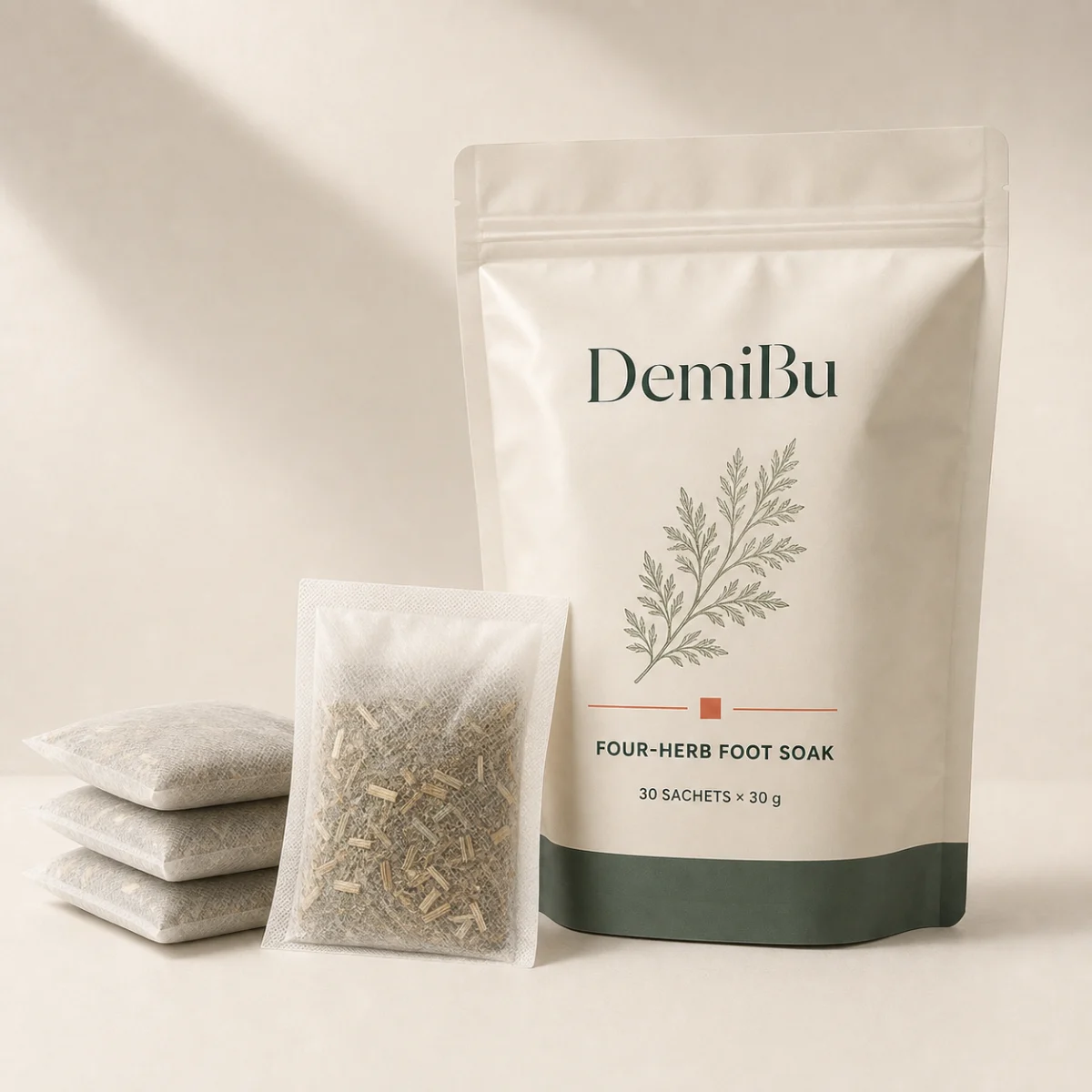
A thirty-count bag may be opened repeatedly over weeks, often near water and humidity. The unopened shelf plan and after-opening routine are different exposures. Define whether sachets are loose inside one resealable barrier, individually overwrapped, grouped in smaller packs or sealed in a non-reclosable carton. Each architecture changes cost, waste, convenience and protection.
Record barrier structure or controlled supplier code, dimensions, sealant layer, zipper if used, tear notch, seal width, puncture considerations and decoration. A kraft paper look may be a printed film or a paper laminate; buyers should know the functional structure rather than infer performance from texture.
Run seal checks on production-equivalent packs at low, target and high fill positions if the line window is being set. Examine channel leaks, contamination in the seal, zipper alignment, tear behavior and consumer reclosure. Store opened packs under a defined use simulation and observe sachet condition and odor; avoid turning a short screen into an unsupported shelf-life claim.
Odor containment matters for warehouse neighbors and gift sets as well as for the herb. Check whether the pack keeps the intended botanical aroma within an acceptable range and whether inks, adhesives or other packed items contribute off-odor. Strong smell is not proof of potency.
Where individual overwrap is considered, calculate whether it solves a real humidity, portability or dosing need. It adds material, printing surfaces and pack steps. A well-designed resealable multi-count barrier may be sufficient for some routes; other channels may value individually protected units. The decision requires evidence and customer context.
Barrier decisions can be supported through supplier data and product-specific studies, but do not confuse a film property measured under stated laboratory conditions with the shelf life of the finished sachet. Seal quality, pinholes, folds, zipper use, storage and botanical moisture all influence the real pack. Define what each report supports.
Create an opened-pack simulation that matches the retail count. Open and reclose at a defined frequency, remove one sachet each cycle, expose the zipper area to ordinary handling and observe remaining units. Compare with unopened controls. The goal is to identify practical moisture or odor change, not to manufacture a universal storage claim.
Make retail instructions work before graphic design begins
The dieline must reserve readable space for preparation, contents and market information before decorative claims occupy the panel.
Build a copy map with front identity, formula or ingredient statement as required, net quantity and count, preparation steps, external-use or other warnings determined by review, storage, lot code, date expression, business details, barcode and language versions. Confirm which information stays on the multi-count pack and whether any must remain with individual sachets.
Directions should specify the approved dose, vessel or water basis, preparation temperature and time where confirmed, use duration if supported as a practical instruction, disposal and storage after opening. Use diagrams only if they match the words. A bathtub image beside a foot-bath product can create unintended use ambiguity.
Health promises are excluded: detoxification, circulation improvement, sleep support, pain relief and treatment do not belong on this pack without suitable substantiation and destination authorization. FTC guidance covers implied as well as express claims, so product names, icons, testimonials and color-coded body graphics require review too.
Typography is part of usability. Print production-equivalent proofs at actual size, check contrast on the chosen substrate and confirm barcode and lot-code readability on the formed pack. Metallic films, patterned backgrounds and zipper zones can reduce legibility. Translation should follow technically approved source copy, with a version matrix for every market.
Use factual merchandising: named formula, measured sachets, botanical aroma, preparation ritual, pack count and format. Do not imply that water color or scent intensity demonstrates biological action.
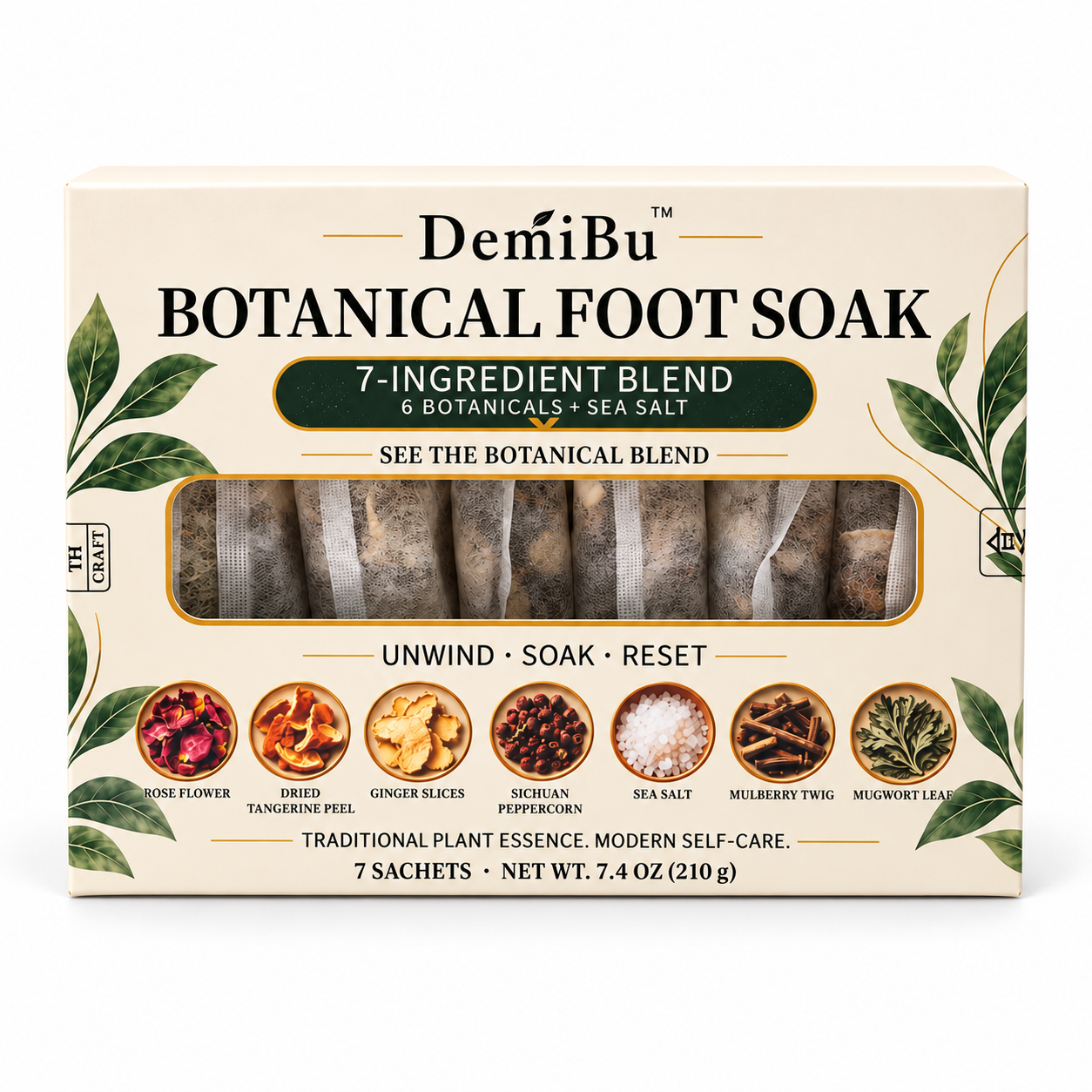
Copy hierarchy should help a purchaser distinguish formula, unit dose and count at a glance. A front panel might say mugwort foot-bath sachets, six grams each and thirty sachets, subject to destination format rules. Keep decorative botanical illustrations consistent with the actual formula so a pictured ginger root or flower is not interpreted as an undeclared component.
Prepare a translation glossary for botanical names, preparation verbs, warnings and pack terminology. Back-translation or bilingual technical review can catch a direction that changed meaning. Lock the source copy and translate by version; editing six language files independently invites contradictions.
Sources for this section: [3]
Validate the assembled retail pack through line and transit
Packaging approval requires actual filling, sealing, coding, counting, cartoning and handling—not an empty printed pouch.
Run a pilot on the intended line. Observe botanical feeding, dust accumulation, fill variation, sachet position, outer-pack counting, zipper contamination, heat-seal window, code placement and rejected units. Establish line-cleaning and changeover expectations, especially when several blends share equipment.
Count control and weight control answer different questions. A finished bag can have the right gross weight with one missing heavy sachet and one extra light sachet. Use an appropriate combination of in-process counts, checkweighing and final inspection. Link results to the production lot.
Pack finished bags in the actual unit carton or master carton. Evaluate compression, drops or handling, vibration where selected, warm and humid route considerations, retail scuffing and seal integrity. Record packed dimensions and gross weight because excessive air can increase freight cost and allow movement.
Artwork approval should include dieline version, material, print process, color reference, zipper and seal keep-out zones, tear notch, code zone and barcode proof. A flat print sheet cannot approve how information aligns after forming and filling. Retain a formed golden pack.
If a material, formula cut, fill count, zipper, adhesive, ink or carton changes, perform an impact review and document which checks repeat. This protects continuity without demanding an indiscriminate full retest for every cosmetic change.
Filling-line capability should be confirmed with the selected particle distribution. Fine powder can foul seals and sensors, long stems can bridge a hopper, and aromatic dust can transfer between formulas. A factory trial should record line speed only after quality is stable. Production efficiency is subordinate to correct dose and containment.
Warehouse and courier handling deserve separate thinking. Retail pouches may flex safely in a full carton but crease or puncture when shipped individually with hard products. Specify ecommerce mailer or protective arrangement if direct fulfillment is part of the channel, and verify that labels remain readable after that route.
Release private label through a packaging bill of materials
A controlled bill of materials and RFQ expose packaging minimums, version risk and ownership before production.
The RFQ should specify formula and cut, dose, inner material and size, seal, count, overwrap decision, outer barrier, zipper, dimensions, printing, carton, market, languages, forecast, pilot and required delivery. Request component minimums, printing plate or cylinder charges, lead times, sample stages, excess-material policy and substitution notification.
Separate product minimum from packaging minimum. Printed outer film can require more units than the first fill order, creating buyer-owned stock. State storage conditions, ownership, write-off terms and what happens when copy changes. Quote neutral, label-applied and fully printed options if the channel is not yet proven.
The single responsibility paragraph is limited: the factory makes and packs the approved formula with the controlled packaging bill and supplies agreed records; Moxa Sourcing coordinates specifications, samples and inspection within scope; the buyer or importer approves ingredient and material suitability, classification, claims, instructions, warnings, labeling, registrations, customs and market release for the exact destination.
Release gates are formula and cut freeze; inner-bag wet test; outer-barrier and opened-use screen; actual-size copy proof; decorated pilot; line and transit inspection; document review; and production authorization. Name the owner and disposition at each gate.
A private-label pack is ready when the last sachet is as protected and understandable as the first, the factory can reorder every layer by code, and sales can describe the ritual without depending on a prohibited health promise.
Packaging artwork must remain editable when destination facts are unresolved. Use a controlled copy deck and dieline rather than placing unverified claims into a final print file. The cost of delaying a printing cylinder is often lower than destroying thousands of obsolete pouches.
Inspect unused printed material at reorder: version, storage condition, odor, blocking, seal behavior and quantity. Buyer-owned film is not automatically fit forever. Agree who authorizes its continued use and how obsolete rolls are documented and disposed of or returned.
The RFQ should also request pallet or courier-carton data, gross and net weights, pack orientation and maximum stacking assumption. These fields reveal whether a premium pouch design creates avoidable freight air or warehouse damage. Cost the pack in its actual route, not as a flat film price.
At final approval, photograph the sealed pouch front, back, top, bottom, zipper, tear notch, code and opened arrangement. Store images beside the signed bill of materials. This gives receiving teams an operational reference and prevents a lifestyle rendering from becoming the quality standard.
Sources and evidence notes
Public sources help frame terminology, specifications and buyer questions. They do not prove that every factory, formula or destination-market requirement is identical.
- [1]Custom OEM Herbal Foot Bath PacksBX Medicine · manufacturer · accessed 2026-08-27
Public manufacturer evidence that herb formula, filter bag, size and private-label pack are separate sourcing decisions; export or efficacy claims are not adopted.
- [2]Pure Herbal Foot Bath PacksMugwort Wellness · manufacturer · accessed 2026-08-27
Public supplier example of a dry herbal foot-bath sachet and OEM product category. Health or detoxification statements are not adopted.
- [3]Health Products Compliance GuidanceU.S. Federal Trade Commission · regulator · accessed 2026-08-27
Supports review of express and implied health claims and the need for appropriate substantiation before advertising.
How this guide was prepared
Moxa Sourcing Editorial Team
The team translates product references, product samples and China-side sourcing workflows into practical English guidance for overseas buyers.
Moxa Sourcing Supply Review Team
The review team checks supplier attribution, commercial boundaries, product specifications and statements that require sample or market-specific verification.
Product availability, MOQ, price and production specifications are reconfirmed against the selected product reference. The buyer or importer leads the destination-market decision and retains applicable statutory importer duties; Moxa Sourcing supports the process by coordinating product and supplier evidence, specifications, documents, testing and label inputs, version control and agreed professional partners.