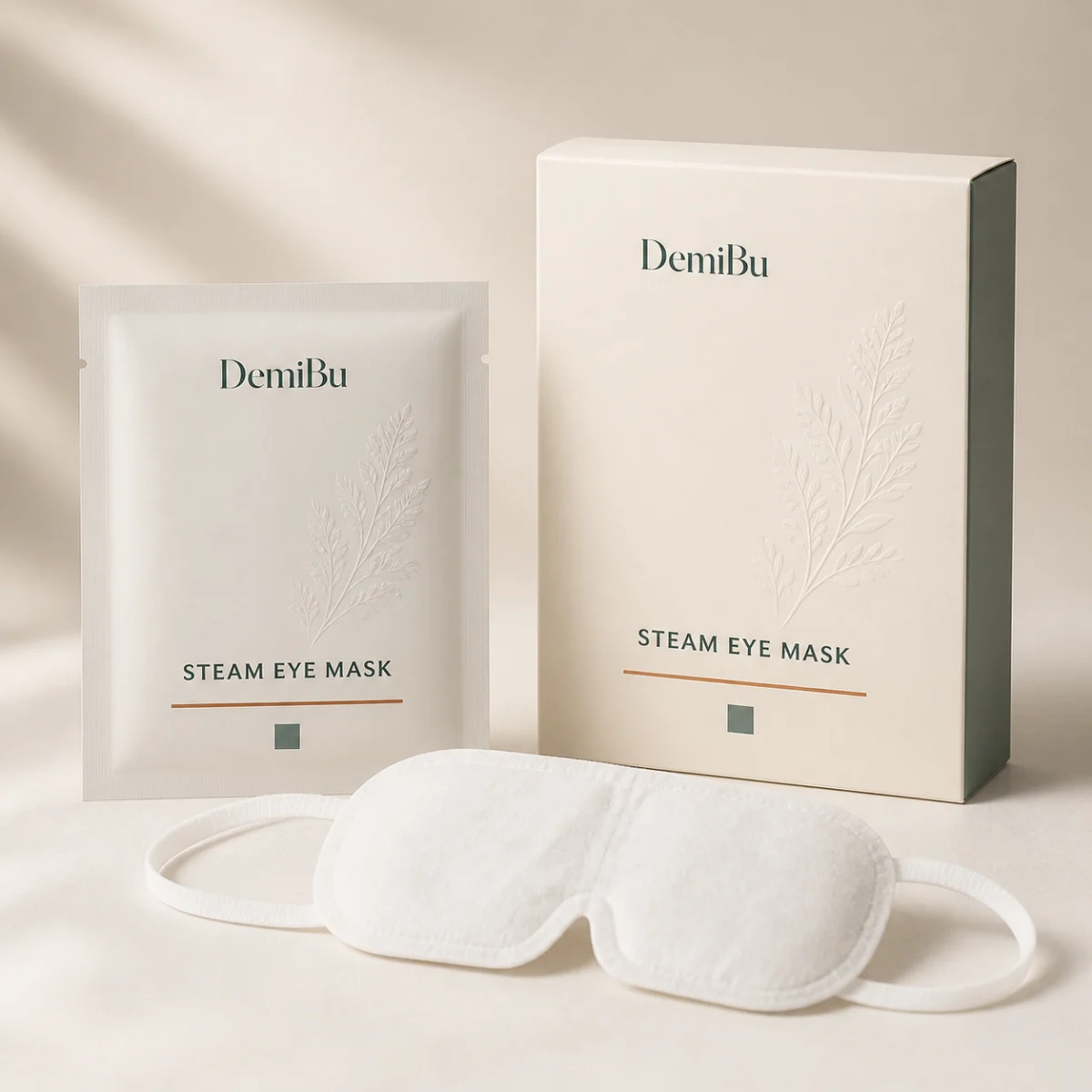
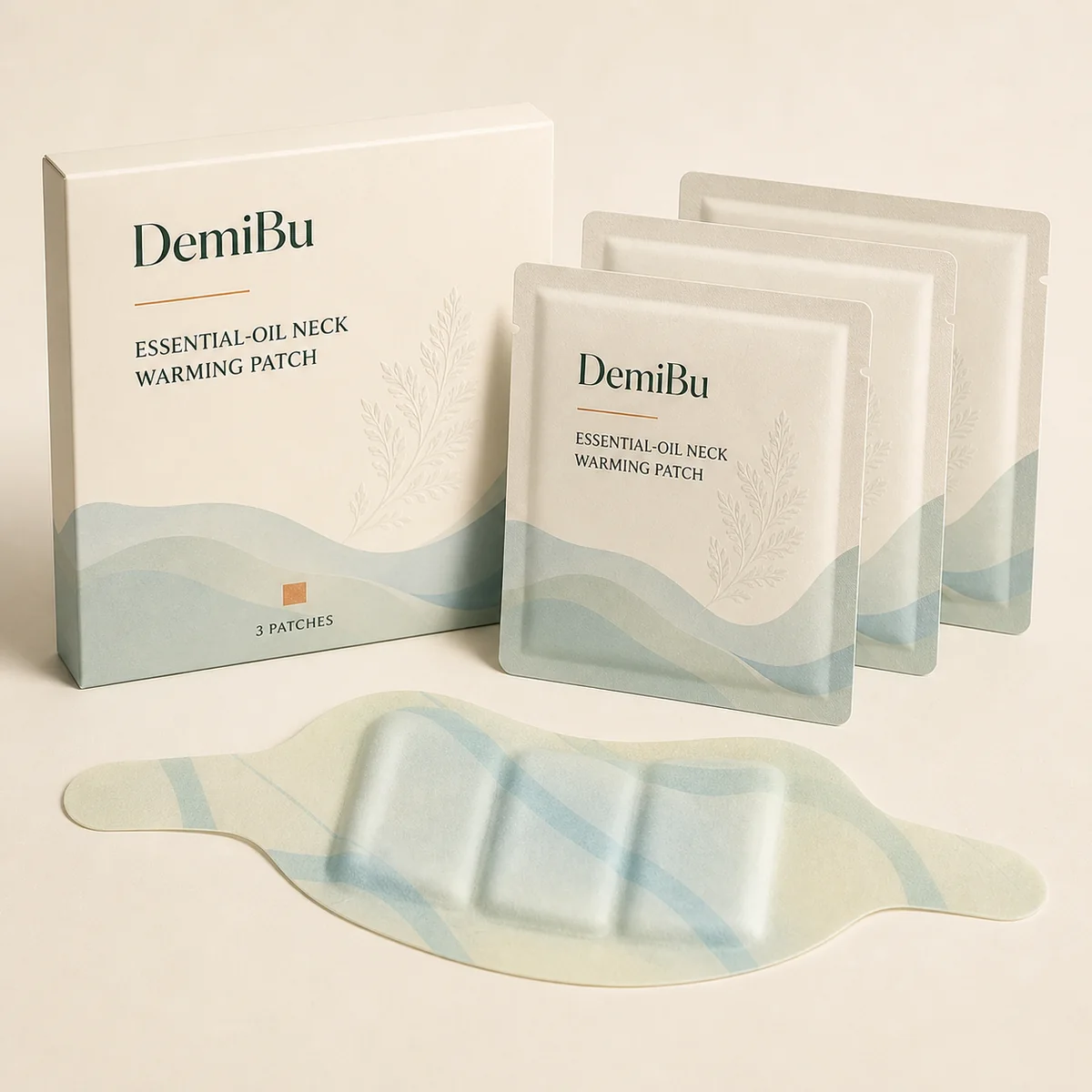
Plan a private-label steam eye mask range around formula, fragrance, heat reference, packaging and the real MOQ created by each customization.
Build the range around a hero construction, not a fragrance catalogue
The economical launch is usually one mask construction with a tightly limited sensory range, because every scent and printed component can create another sample, artwork, inventory and replenishment problem.
A brand can be tempted by a factory page showing many aromas, colors and cartons. That breadth is evidence of available customization fields, not evidence that launching every combination is sensible. The commercial unit is the complete sealed mask: heating insert, facial geometry, skin-contact layer, ear-loop behavior, fragrance system, pouch laminate, instructions and retail count. If any one of those elements changes, the buyer must decide whether the change creates a new SKU, a new test obligation or merely an artwork revision.
Begin with a range hypothesis. Name the primary customer, selling channel, expected retail price band, case quantity and reorder rhythm. A travel buyer may favor a neutral scent and compact singles, while a spa retailer may value a recognizable aroma and giftable count. Those are different merchandising needs, but neither justifies inventing eye-health or sleep outcomes. The range plan should explain why each proposed variant earns its place in inventory.
Unscented is useful as a reference because it separates the warming experience from fragrance preference. It is not automatically fragrance-free in the regulatory or allergen-review sense, and it is not automatically hypoallergenic. Ask the supplier what unscented means for the selected formula and whether odor from the heating matrix or materials remains perceptible. Approve the wording only after the buyer reviews the finished composition and destination requirements.
The first commercial decision is therefore subtraction. Choose one base construction, one pouch format and one retail count. Add one fragrance only if it serves a clear audience or price architecture. This concentrates sampling and printed-material minimums, makes consumer feedback easier to interpret and protects cash from slow-moving scent inventory. A broad scent story can be developed after replenishment data exists.
Translate fragrance and heat options into six approvable records
Each selectable feature needs a named reference, evidence request and boundary so sales language cannot outrun the finished sample.
Anchor the thermal offer first. Choose one existing heating matrix before requesting custom changes. Request measured warm-up, operating range, peak and duration from finished samples. A catalogue number is only a lead until the selected finished masks are measured.
Treat facial fit as a commercial specification. Select adult shape, nose bridge and ear-loop construction for the target user. Request dimensions, fit-panel observations and tensile checks. One approved drawing plus a retained mask prevents vague requests for a more premium fit.
Give aroma its own identity file. Treat unscented and each scent as separate sensory references. Request fragrance name, composition disclosure needed for review, load and retained sample. A scent name without a formula reference cannot support consistent replenishment.
Describe the layer stack in procurement language. Define outer printable layer, skin-contact layer and heating insert. Request bill of materials, supplier declarations and finished-unit inspection. Subjective adjectives should be backed by a named material or an approved tactile standard.
Make the individual pouch part of product performance. Choose barrier pouch, individual artwork, multipack count and master carton. Request dielines, seal checks, pack-out sample and carton specification. Opening the barrier is the activation event, so pack conversion cannot be treated as decoration alone.
Calculate minimums by customization route. Separate stock-reference, custom pouch, custom carton and full formula MOQ. Request written quote with tooling, print, sample and testing scope. The controlling minimum may come from print, components or production rather than the mask assembly itself.
| Decision | What to choose | Evidence to request | Approval boundary |
|---|---|---|---|
| Heating reference | Choose one existing heating matrix before requesting custom changes. | Measured warm-up, operating range, peak and duration from finished samples. | Do not combine performance figures from different supplier variants. |
| Mask geometry | Select adult shape, nose bridge and ear-loop construction for the target user. | Dimensions, fit-panel observations and tensile checks. | Record the approved physical sample and drawing. |
| Fragrance | Treat unscented and each scent as separate sensory references. | Fragrance name, composition disclosure needed for review, load and retained sample. | Never infer product efficacy from botanical scent. |
| Material stack | Define outer printable layer, skin-contact layer and heating insert. | Bill of materials, supplier declarations and finished-unit inspection. | Marketing terms such as soft or premium need a measurable reference. |
| Pouch and carton | Choose barrier pouch, individual artwork, multipack count and master carton. | Dielines, seal checks, pack-out sample and carton specification. | The pouch is functional because premature air exposure changes the product. |
| MOQ route | Separate stock-reference, custom pouch, custom carton and full formula MOQ. | Written quote with tooling, print, sample and testing scope. | MOQ is not final until the customization scope is fixed. |
Run fragrance commercialization as a small portfolio project
A fragrance is ready for purchase only when its identity, sensory reference, pack code, documentation request and reorder implication agree.
Create a variant card for every candidate: internal code, supplier fragrance name, intended public name, formula revision, scent intensity target, selected mask construction, pouch design, carton design and sample date. Avoid accepting labels such as lavender, herb or mugwort as complete specifications. The public name may be marketing language; the factory still needs an unambiguous material and load reference that can be repeated.
Evaluate candidates blind where practical. Present sealed, coded samples under the same conditions and ask reviewers to score opening intensity, character, persistence during the intended wearing period and residual odor after removal. The scorecard measures sensory preference and consistency; it does not measure relaxation, sleep, visual comfort or any medical outcome. Keep comments that describe aroma rather than diagnoses or promised benefits.
Use a kill rule before requesting artwork. A candidate should stop if the scent cannot be identified consistently, composition information required by the buyer is unavailable, the printed minimum creates unacceptable inventory, or the aroma masks a packaging or heating odor rather than solving it. Removing a weak variant before print is cheaper than explaining it after cartons and pouches are produced.
Retain sealed references from the approved sample and the first production lot. The purchasing specification should state how production is compared with the reference, who may accept a small sensory deviation and what event triggers resampling. Changes in fragrance supplier, load, heating insert, nonwoven material or barrier pouch can alter the perceived profile, so the review cannot be isolated from construction changes.
For copy development, describe the variant plainly: scented or unscented, named aroma, single-use warming format, unit count and directions. Do not turn the botanical name into proof of effectiveness. If the brand wishes to make a benefit statement, the buyer must define the intended market, evidence and classification pathway independently of the fragrance story.
- One internal code for every fragrance-formula combination
- A sealed sensory reference and dated scorecard
- Separate MOQ for pouch, carton and fragrance change
- A written rule for substitution and resampling
Use channel economics to decide which variants deserve inventory
The channel changes pack count and presentation, but it should not create contradictory identities for the same physical mask.
Model the landed unit before choosing decorative options. Include the mask, individual barrier pouch, retail carton, insert, assembly, master carton, testing scope, inspection and estimated freight basis. Then divide printed-component minimums by a realistic sell-through period. A scent that looks inexpensive at factory unit level may be costly when its dedicated pouch and carton remain in storage.
Travel and hospitality programs benefit from small packs, robust seals and instructions that survive multilingual use. Beauty and spa shelves may support a more tactile carton, but the product statement still needs to remain factual. Ecommerce favors variant names that are easy to distinguish on a thumbnail and carton sizes that replenish without creating excessive stock. These priorities should be decided before dielines are released.
A useful launch allocation is demand-led rather than symmetrical. There is no business reason to order equal quantities of unscented and scented versions merely because they share a base mask. Ask the factory for the minimum by printed design, the ability to share neutral components and the cost of holding undecorated material. The answer reveals whether a proposed assortment is operationally real.
Review the range after the first reorder window. Compare inquiry conversion, sample feedback, actual purchase mix, returns attributed to scent preference, aged inventory and the cost of keeping each artwork active. Expand only when evidence shows a distinct buyer. Consolidate when two variants compete for the same customer and divide the same minimum.
| Channel | What to prioritize | Primary operational risk |
|---|---|---|
| Travel and hospitality | Single units, compact cartons and neutral or low-intensity scent options | Premature activation, luggage pressure and multilingual instructions |
| Beauty and spa retail | Sensory choice, surface finish and giftable multipacks | Benefit language drifting into eye-treatment claims |
| Ecommerce private label | Clear variant naming, review-safe claims and replenishable carton sizes | Too many scent SKUs before demand is proven |
Keep aroma language outside prohibited outcome promises
Scent and warmth may describe the experience, but they do not by themselves establish sleep, eyesight, treatment or skin-improvement claims.
Screen the name, pouch front, instructions, ecommerce bullets, images, testimonials and distributor scripts as one communication set. A cautious carton can still be undermined by a landing page that implies treatment or correction of a condition. Supplier pages are useful here only for observable format and customization fields; their promotional claims are not inherited by the private-label buyer.
The factory controls manufacture to the approved construction and supplies the agreed production records. Moxa Sourcing coordinates references, samples, specifications, checkpoints and China-side handoff. The buyer or importer selects the destination pathway, obtains qualified review, approves the ingredient and warning text, controls advertising and arranges entry and clearance. A testing or logistics provider owns only the service specifically contracted.
If fragrance, heating mechanism, contact material, directions, target user or public claims change, reopen the relevant assessment. Do not treat a previous version as universal permission. The most defensible commercial language is often the most useful: what the product is, what is in the pack, how it is opened and worn, what aroma was selected, and when the user should stop using it.
Claims restraint is also an assortment advantage. It allows the same truthful product core to be adapted for travel, gifting or personal-care merchandising without inventing a different promised outcome for every channel. Destination-specific wording still requires current buyer review before artwork release.
| Party | Owns | Does not automatically own |
|---|---|---|
| Factory | Manufacturing, factory controls, agreed batch and product records | Destination classification, buyer advertising or customs clearance |
| Moxa Sourcing | Supplier coordination, samples, specification, quality checkpoints and handoff | Universal compliance guarantee or importer-of-record role |
| Buyer / importer | Market pathway, assessment, registration, label, claims, entry and sale authorization | Factory production execution |
| Testing, legal or logistics provider | The specifically contracted report, advice, filing or transport service | The entire product or commercial decision |
Sources for this section: [3]
Send an RFQ that exposes the real cost of customization
A workable request names the base sample, range size, pack architecture, evidence questions and first-order plus reorder quantities.
Open with the exact product reference or sample ID and state that the project is a single-use air-activated warming eye mask. Specify whether the launch uses the current heating construction or requests a technical change. Add destination, channel, target quantity, intended retail count and preferred launch date. This prevents a fragrance conversation from concealing unresolved fundamentals.
List every planned variant on one sheet. For each, show scent status, internal code, pouch artwork, carton artwork, unit count and forecast quantity. Ask for separate minimums and prices for stock-format wholesale, custom printed pouch, custom carton and any formula or fragrance modification. Tooling, sampling, artwork proof, testing and inspection should appear as visible line items.
Request production-intent masks for thermal observation, fit, scent and barrier review. State the method questions rather than asking whether quality is good. The resulting approval file should connect the retained unit to its construction, formula, pouch, copy deck and dated decision. Only then should the brand freeze artwork and issue a purchase specification.
Before deposit, reconcile purchase quantity with printed-material exposure. Before shipment, verify assortment, pouch seal appearance, lot coding, carton count, artwork revision and the agreed product-specific checks. Preserve retained samples from the shipment. Any substitution or variance needs a written disposition; an informal promise to correct the next order is not inventory control.
The commercial goal is a repeatable hero SKU, not the widest possible catalogue. A buyer that can reorder one controlled mask in one or two clearly differentiated sensory versions has a stronger business than a buyer holding many fragrances with weak evidence and divided cash.
- Base sample and construction revision
- Unscented and fragrance variant matrix
- First-order quantity plus 90-day reorder estimate
- Pouch, carton and master-carton specifications
- Evidence owner and artwork approval owner
- Inspection and shipment handoff requirements
Sources and evidence notes
Public sources help frame terminology, specifications and buyer questions. They do not prove that every factory, formula or destination-market requirement is identical.
- [1]Steam Eye Mask Product PageHoda Technology · manufacturer · accessed 2026-08-27
Public manufacturer evidence that disposable steam eye masks are offered as air-activated warming products with configurable scent and pack options; any performance figure remains sample-specific.
- [2]OEM Steam Eye Mask ManufacturerGuanma Medical Supplies · manufacturer · accessed 2026-08-27
Public manufacturer evidence for mask size, material, fragrance, individual pouch, multipack and private-label customization fields. Therapeutic marketing statements are not adopted.
- [3]Cosmetics Labeling ClaimsU.S. Food and Drug Administration · regulator · accessed 2026-08-27
Supports the rule that cosmetic claims must be truthful and that disease or structure/function claims may change U.S. product classification.
How this guide was prepared
Moxa Sourcing Editorial Team
The team translates product references, product samples and China-side sourcing workflows into practical English guidance for overseas buyers.
Moxa Sourcing Supply Review Team
The review team checks supplier attribution, commercial boundaries, product specifications and statements that require sample or market-specific verification.
Product availability, MOQ, price and production specifications are reconfirmed against the selected product reference. The buyer or importer leads the destination-market decision and retains applicable statutory importer duties; Moxa Sourcing supports the process by coordinating product and supplier evidence, specifications, documents, testing and label inputs, version control and agreed professional partners.