Gourd moxibustion: from the parts to the complete setup
Learn what the shell, pins, mesh, base and smoke connection do. Compare actual constructions, read the evidence in context and plan the complete clinic setup.
Configuration · Connections · Supply scope
We coordinate product, sample, packing and quotation questions. Send the setting and component list you need to resolve.
Discuss a configuration
The essential distinction: Gourd moxibustion uses burning moxa held inside a prepared gourd-shaped enclosure, usually supported by a separate base. The fuel supplies the heat; the shell, holding pins, mesh and base organize the local arrangement. A side outlet can connect to a smoke hose. The outlet alone does not provide extraction or air cleaning.
Three reading routes
01
Start with the device
Identify the heat source, construction and visible parts.
02
Inspect the details
Compare the base, pin positions, dimensions and hose interface.
03
Plan the setting
Separate capture, treatment, maintenance and supply scope.
What is gourd moxibustion?
Gourd moxibustion uses burning moxa held inside a prepared gourd-shaped enclosure, usually supported by a separate base. The fuel supplies the heat; the shell, holding pins, mesh and base organize the local arrangement. A side outlet can connect to a smoke hose. The outlet alone does not provide extraction or air cleaning.
In Chinese, the term hulu jiu can refer either to the tool or to a practitioner-delivered treatment using it. A product description identifies components; a hospital description concerns a clinical procedure. Buying a similar enclosure does not reproduce the clinical setting, assessment or intervention.
Compared with a handheld moxa roll, the enclosure brings fuel retention, support and the local heat environment into one assembly. Compared with an electrically heated pad, it still involves combustion, ash, smoke and extinguishing. Some products use a metal chamber or composite cover rather than a natural gourd; the name and silhouette do not settle the construction.
History: distinguish cultural objects from device evidence
Gourds have a place in Chinese medical culture. The National Museum of Traditional Chinese Medicine lists a Qing-dynasty medicine gourd as a container. That object documents medicine storage, rather than the internal construction of a modern combustion tool. [1]
A published 2015 utility-model document describes a gourd shell, internal moxa supports, a metal support screen and an exhaust connection. It establishes a dated disclosed design. Its promotional benefit statements are not independent testing, an origin date for the practice, or a legal assessment of a current product. [2]
A 2016 community-health report describes a different arrangement with smoke leaving at the top. A 2021 hospital training report documents contemporary professional teaching. These records help trace modern use; neither establishes the earliest use or a universal specification. [3] [4]
The material reviewed here does not establish that this same modern device appears in Sun Simiao’s ancient writings or holds a separate national intangible-heritage designation. A cultural association and a documented device design should remain separate.
Common constructions and what changes between them
Read the actual configuration before comparing names such as traditional, durable, steaming or multi-head. Natural and gold-coloured finishes are appearance options in the supplied material. Colour does not establish lining composition, heat resistance or a clinical advantage.
These are observable construction categories, not a proven one-way history of technical progress. A natural shell and a metal chamber can differ in fuel retention, cleaning, replaceable parts and support. A product called steam moxa requires evidence of a water path and steam-generating mechanism before it can be described as a steam device.
| Construction | Visible feature | Selection question |
|---|---|---|
| Natural gourd shell | A cut shell, internal supports and separate base | How are natural variation, lining and cracks specified? |
| Side-outlet configuration | Metal outlet and matching hose | What are the mating dimensions and downstream destination? |
| Adjustable or reversible base | Different seating or mesh orientation | Which orientation does the model instruction permit? |
| Metal/composite variant | Metal chamber, fabric or other outer parts | Which materials contact heat and how are they maintained? |
| Multi-head arrangement | Several tools connected to branches and a main unit | Will tools run together, and is each branch verified? |
Heat, smoke and the limits of the enclosure
Burning moxa produces heat and smoke together. Heat can move by radiation, air movement and conduction through contacting parts. Shell shape, fuel position, base geometry and ventilation influence the arrangement; they are not an automatic temperature-control system.
Fuel size and burn state, distance within the assembly, extraction strength, hose resistance, coverings and room conditions can all affect behaviour. Pin count alone cannot predict a temperature. Mechanical height adjustment and a separate thermometer are different from a feedback controller that regulates heat.
Warmth, steam generation and claims about a special infrared wavelength are different propositions. Warmth does not demonstrate a specific therapeutic mechanism. Likewise, moving visible smoke into a hose does not establish that the remaining room air meets an exposure requirement.
Traditional explanations and modern clinical research
Traditional Chinese medicine uses concepts such as warming channels and dispersing cold to describe moxibustion. These belong to its clinical and theoretical framework. Modern research asks which patients received which intervention, compared with what, and with which measured outcomes and adverse events. A statement about one framework should not silently become proof in the other.
A 2026 journal abstract reports a four-week comparison involving 67 patients with a specified lumbar-disc-herniation syndrome. It reports differences in some outcomes, but no significant between-group difference for VAS pain or ODI disability. Absence of significance does not demonstrate equivalence. Only the abstract was reviewed; full methods and longer-term safety remain unassessed. [5]
A 2025 paper describes a single-centre retrospective analysis of 109 patients with cancer-related incomplete bowel obstruction. Gourd moxibustion and umbilical therapy were added to standard care in one group. Reported improvements concern that combined intervention. Nonrandom allocation, short follow-up and combined treatment limit attribution; this does not demonstrate treatment of cancer or superiority of a particular shell or commercial device. [6]
Use clinical papers to understand the intervention and its limits. A patent supports a disclosed design; a photograph supports visible appearance; a test report supports its identified sample and conditions. None can substitute for the other. This reference does not prescribe treatment, universal loading, temperature or duration.
Real product photographs: inspect the parts
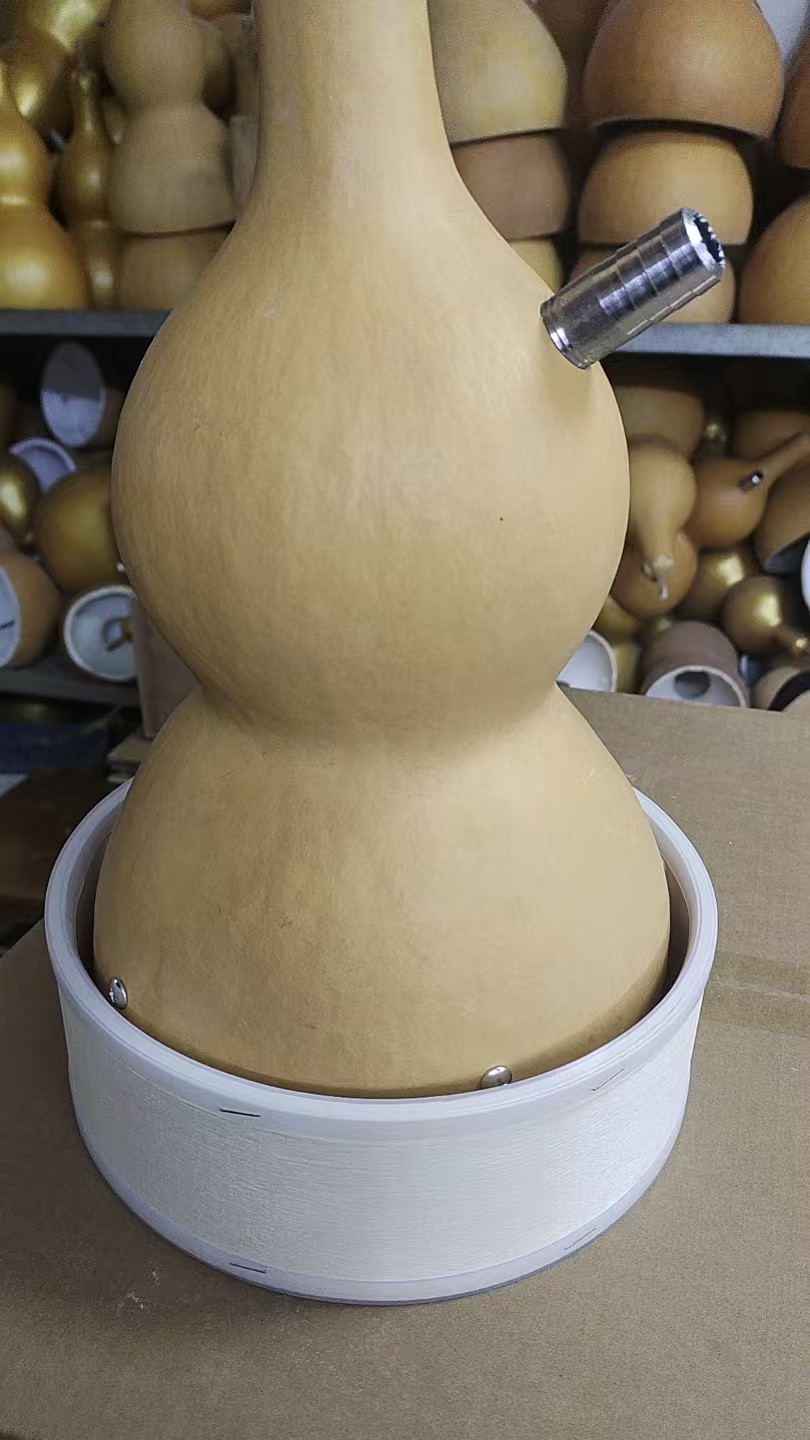
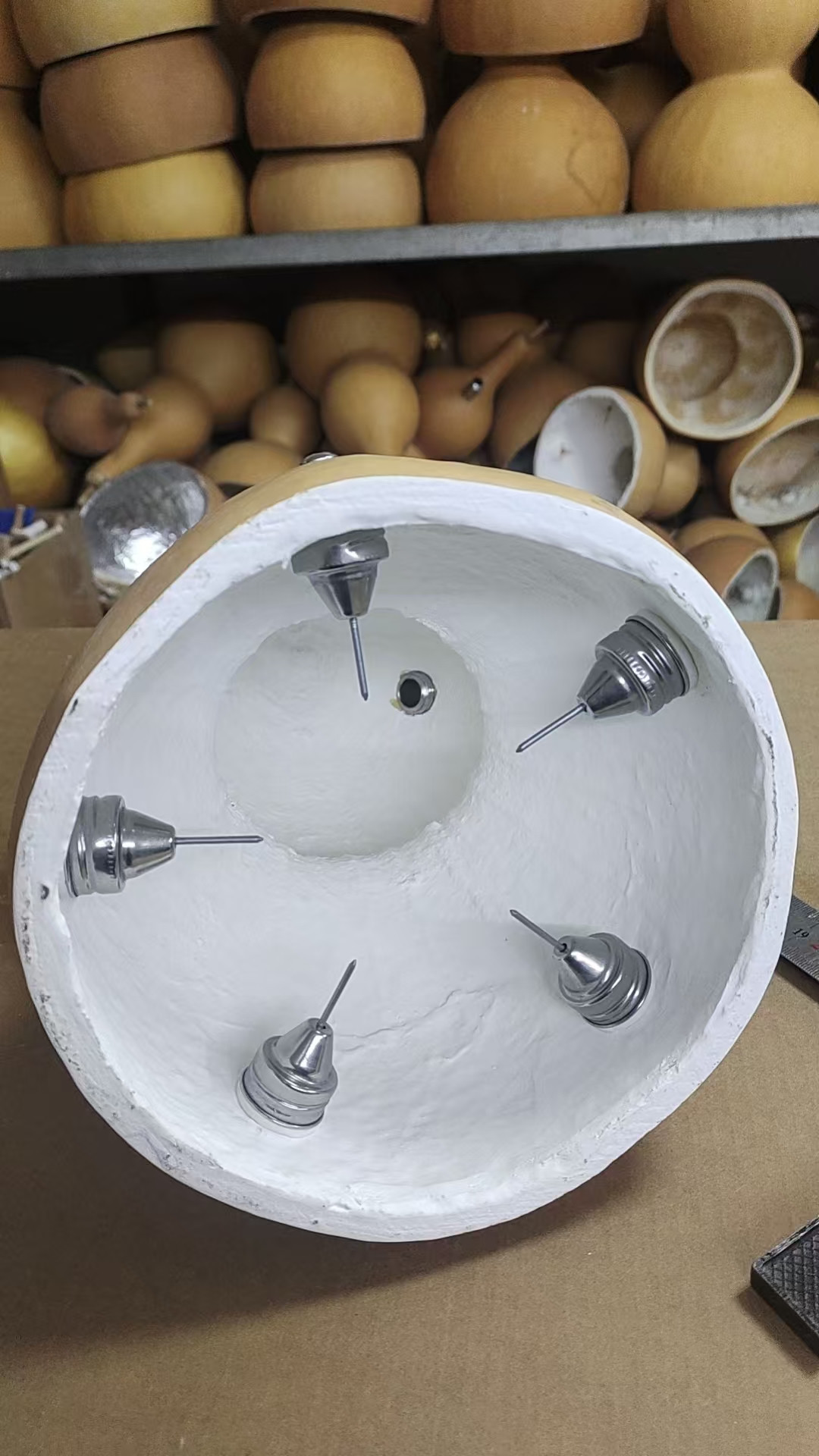
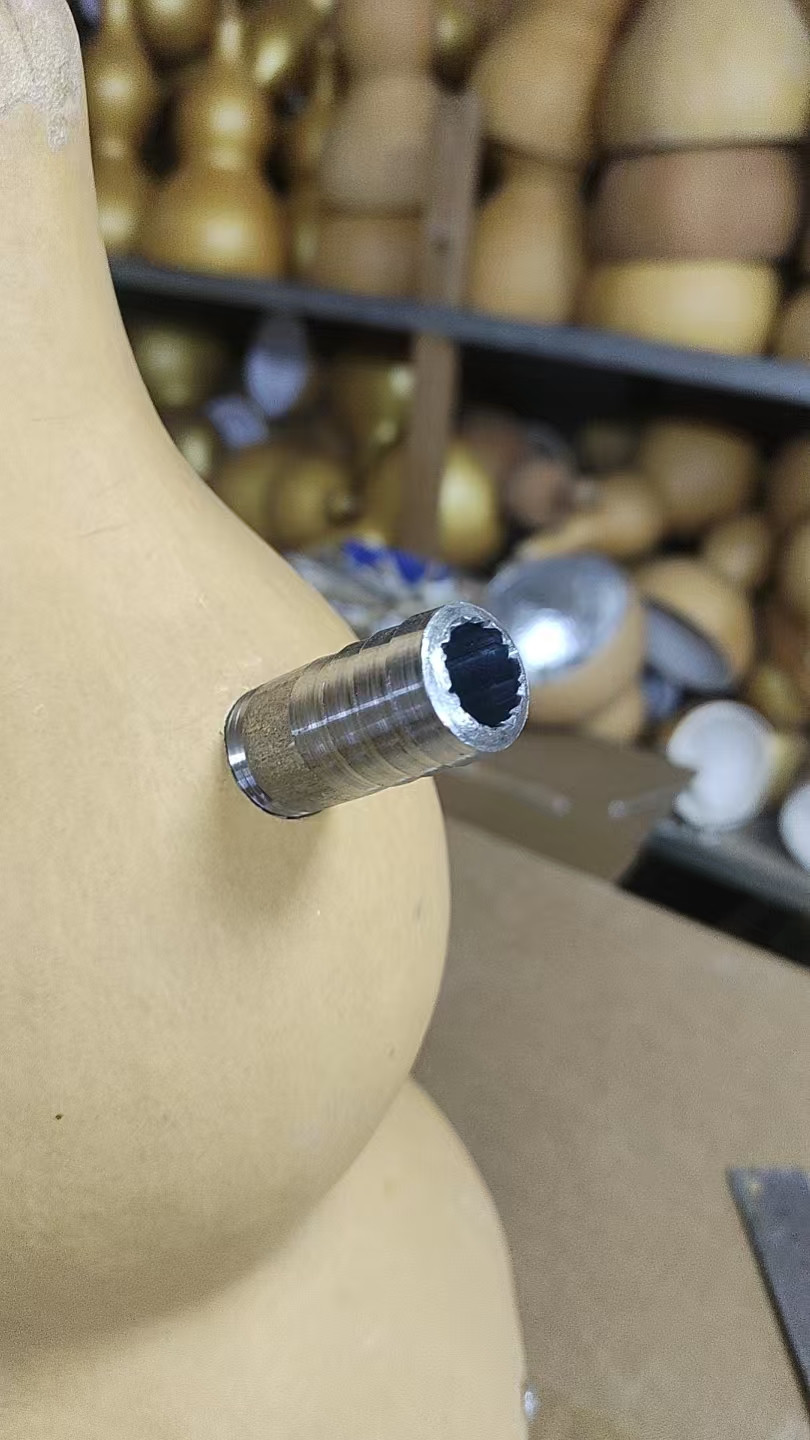
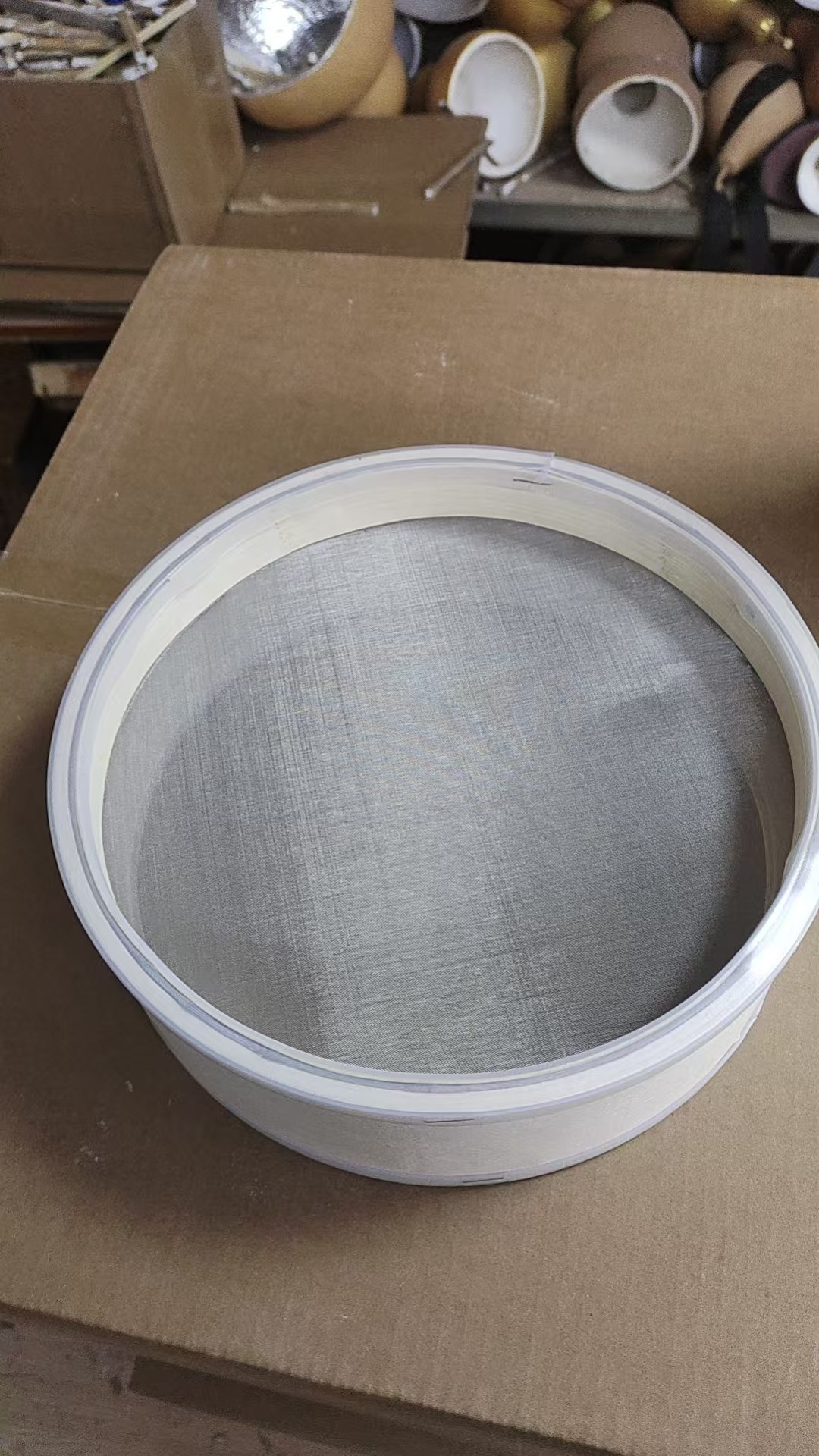
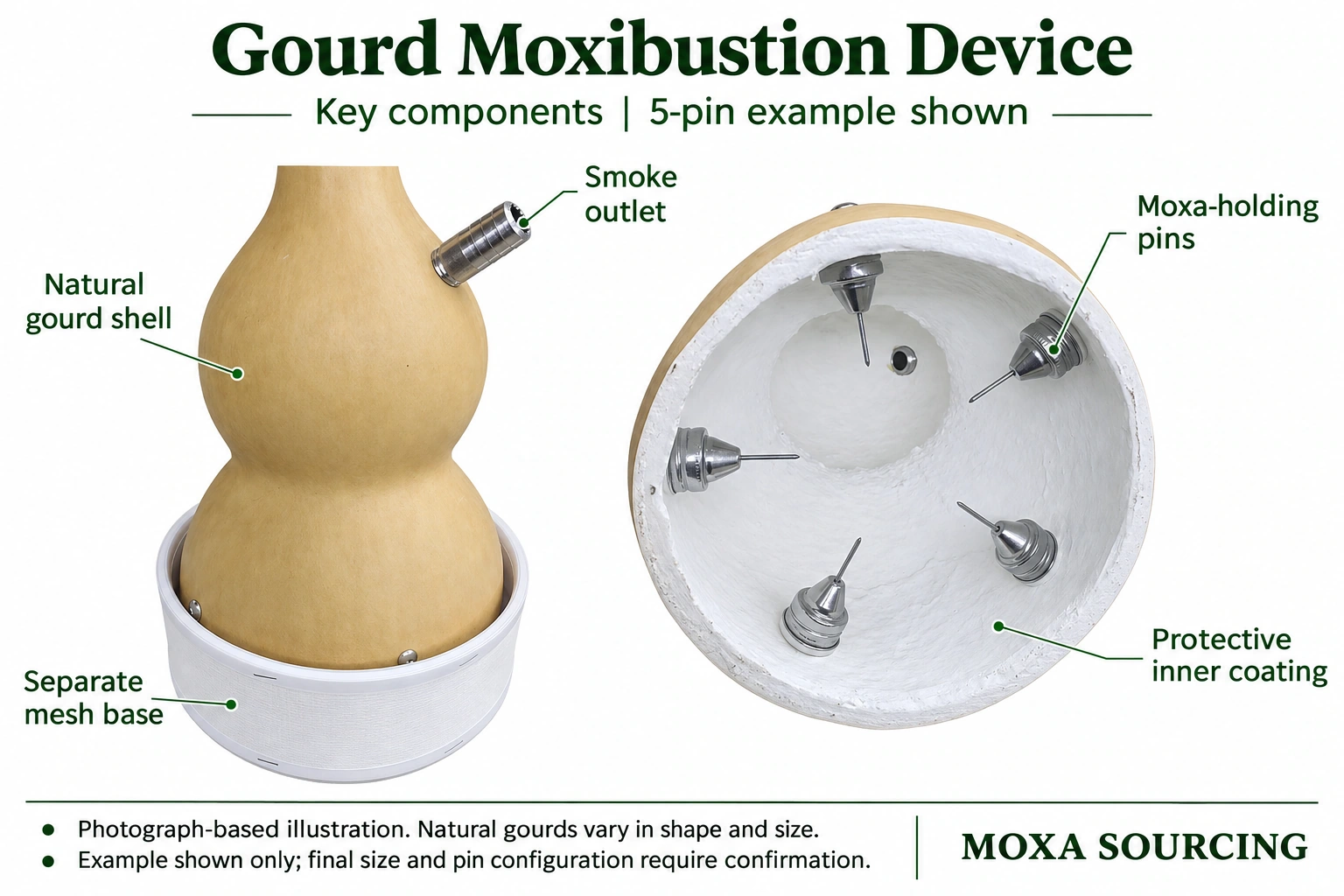
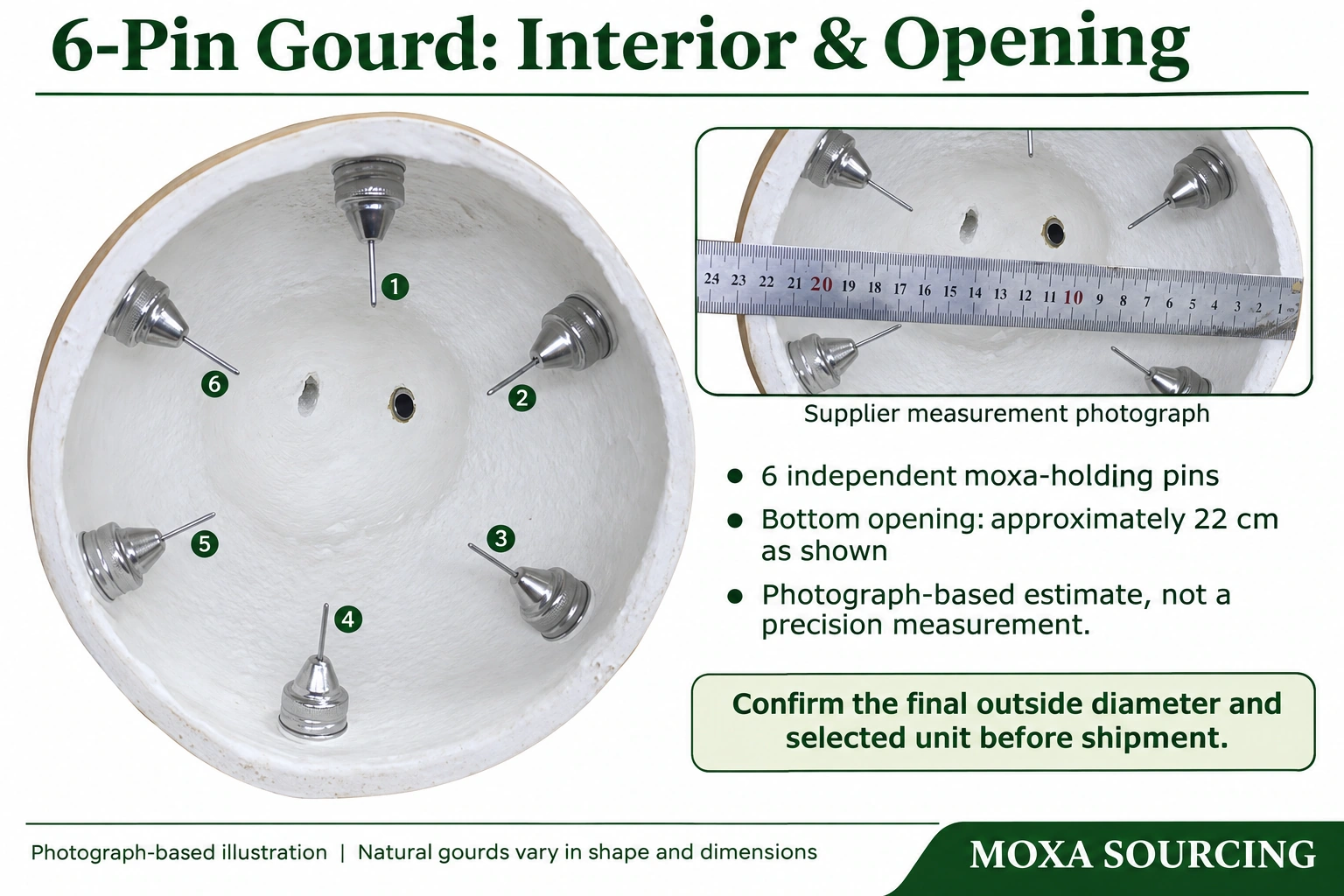
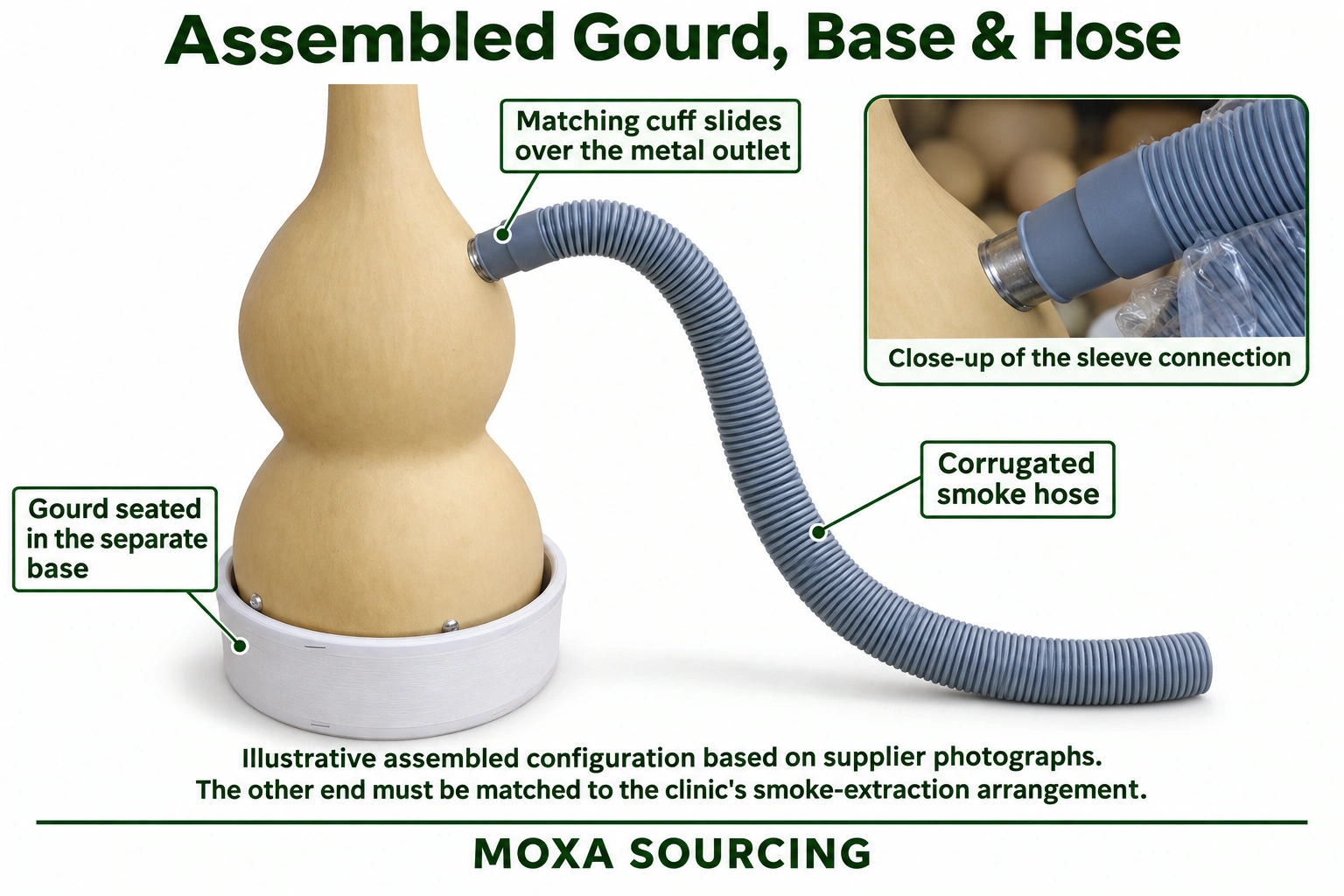
The following photographs were supplied with the source package. They show actual reference objects, not generated product photographs or evidence of current stock. The selected views show the shell and base, five internal holding positions, side outlet and removable mesh. Material composition and exact dimensions require the selected model’s documentation.
Eight illustrated views of the structure
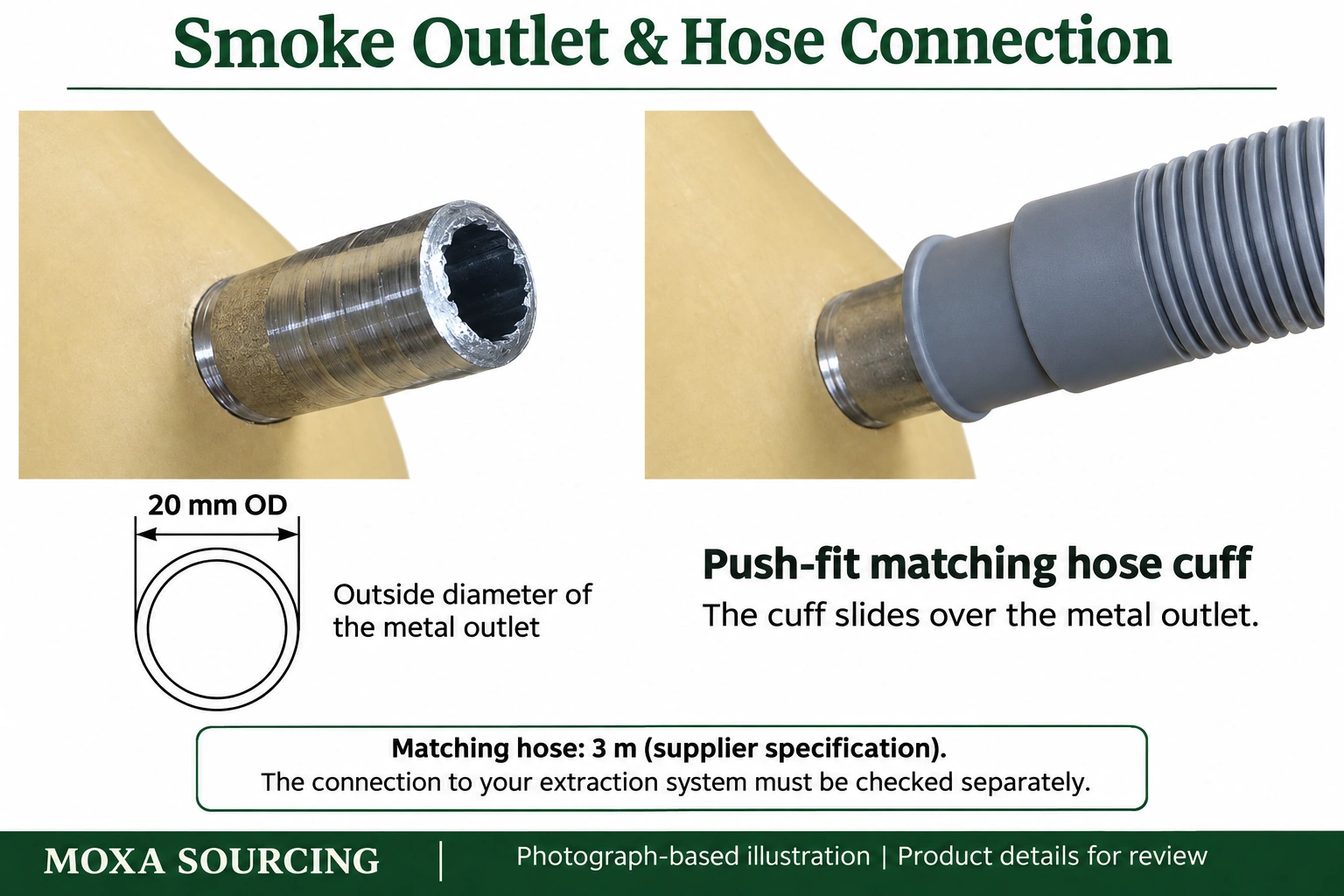
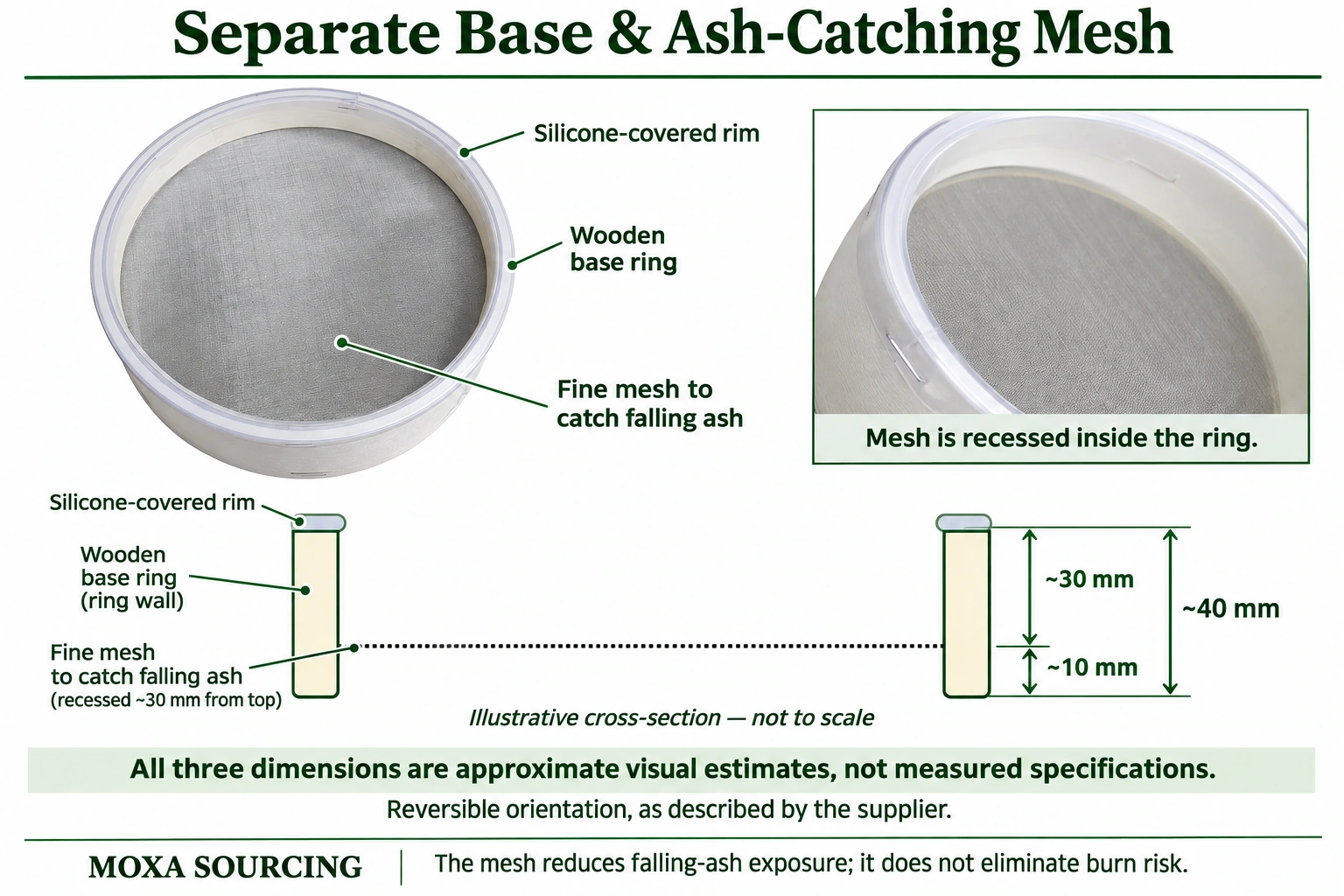
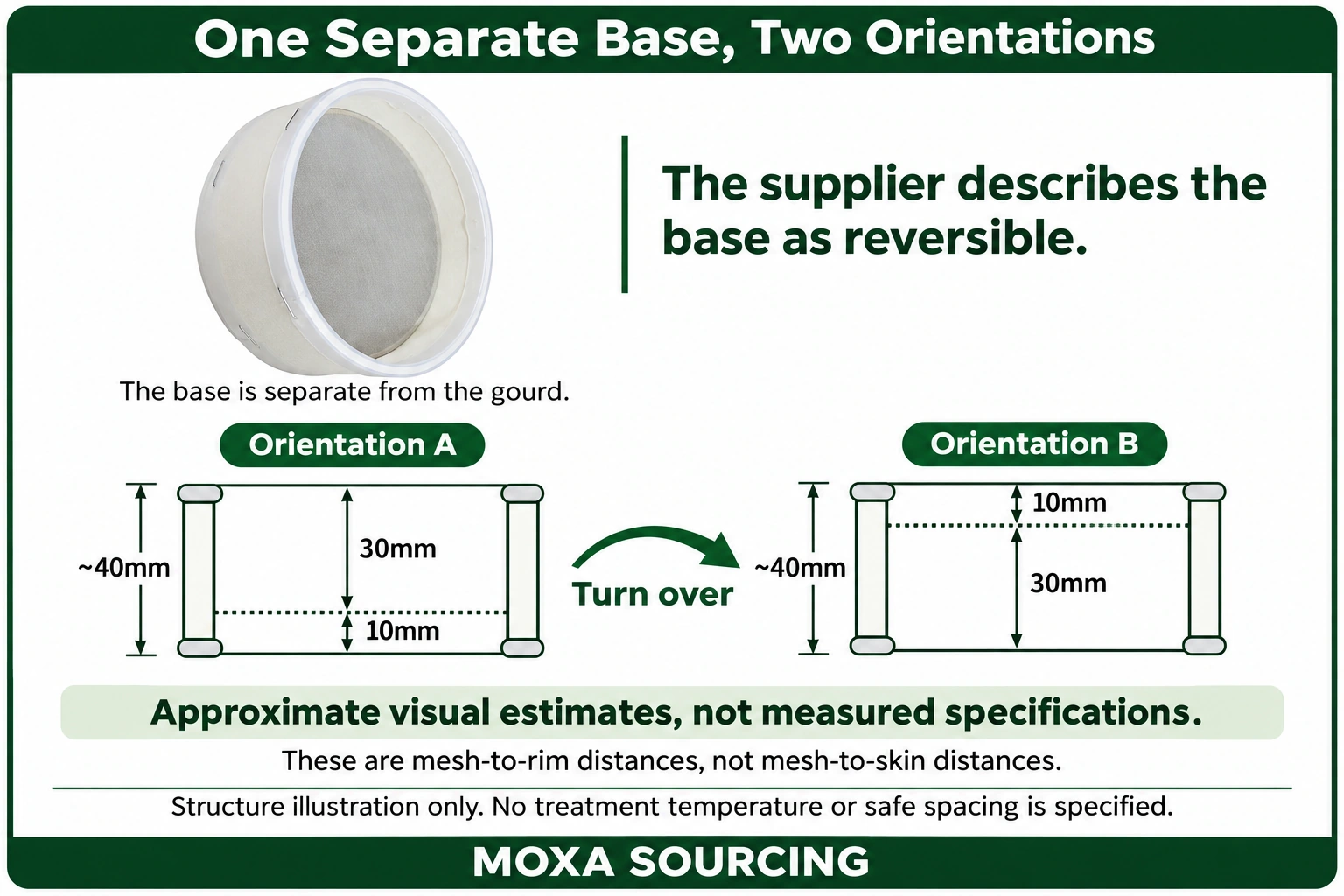
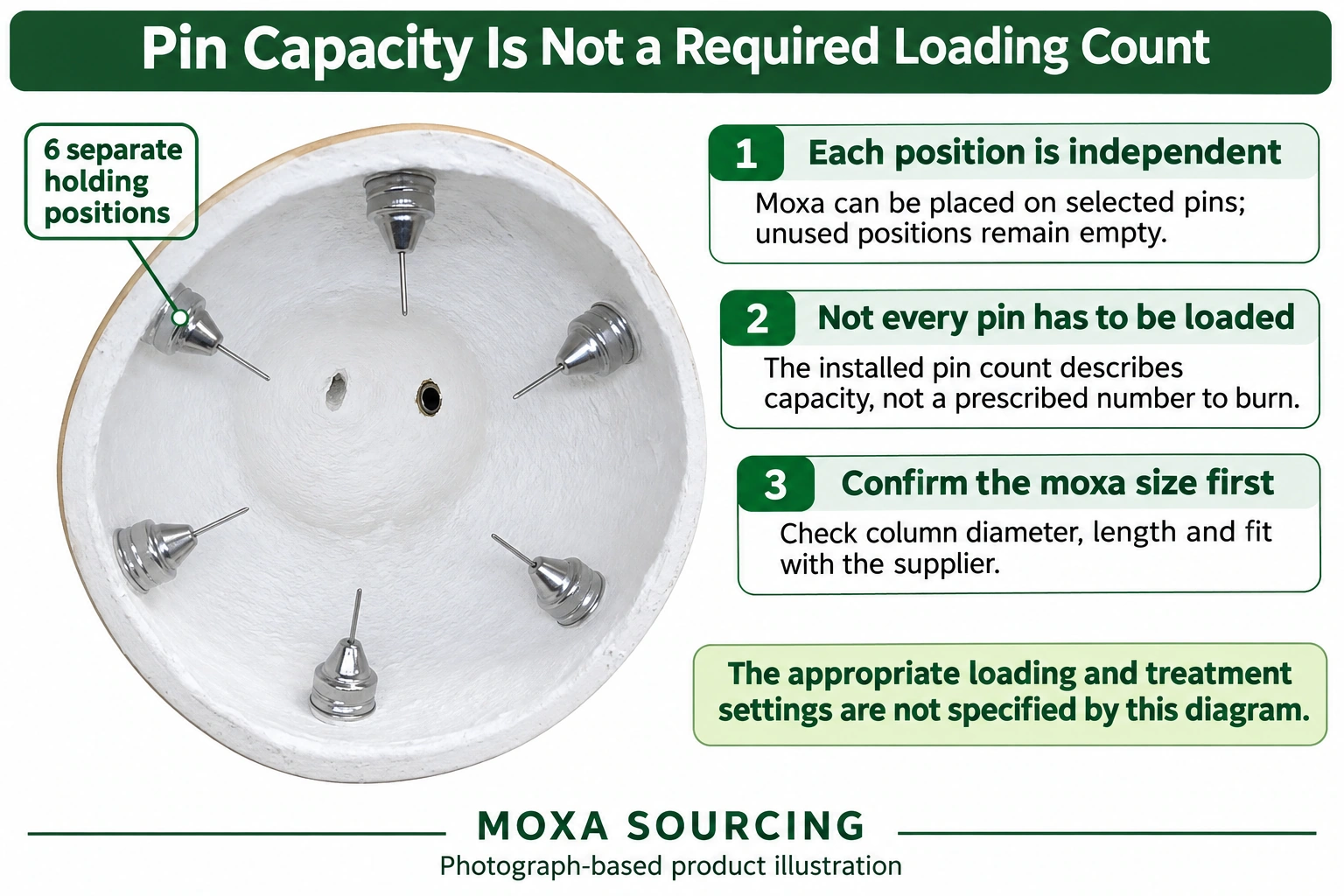
These supplied English-labelled diagrams combine reference photographs, annotations and schematic sections. They explain parts; they are not engineering drawings or operating prescriptions. Arabic captions and the surrounding Arabic text provide the corresponding explanations. Open each image for its full-size labels.
Numbers belong to their illustrated example. The outlet diagram labels 20 mm outside diameter and a supplier-described 3 m hose; neither is a universal fitting. The base diagrams show approximate visual estimates of 10/30/40 mm, explicitly not measured specifications. These are rim-to-mesh relationships, not safe heat-to-skin distances. Other supplied base pictures use different measurement references, so their figures cannot simply be added.
The size diagram distinguishes a photographed five-pin example listed as 20–22 cm from requested 18–20 cm/five-pin and 22–24 cm/six-pin configurations that still require confirmation. The six-pin diagram estimates an opening near 22 cm from a ruler photograph. Confirm whether a quoted dimension means opening outside diameter, inside diameter or usable space; natural shells vary.
Annotations such as protective coating, silicone rim or wooden ring describe the supplied illustration. They do not independently establish composition, rated temperature or service life. The reversible-base illustration explains geometry for that described design, rather than permission to reverse every model.

Matching moxa, holding pins and the base
Moxa is the consumable fuel, while the pin is its support. Confirm fuel diameter, length, integrity and retention with the tool’s instructions. A loose fit, an unstable support or material that changes as it burns can affect the source position and ash. Being able to insert a piece does not establish compatibility.
The mesh sits below the fuel and is intended to intercept falling ash; its openings, condition and attachment matter. The base supports the assembly. Its height, mesh position and the depth at which the shell seats must be considered together. A detachable base remains a necessary component where the design requires it.
Towels, gauze or ginger shown in a demonstration identify that demonstration’s arrangement, not a generally suitable recipe. Interposed materials can change heat transfer with their thickness, moisture and position. They do not establish that burns are impossible. Refer to the exact instructions and qualified clinical assessment.
Original videos and the complete process
Use the source videos to recognize components and the setting. The Dongfang Hospital page presents a professional demonstration; its visible stages do not replace assessment, model instructions, fire precautions or training. Open videos on the original sites below; regional or login restrictions may apply.
The supplied review notes describe a hose extending beyond the hospital frame and a separate wired thermometer. The downstream exhaust destination is not visible; the thermometer does not establish built-in automatic control. The supplementary public clips illustrate overhead-hood capture and a two-gourd scene, not verified capture efficiency or a universal treatment arrangement. These are attributed source-package observations, not a new full audiovisual examination by Moxa Sourcing.
A complete process also includes suitability assessment, an intact stable assembly, the intended smoke destination, continued observation, safe removal, complete extinguishing, cooling, cleaning and inspection. The available short demonstration does not show every cleanup and maintenance step. Do not take a visible loading count, time segment or temperature instrument as a prescription for another person or model.
| Original source | What to look for |
|---|---|
| Dongfang Hospital: gourd moxibustion demonstration | Fuel retention, base, hose and separate temperature observation. |
| Public scene: overhead capture | The supplied notes identify a hood above the gourd; the final destination is outside the observed frame. |
| Public scene: two gourds | Commercial scene, rather than an operating standard or clinical result. |
Hospitals, clinics and home settings
A hospital or professional practice must consider staff competence, patient assessment, observation, smoke management, cleaning and maintenance alongside the tool. The existence of hospital training does not make every market model equivalent to the one used there.
For a smaller clinic, layout, frequency of use, simultaneous tools and the possibility of a suitable outdoor discharge path affect the equipment combination. Two tools may mean simultaneous use or one working unit and a spare; these require different branch and fan arrangements.
A seller’s home-use picture does not establish that unsupervised use is suitable. Combustion brings heat, smoke and ash. Anyone unfamiliar with the model, unable to observe continuously or uncertain about clinical suitability should first obtain appropriate professional guidance. Size alone does not establish a safe home configuration.
Smoke capture, transport and final treatment
Distinguish where smoke is captured from where it finally goes. A side hose begins at the outlet. An overhead hood collects the plume near the tool without necessarily connecting to the outlet. Either collection method may lead to outdoor discharge or treatment equipment. A hood, fan and purifier describe different functions.
INRS guidance supports capture close to emission, effective distribution of airflow and adequate replacement air. Discharge should avoid fresh-air intakes. It also says treatment performance must be checked and does not remove the need for room ventilation. Apply these general principles through a competent assessment of the actual installation. [7]
Ask for performance with the actual hose length, bends and simultaneous branches. A no-load maximum airflow is not the installed flow at every tool. Check leakage, kinks, deposited ash and changes in suction. Extraction can change the combustion and local heat environment, so fit and operating behaviour need to be checked together.
For treatment units, identify the pollutants addressed, filtration or adsorption stages, any catalytic process, relevant test conditions, maintenance and residual emissions. A catalyst label, a report thumbnail or a claim such as no filters does not establish indoor recirculation conditions or maintenance-free service. The supplied promotional diagrams do not prove a capture or removal percentage.
| Route | Components to identify | What must be confirmed |
|---|---|---|
| Powered outdoor discharge | Tool or hood → duct → fan → outdoor endpoint | Installed suction, makeup air, endpoint, neighbouring exposure and installation permission. |
| Treatment before discharge | Collection → treatment unit → verified discharge path | Actual model, process, suitable tests, maintenance and final destination. |
| Indoor recirculation | Collection → treatment → room | Residual pollutants, verified recirculation conditions and ventilation; absence of visible smoke is insufficient. |
Safety, cleaning and replacement
Burns, fire and smoke exposure are relevant hazards of a combustion tool. Clinical suitability and operation require appropriately qualified judgment. Continuous observation remains necessary; a thermometer’s single reading cannot represent every contact point or substitute for attention to the person, smoke and stability.
Inspect the natural shell and inner layer for cracks, detachment or unexplained persistent odour; check pins for looseness and mesh for damage, corrosion or deformation. Agree which natural appearance variations are acceptable and which defects require rejection or stopping use. A seller calling a crack normal is not an assessment of ash containment or structural integrity.
After the model-specific removal and extinguishing procedure, allow complete cooling before cleaning. Use the manufacturer’s written method for the shell, coating, metal parts and contacting surfaces. Do not assume whole-device immersion, a household repair mixture or a reversed base is permitted. Keep cleaning agents and methods compatible with the identified materials.
Maintain the system as well as the shell: hose connections, deposits, fan operation and the treatment unit’s replaceable or serviceable parts. No disposable filter does not mean no maintenance. Request written stop-use conditions and access to matching bases, mesh, connectors and consumables.
From a clinic brief to a comparable supply package
Start with the intended setting and components, rather than selecting the most expensive main unit. Ask whether tools operate simultaneously, whether extraction equipment already exists, whether suitable outdoor discharge is possible, and what opening, base, fuel and connections are required. A request for two gourds does not answer these questions.
If an appropriate extraction system exists, the supply may focus on tools, bases, hose and verified adapters. If no system exists but a suitable outdoor route is available, investigate the fan, duct and installation. Where outdoor discharge is impractical, assess a substantiated treatment and ventilation combination before proposing recirculation. These are selection routes, not confirmed offers or installation approval.
Align the entire bill of supply before comparing prices: shell size and pin arrangement, base and mesh, moxa, hose and adapters, fan or treatment unit, electrical specification where relevant, packing, spare parts and after-sales terms. A multi-tool set price and a small fan’s starting price describe different products and cannot establish equivalent value. Historical marketplace prices in source screenshots are not current Moxa Sourcing quotations.
Packing must protect natural shells and prevent parts moving. As an arithmetic example only, a 60 × 35 × 35 cm carton has 73,500 cm³ volume. Dividing by 5,000 gives 14.7 kg volumetric weight; dividing by 6,000 gives 12.25 kg. The carrier’s actual divisor, rounding, gross weight and surcharges determine its chargeable calculation. Adding a main unit changes the package and transport assessment.
The quotation should identify configuration, quantity, currency, dated validity, delivery scope, destination and tax responsibilities. Product classification and applicable market documents depend on the actual tool or electrical system and its intended purpose; one certificate name cannot cover every arrangement. Use the tool RFQ checklist to organize missing fields.
Frequently asked questions
Are larger gourds or more pins better?
Size changes geometry and support needs. Pin count describes holding positions, not prescribed loading or treatment strength. Match the selected tool, fuel and instructions to the actual setting.
Does a side outlet make the tool smokeless?
No. It supplies a connection point. Collection, transport, treatment and the final discharge destination must be assessed as a complete system.
Does gold colouring establish a different function?
The supplied material shows an appearance option. Check the actual coating and model documentation; colour alone does not establish heat resistance, safety or clinical performance.
Does a thermometer mean unattended operation is suitable?
No. Measurement and automatic control are different functions. Confirm the measurement location and the actual controls, while maintaining continuous observation.
Is a catalytic unit always preferable to a fan?
They perform different jobs. Compare the intended pollutant handling, installed flow, tested conditions, residual emissions, maintenance and destination; the label or price alone is insufficient.
Can a hospital video be used as a home tutorial?
It can help identify parts and process stages. Clinical assessment, staff training, model-specific instructions and steps outside the frame remain necessary.
Discuss the selected configuration
Send the opening measurement, fuel, base, outlet, simultaneous-use requirement, destination and any existing extraction connection. We can coordinate samples and supply-scope questions against that brief.
Sources and scope
- National Museum of Traditional Chinese Medicine: medicine gourd
- 2015 disclosed gourd device design
- 2016 community-health reporting
- Henan hospital: gourd moxibustion training
- Guoyi Luntan, 2026: lumbar-disc study abstract
- World Journal of Gastroenterology, 2025: combined intervention
- INRS: collective protection and source capture
Edited from supplied Chinese research material, product photographs and annotated diagrams, with targeted review of the linked primary sources. Third-party videos remain on their original sites. Photo-based illustrations and numerical examples identify their limits in the captions and text.
Related guides: Moxibustion tools and accessory fit · Consumable fit · Cleaning and spares